



You start training your dog.
You become more consistent.
You introduce new rules.
Then suddenly the behavior seems worse.
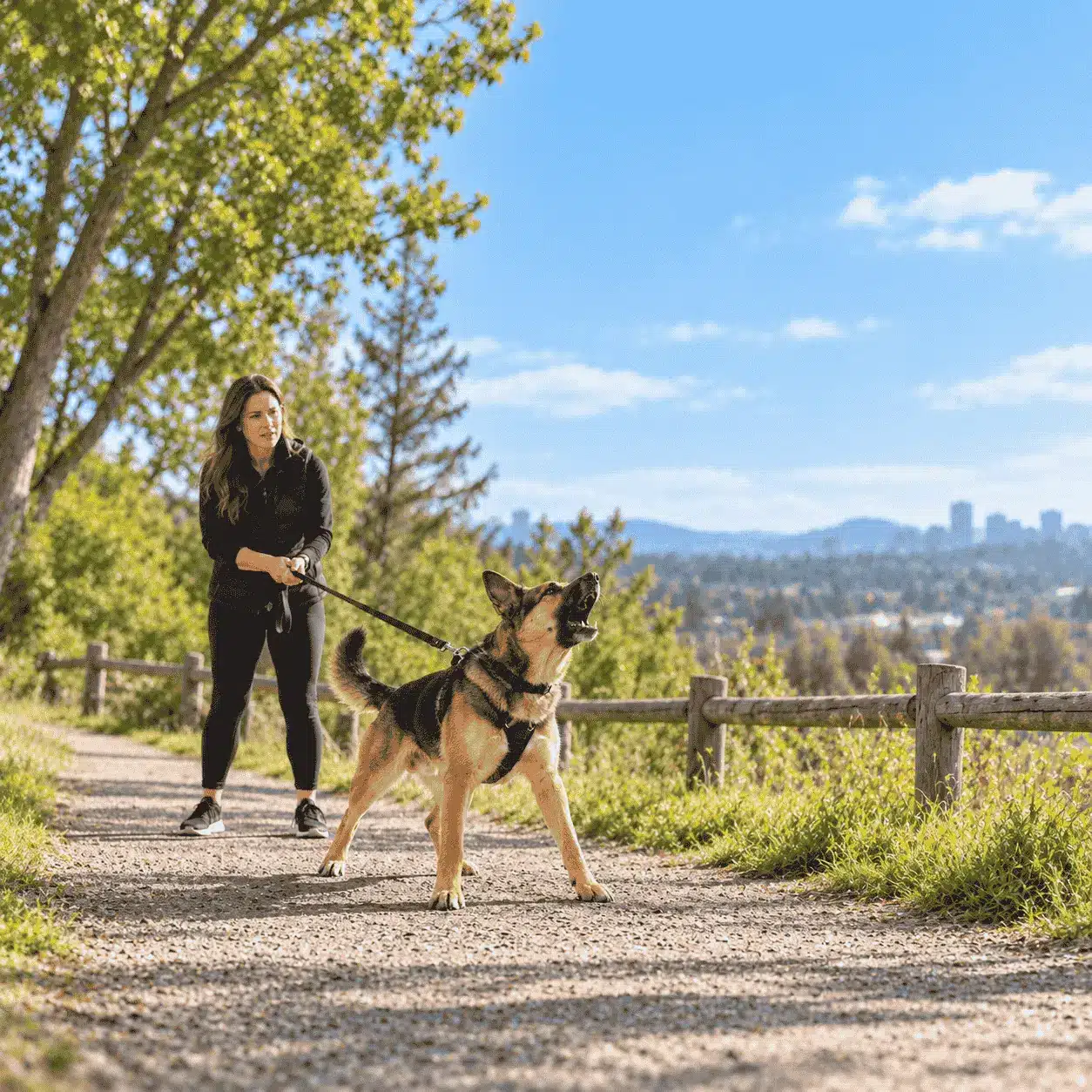
During dog training, your dog may pull harder, jump more, whine longer, or push boundaries more than before.
Many owners assume this means training is failing.
But in some situations, increased behavior can actually happen because the rules have changed.
Dogs Repeat Behaviors That Work
Dogs learn through consequences.
If jumping previously resulted in attention, jumping became valuable.
If pulling got the dog closer to another dog, pulling worked.
If barking caused someone to open a door, barking worked.
When those outcomes suddenly stop, the dog may initially try the behavior more intensely.
Why Persistence Can Increase
Imagine a vending machine that normally gives you a drink every time you press the button.
One day you press it and nothing happens.
You probably do not immediately walk away.
You may:
- Press again
- Press harder
- Press repeatedly
During dog training, dogs can respond similarly when a previously successful behavior stops working.
The behavior may become temporarily more intense before decreasing.
Consistency Is Critical
This is where owners often unintentionally reinforce the problem.
For example:
The dog jumps.
The owner ignores it.
The dog jumps harder.
The owner finally gives attention.
The dog learns:
“Jumping harder works.”
The same thing can happen with:
- Barking
- Pulling
- Whining
- Pawing
- Demand behavior
Consistency is what allows new expectations to become clear.
Adolescence Can Make Training Harder
Puppies often become more independent as they mature.
A dog that seemed easy at four months may become much more challenging at eight or ten months.
Adolescence can bring:
- Increased confidence
- More environmental interest
- Hormonal changes
- Boundary testing
- Stronger physical ability
- More distraction
This does not mean the puppy forgot everything.
It means the training needs to continue developing.
Environment Changes Behavior
A dog may behave perfectly at home and struggle elsewhere.
This is normal.
Training needs to be practiced:
- In different rooms
- Outside
- Around people
- Around dogs
- Near traffic
- In public environments
Behavior that is reliable in one place may need more practice in another.
Progress Is Not Linear
Training rarely looks like:
Day 1: bad
Day 2: better
Day 3: better
Day 4: perfect
More often, it looks like:
Improvement
Setback
Improvement
Hard day
Breakthrough
Another challenge
More improvement
This is normal.
Look at the overall trend rather than judging success based on one difficult day.
Balanced Training Creates Clarity
Balanced training helps owners communicate both:
- What the dog should do
- What the dog should not do
Depending on the dog, that may include:
- Rewards
- Praise
- Play
- Structure
- Leash communication
- Boundaries
- Environmental management
- Appropriate corrections
The goal is not punishment.
The goal is clarity.
Everyone in the Household Must Be Consistent
If one person allows jumping and another person discourages it, the dog receives mixed information.
Dog training progress becomes slower when one family member allows the dog to pull toward other dogs while another enforces proper leash manners.
Household consistency matters.
Training Problems Are Often Communication Problems
Sometimes the issue is not the dog.
The problem may be:
- Poor timing
- Unclear commands
- Repeating cues
- Inconsistent rules
- Rewards delivered too late
- Corrections delivered without understanding
- Moving too quickly
A trainer can often spot these issues quickly.
Do Not Change Everything at Once
Owners sometimes become frustrated and completely change training methods every few days.
That can create even more confusion.
Training requires enough consistency to determine whether the approach is working.
Celebrate Small Wins
Progress may look like:
- One calmer greeting
- A shorter reaction
- Faster recovery
- Better leash position
- One successful recall
- Improved focus
Small improvements matter.
They are often the building blocks of larger behavioral change.
When to Ask for Help
If behavior is steadily becoming more intense or unsafe, do not assume it is simply part of the process.
Seek professional guidance if your dog:
- Becomes aggressive
- Begins biting
- Develops intense fear
- Becomes increasingly reactive
- Shows sudden dramatic behavior changes
A qualified trainer can help determine whether the issue is part of the training process or whether the approach needs to change.
Stay Consistent and Keep Learning
Training is a process.
Dogs need repetition.
Owners need practice.
Communication improves over time.
If things feel harder before they get easier, the important question is not whether every day is perfect.
The question is whether you are building clearer communication and better long-term habits.
Ultimate K9 helps owners understand both the dog and the training process so they can build results that last beyond the training session.