



Dog training is most effective when we understand not only what a dog is doing, but also why the dog is doing it.
At Ultimate K9, balanced training through dog psychology means looking beyond individual commands and focusing on how dogs learn, communicate, respond to their environment, and develop patterns of behavior.
Every dog is different. Breed, temperament, genetics, previous experiences, environment, motivation, confidence, and the relationship with the handler can all influence behavior.
That is why successful training based on Dog Psychology should not rely on one single technique for every dog.
What Does Dog Psychology Mean in Training?
That is why successful training, guided by Dog Psychology, should not rely on one single technique for every dog.
Dogs learn through associations and consequences. Behaviors that produce desirable outcomes are often repeated, while behaviors that consistently do not work—or lead to clear, fair consequences—are less likely to continue.
Dogs also communicate through body language.
This may include:
- Posture
- Eye contact
- Ear position
- Tail position
- Movement
- Tension
- Distance
- Vocalization
- Avoidance
- Engagement
Understanding these signals helps a trainer identify whether a dog is fearful, frustrated, excited, confused, defensive, overstimulated, or simply unclear about what is expected.
Balanced Training Is Not One Method
Balanced training is sometimes misunderstood as simply combining rewards and corrections.
In reality, a thoughtful balanced approach is much broader.
Training may include:
- Positive reinforcement
- Food rewards
- Praise
- Play
- Clear verbal communication
- Leash communication
- Structure
- Boundaries
- Environmental management
- Appropriate training tools
- Fair corrections when necessary
- Confidence-building exercises
- Owner education
The goal is not to use every technique with every dog. The goal is to select the communication and training approach that makes sense for the individual dog.
Positive Reinforcement Is an Important Part of Training
Dogs should understand what behaviors we want from them.
When a dog makes a good choice, reinforcement can help strengthen that behavior.
Rewards may include:
- Food
- Praise
- Toys
- Play
- Movement
- Access to something the dog wants
Positive reinforcement can be especially useful when teaching new skills, building engagement, increasing confidence, and helping dogs understand desired behavior.
However, reinforcement alone does not always address every challenge.
Dogs also need clear boundaries and consistent expectations.
Why Structure Matters
Dogs often perform better when their environment and expectations are predictable.
Structure may include:
- Consistent feeding routines
- Clear household rules
- Defined sleeping or resting areas
- Structured walks
- Controlled greetings
- Expectations around doors
- Calm behavior before receiving access to something desirable
Structure does not mean removing enjoyment from a dog’s life.
It creates clarity.
When the dog understands what is expected, communication often becomes easier and conflict can decrease.
Understanding Motivation
One dog may work enthusiastically for food.
Another may value a ball.
Another may respond strongly to praise.
Another may be motivated by movement or access to the environment.
Understanding what motivates the dog allows the trainer to build stronger engagement and more effective training sessions.
Motivation can also change depending on the environment.
A reward that works perfectly at home may be less valuable around other dogs or exciting distractions.
That is why training must adapt as difficulty increases.
The Importance of Boundaries
Dogs need to understand not only what they should do but also what behaviors are not acceptable.
Examples may include:
- Pulling excessively on leash
- Jumping on people
- Rushing through doors
- Ignoring known commands
- Lunging toward distractions
- Guarding inappropriate resources
Balanced training creates boundaries in a way the dog can understand.
The type and level of correction should always be appropriate for the dog’s temperament, experience, and understanding.
The purpose is communication—not fear or punishment.
Why Timing Is So Important
Dogs associate consequences with behavior very quickly.
That means timing matters.
A reward delivered too late may reinforce the wrong behavior.
A correction delivered after the dog no longer understands what happened can create confusion.
One of the most important skills owners learn during training is how to communicate at the correct moment.
Better timing creates clearer information for the dog.
Training the Human Is Just as Important
Many behavioral problems are influenced by communication between the dog and the owner.
The owner may unintentionally:
- Reward unwanted behavior
- Repeat commands without follow-through
- Give inconsistent boundaries
- Use unclear leash pressure
- Reinforce excitement
- Change expectations depending on the situation
Dog training therefore involves teaching the owner as much as teaching the dog.
A professional trainer may help the dog establish new behaviors, but long-term success depends heavily on what happens after the training session.
Different Dogs Require Different Approaches
A confident working dog may need a very different approach from a sensitive puppy.
A fearful rescue may require different communication than an adolescent dog pushing boundaries.
A reactive dog may need carefully controlled exposure, while another dog may simply need better obedience and impulse control.
Dog psychology helps us avoid forcing every dog into the same training formula.
Instead, we evaluate the dog in front of us.
Behavior Has Context
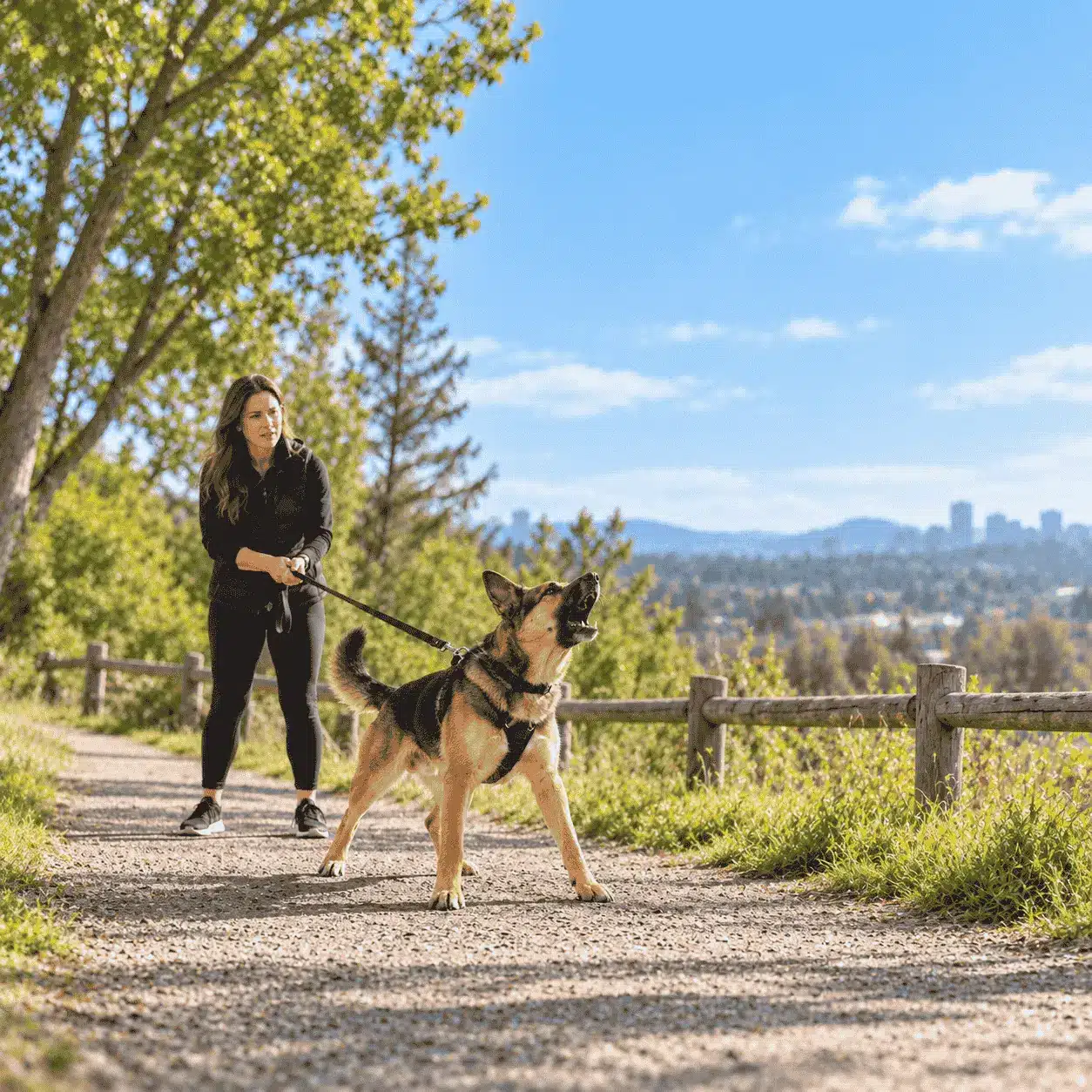
A dog barking does not automatically tell us why the dog is barking.
The dog may be:
- Afraid
- Excited
- Frustrated
- Territorial
- Seeking attention
- Overstimulated
Likewise, lunging does not automatically mean aggression.
Understanding the context surrounding behavior allows trainers to create more appropriate training plans.
Communication Builds Confidence
Clear communication helps dogs become more confident because they understand how to succeed.
When expectations constantly change, dogs can become confused or frustrated.
Balanced training helps create consistency:
Good choices have meaningful rewards.
Unwanted behaviors have clear boundaries.
The dog receives information it can understand.
Over time, this creates more reliable behavior and a stronger relationship between dog and handler.
Real-Life Training Matters
Training should eventually work outside the controlled environment.
Dogs need to practice around:
- People
- Other dogs
- Traffic
- New locations
- Smells
- Sounds
- Everyday distractions
This process is often called proofing.
A dog that performs perfectly in the living room but cannot respond outside has not failed. The behavior simply needs additional training under higher levels of distraction.
Building Lasting Results
The ultimate goal of dog training should not be temporary obedience during a training session.
We want owners to develop the communication skills and confidence necessary to continue working with their dogs throughout everyday life.
Balanced training through dog psychology provides a framework for understanding the individual dog, communicating clearly, reinforcing good choices, setting appropriate boundaries, and adapting training as the dog develops.
At Ultimate K9, our training programs are built around helping both the dog and owner understand each other more clearly so they can create practical, lasting results.