


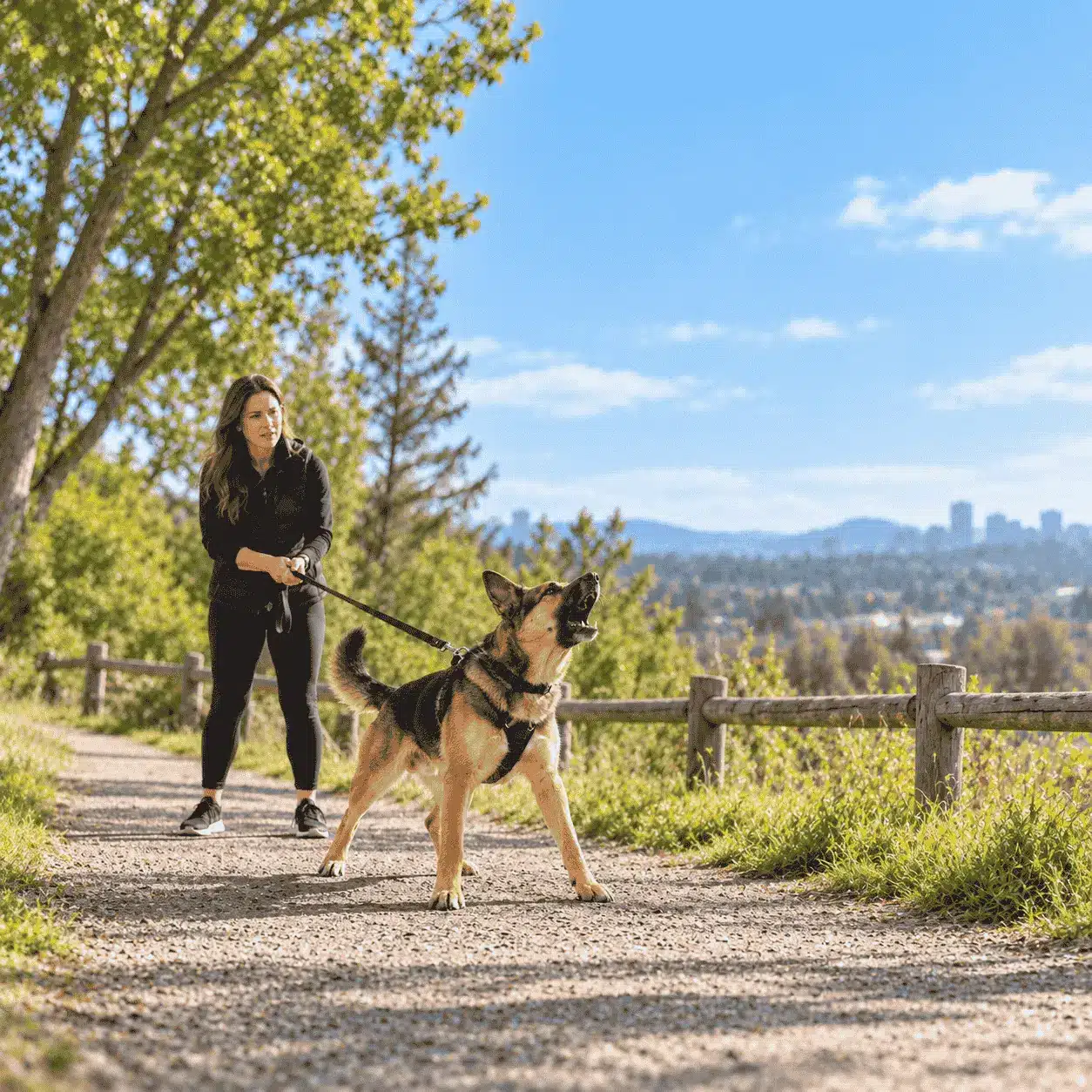


Barking is one of the ways dogs communicate with the world around them.
A dog may bark when someone approaches the house, another dog walks past, a strange noise occurs, or they want attention from their owner.
Some barking is completely normal. However, when barking becomes constant, intense, or difficult to interrupt, it can quickly turn into a frustrating problem for the entire household.
If you’re wondering why dogs bark excessively, the most important first step is understanding what is causing the behavior.
At Ultimate K9, we believe behavior training should address the underlying motivation rather than focus exclusively on the outward behavior.
Why Do Dogs Bark So Much?
Excessive barking is not a single behavior problem with one universal solution.
Different types of barking may require very different training strategies.
1. Territorial and Alert Barking
Some dogs bark when they notice activity around their property.
Common triggers include delivery drivers, visitors, neighbors, and people walking past windows or fences.
The dog may be attempting to alert the household or create distance from something unfamiliar, which is one of the common reasons dogs bark.
This response can become a repeated habit when the dog spends much of the day watching for activity outside.
How to Address Alert Barking
Begin by reducing opportunities for your dog to rehearse excessive barking.
You might block access to a particularly stimulating window, move their resting area, or limit unsupervised fence access.
Then teach a reliable alternative, such as coming to you or going to a designated place when called.
Reward calm behavior and practice the response before the dog becomes highly excited.
The goal is not necessarily complete silence. It is to help your dog recover from a trigger and respond to your guidance.
2. Attention-Seeking Barking
Some dogs learn that barking gets people to respond.
For example, your dog barks near the door and you let them outside. Or they bark repeatedly while you are working, and you eventually begin playing with them.
Over time, barking may become a reliable way to request something.
How to Address Attention Barking
First, make sure the dog’s actual needs have been met.
They may need a bathroom break, exercise, food, water, or social interaction.
Once those needs are satisfied, begin rewarding appropriate ways of requesting attention to help reduce excessive dog barking.
For example, reinforce your dog for sitting calmly, settling on a mat, or approaching you without barking.
Avoid waiting until the barking has become intense before providing attention.
3. Fear and Anxiety-Related Barking
Not every barking dog is excited or confident.
Dogs may bark when they are frightened by unfamiliar people, other dogs, noises, or environments.
Fear-based barking may be accompanied by stiff posture, retreating, trembling, avoidance, or difficulty responding to familiar cues.
How to Help a Fearful Barking Dog
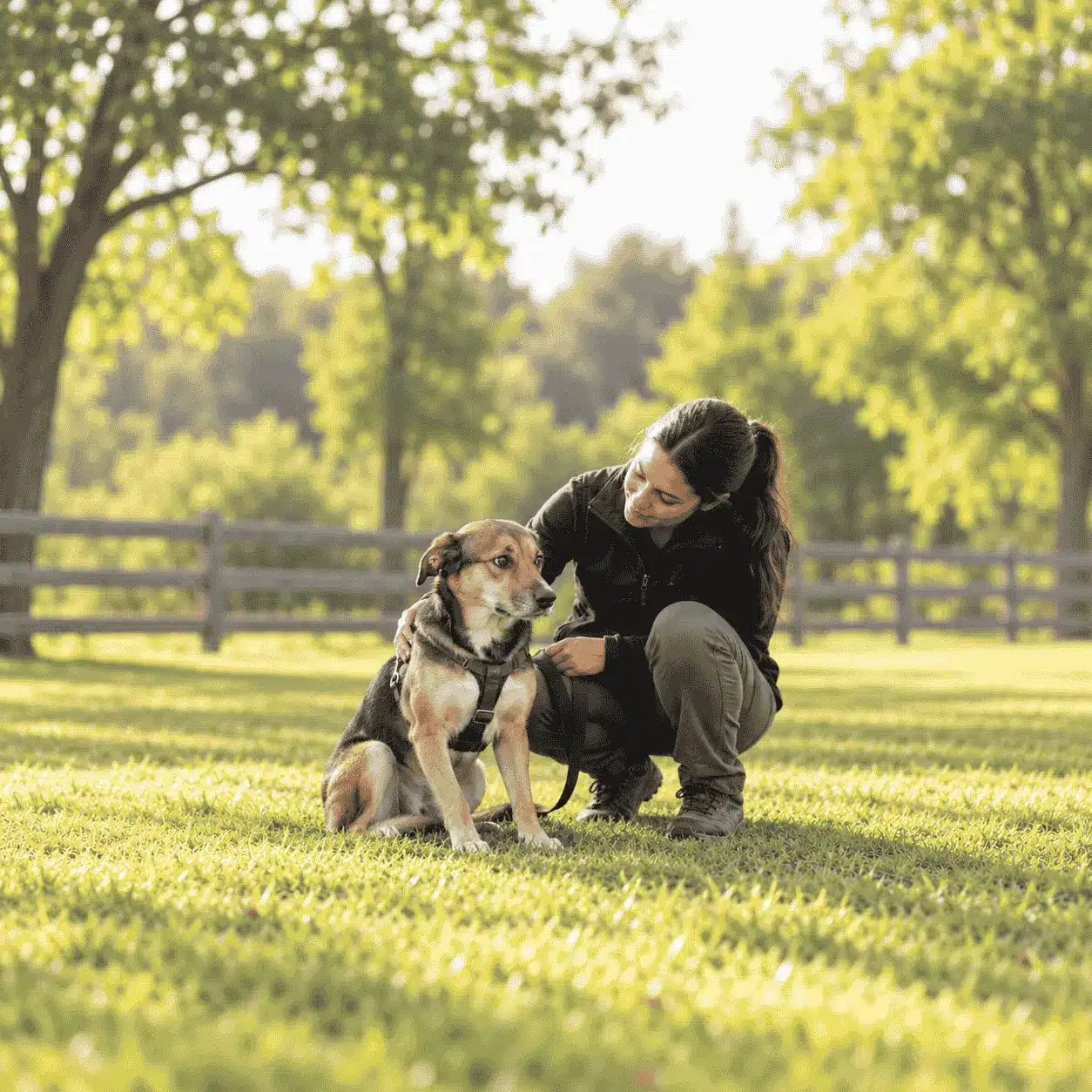
The most important first step is creating an environment where your dog can feel safe enough to learn.
If another dog is triggering barking, increasing distance may make training more productive.
Reward calm observation and engagement with the handler.
As your dog becomes more comfortable, controlled exposure can gradually help them develop more appropriate responses.
Avoid forcing a frightened dog into overwhelming situations or punishing fear-related barking.
For dogs displaying significant fear or reactivity, professional behavioral guidance is particularly important.
4. Barking From Frustration
Some dogs bark because they cannot reach something they want.
A dog might engage in excessive dog barking when another dog walks past, when a visitor stays behind a gate, or when a favorite toy is out of reach.
Frustration can lead to barking, pulling, jumping, and other highly excited behaviors.
Training may involve improving impulse control, building engagement with the handler, and teaching the dog how to remain calm when immediate access is unavailable.
5. Boredom and Under-Stimulation
Dogs need opportunities for physical activity, mental engagement, rest, and appropriate social interaction.
Some dogs develop repetitive barking habits when their daily routines provide too little meaningful activity.
Depending on the individual dog, enrichment might include structured walks, scent games, interactive feeders, training exercises, and supervised play.
Providing appropriate enrichment can help, although it will not resolve every type of barking.
6. Separation-Related Barking
Some dogs bark or howl intensely when left alone.
If the behavior is accompanied by pacing, drooling, attempts to escape, or destructive behavior around exits, separation-related distress may be involved.
This should not be treated as ordinary attention-seeking or disobedience.
A dog experiencing separation distress may need a gradual behavior modification plan and veterinary support.
Understanding Your Dog's Barking Triggers
Before attempting to change excessive barking, begin observing the circumstances.
Consider these questions:
- When does the barking happen?
- What occurs immediately before it starts?
- Is the dog afraid, excited, frustrated, or seeking attention?
- What happens after the dog barks?
- How long does it take the dog to settle?
- Does the behavior happen only in specific environments?
These details can reveal patterns that help identify the most appropriate training strategy.
Keeping a simple behavior log for several days can be helpful.
How Balanced Dog Training Can Help
At Ultimate K9, we approach behavior training by considering the dog’s psychology, temperament, environment, and relationship with the owner.
Our balanced training philosophy emphasizes positive reinforcement, clear communication, consistent boundaries, structure, and owner education.
For a dog that barks for attention, the solution may center on teaching quieter ways to communicate.
For a dog that barks from fear, the priority may be confidence-building and controlled exposure.
For a highly excited dog, training may focus on impulse control and better responses around distractions.
The goal is not to apply the same technique to every dog. It is to identify the behavior’s function and create an appropriate training plan.
Common Mistakes When Addressing Excessive Barking
Yelling Over the Dog
Raising your voice may increase excitement or stress, especially if the dog is already highly aroused.
Ignoring the Cause
Stopping barking temporarily does not necessarily resolve what caused it.
Providing Inconsistent Responses
If barking produces attention or access sometimes but not others, the behavior may persist.
Expecting Immediate Silence
Dogs communicate through vocalization. Training should focus on improving control, reducing unnecessary barking, and helping the dog respond appropriately.
When to Seek Professional Help
Consider professional guidance when barking is accompanied by lunging, biting, severe fear, destructive behavior, or an inability to settle.
If barking appears suddenly or changes dramatically, schedule a veterinary examination to rule out pain, hearing changes, or other health concerns.
Ultimate K9 offers individualized Private Dog Training Lessons and training for more complicated aggression and behavior concerns.
Frequently Asked Questions
Can excessive barking be corrected through training?
Why does my dog bark at everyone who walks past the house?
Will more exercise stop my dog from barking?
Help Your Dog Develop Better Communication
Excessive barking can make daily life stressful, but understanding the motivation behind the behavior creates a better starting point.
Rather than simply trying to silence your dog, focus on teaching calm responses, appropriate boundaries, and clear communication.
At Ultimate K9, we help dog owners throughout Graham, Tacoma, Puyallup, Spanaway, and surrounding areas understand challenging behaviors and develop practical training plans.
Struggling with excessive barking or reactivity?
Contact Ultimate K9 to discuss your dog’s behavior and learn about our individualized training programs.