Resource guarding can be frightening and confusing for dog owners.
A dog may growl when someone approaches their food bowl, freeze over a toy, guard a bed, or become defensive around certain people or objects.
Some owners assume the dog is simply being dominant or aggressive.
In reality, resource guarding can have several causes, and the correct training approach depends on understanding what is happening and why.
What Is Resource Guarding?
Resource guarding happens when a dog attempts to maintain control over something they value.
Common guarded resources include:
- Food
- Bones
- Toys
- Beds
- Furniture
- Crates
- Spaces
- People
- Stolen objects
The dog may believe that another person or animal approaching the resource means they are about to lose it.
Early Warning Signs
Resource guarding does not always begin with biting.
Early signs may include:
- Freezing
- Stiff posture
- Lowering the head over an item
- Hard staring
- Eating faster when approached
- Moving away with an object
- Growling
- Showing teeth
- Snapping
These warning signs provide useful information.
Ignoring them can allow the behavior to escalate.
Why Dogs Guard Resources
There is not one single cause.
Possible contributing factors include:
- Genetics
- Insecurity
- Competition
- Previous experiences
- Learned behavior
- Lack of structure
- Fear of losing the item
- Reinforcement history
Some dogs may have learned that people approaching means valuable items disappear.
Others may simply have a naturally strong desire to control certain resources.
Avoid Constantly Taking Things Away
A common piece of old advice is to repeatedly take food or objects from a dog to “show them who is in charge.”
This can sometimes make guarding worse.
If the dog learns:
“Every time a person approaches, I lose what I have,”
they may become increasingly defensive.
Instead, training should focus on communication, trust, structure, and appropriate control of resources.
Teach Useful Behaviors
Helpful training may include:
Drop It
Teach the dog to willingly release an object.
Leave It
Teach the dog not to pick up or engage with an item.
Place
Teach the dog to go to a designated location and remain there.
Structured Feeding
Use consistent routines around meals and food.
Trading
In some situations, trading a lower-value item for something better can help teach the dog that giving things up does not always result in loss.
Management Matters
Training takes time.
While training is happening, management helps keep everyone safe.
Management may include:
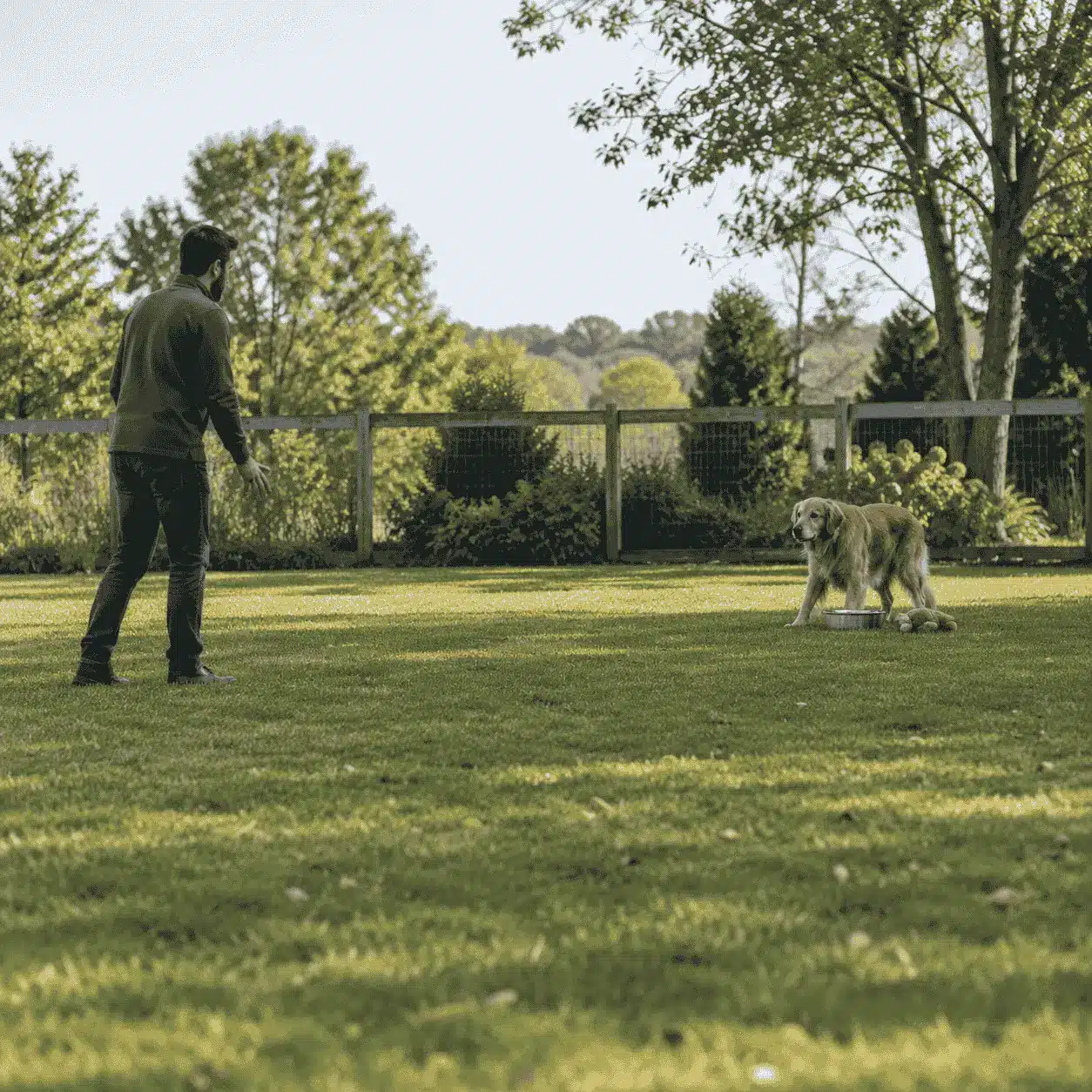
- Feeding dogs separately
- Removing high-value objects when needed
- Avoiding unsupervised access around children
- Preventing competition between dogs
- Controlling access to guarded spaces
- Using gates, crates, or separate rooms appropriately
Management is not failure.
It is part of responsible training.
Do Not Ignore Growling
Growling is communication.
A growl often means:
“I am uncomfortable with what is happening.”
Punishing the growl without addressing the reason behind it can remove the warning while leaving the underlying problem unchanged.
That can make behavior less predictable.
The goal should be to change the dog’s response and improve communication, not simply silence the warning.
Balanced Training for Resource Guarding
Balanced training does not mean correcting every sign of guarding.
It means combining:
- Reinforcement
- Clear structure
- Boundaries
- Management
- Obedience
- Appropriate corrections when necessary
- Owner education
- Individualized training
The trainer must consider the severity of the behavior and the dog’s history.
A mild case involving a toy may require a very different approach from a dog with a serious bite history.
Children and Resource Guarding
This is especially important.
Children should never be encouraged to:
- Reach into a dog’s food bowl
- Take bones away
- Grab toys from a guarding dog
- Climb into the dog’s resting area
Children may not recognize warning signs.
Management should be taken very seriously when a dog is guarding resources around children.
Multi-Dog Households
Resource guarding can also happen between dogs.
Signs may include:
- Blocking access
- Hovering over toys
- Guarding food
- Guarding people
- Preventing another dog from entering a space
Feeding separately and controlling high-value items can help reduce conflict while training is taking place.
When to Get Professional Help
Professional help is strongly recommended if your dog:
- Has bitten someone
- Has snapped repeatedly
- Guards multiple resources
- Guards people
- Is becoming more intense
- Redirects aggression
- Lives with children
- Is difficult to manage safely
A professional can evaluate the behavior and determine the safest training plan.
Resource Guarding Can Improve
Resource guarding does not automatically mean your dog is dangerous or hopeless.
With appropriate training, management, structure, and communication, many dogs improve significantly.
The key is addressing the behavior thoughtfully rather than reacting emotionally.
Ultimate K9 works with behavioral concerns using individualized training and a balanced approach designed to improve communication, safety, and reliability.