
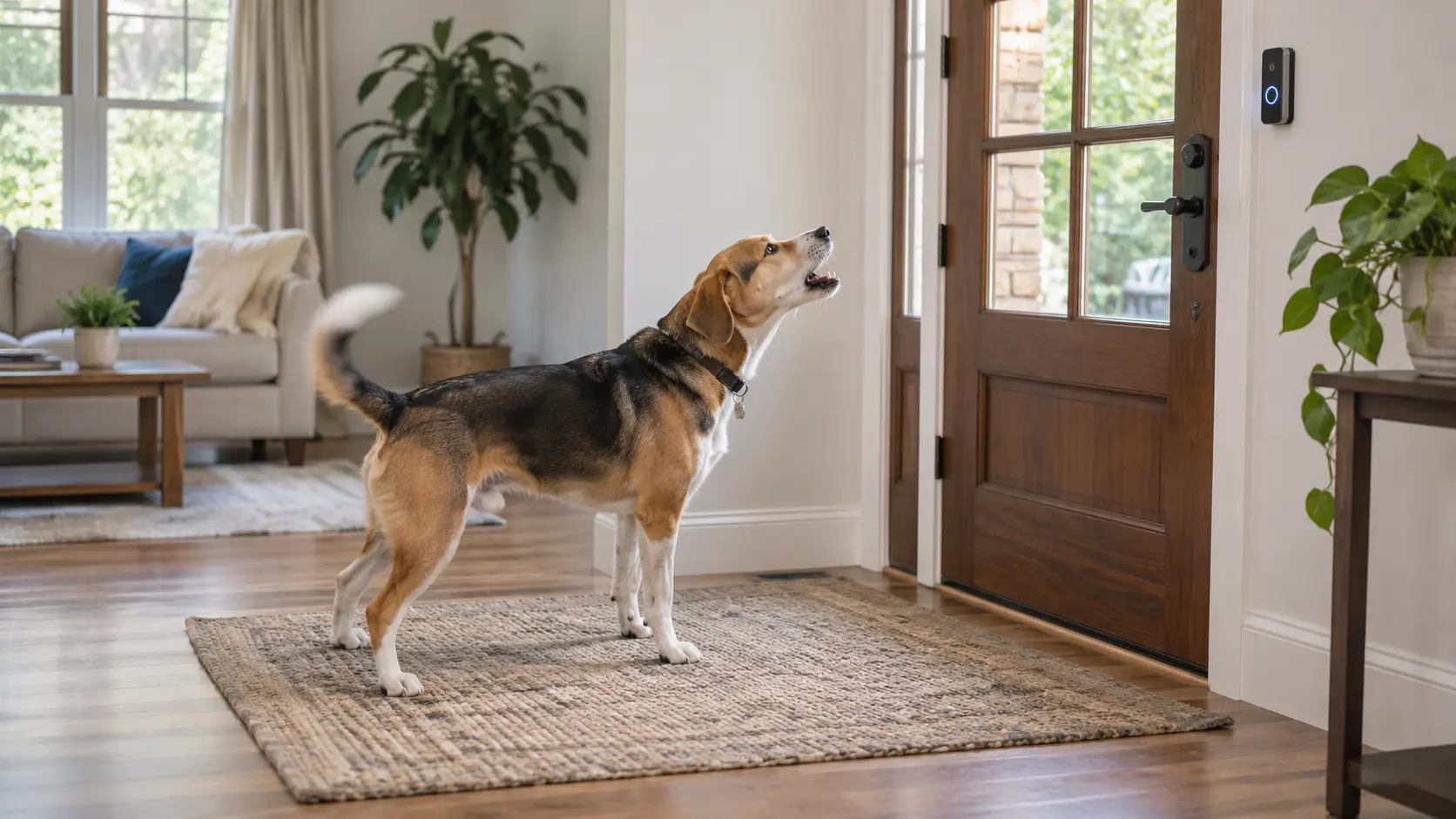

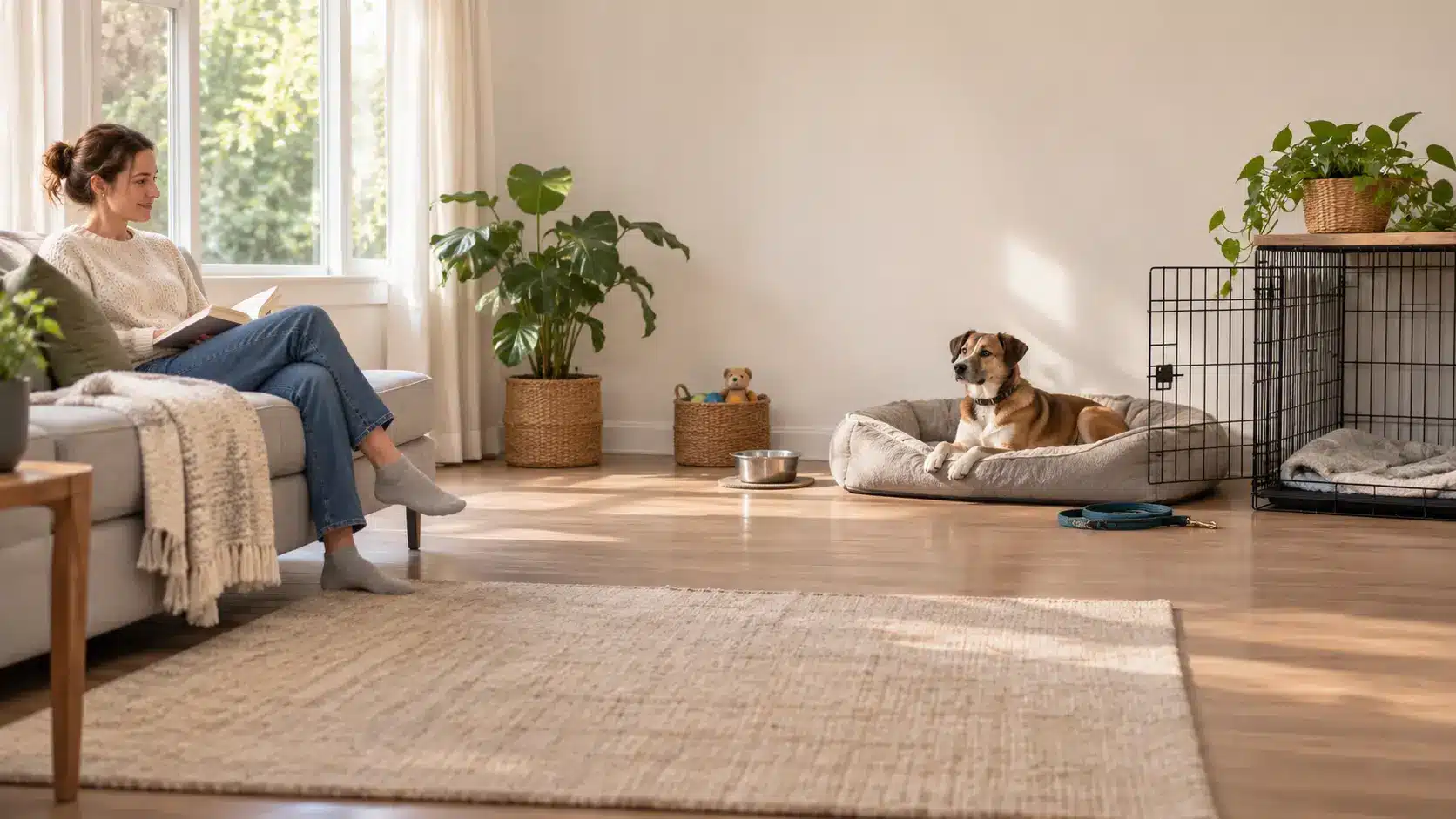
Does your dog explode into barking the second the doorbell rings? Maybe they race to the door, jump on guests, or get so worked up that commands they know perfectly well seem to vanish.
For many households, a dog barking at the doorbell is the most predictable behavior problem of the day, and with holiday visitors on the way, it can feel even more stressful. The good news: your dog can learn a completely different response to that sound.
At Ultimate K9, Belynda Moore has spent more than 30 years helping dogs in Graham, Puyallup, Spanaway, and Tacoma build calmer household manners. Our approach starts with understanding why your dog reacts, not just stopping the noise.
Quick answer: To stop a dog barking at the doorbell, manage arrivals so your dog can’t keep rehearsing the habit, teach a calm alternative such as going to a mat, then pair a quiet recording of the doorbell with rewards and gradually raise the volume. Practice with a familiar visitor before real guests arrive. If your dog is fearful, growls, or lunges, get professional guidance.
Why Dogs Bark When the Doorbell Rings
Dogs bark at the doorbell for different reasons:
Excitement: the bell means people, and people mean fun
Alerting: letting you know someone is there
Territorial concern: guarding the home
Uncertainty or fear about who’s arriving
Learned habit: the bell has predicted a burst of excitement hundreds of times
Frustration or general overarousal
Not every barking dog is aggressive, and not every quiet dog is comfortable. Watch your dog’s body. Is it loose and wiggly, or stiff and tense? Are they trying to reach the visitor, or keep the visitor away? The answer shapes the training plan. If you’re unsure, our guide to dog body language can help, and you can learn more about the root causes of barking in why dogs bark excessively.
Why Yelling “Quiet!” Usually Doesn’t Work
It’s tempting to shout over the barking, but to your dog, yelling often sounds like you’re joining in. It adds excitement to an already intense moment, and it doesn’t tell your dog what you do want.
A better approach combines three things: management, gradual exposure to the doorbell sound, and a clear alternative behavior.
How to Stop Your Dog Barking at the Doorbell: 6 Steps
Step 1: Manage Arrivals While You Train
Every time your dog charges the door and barks, the habit gets stronger. While you’re training, prevent those repeat performances:
Use a baby gate to block access to the entryway
Put your dog in a quiet room before expected guests arrive
Keep a leash on during visits so you can calmly guide your dog away
For dogs who are worried about visitors, provide a retreat space and never require them to say hello. For overexcited dogs, add enough distance to help them settle.
Management isn’t failure. It keeps everyone safe while the new habit develops. It also matters if your dog tends to bolt when the door opens; see how to stop your dog from running out the door.
Step 2: Teach a Calm Alternative Behavior
Decide what you’d like your dog to do when the doorbell rings. Going to a mat or bed a short distance from the door works well for most dogs.
Teach it in a quiet room first:
Reward your dog for stepping onto the mat.
Gradually reward them for staying there for short, comfortable periods.
Add a release cue, like “free” or “okay,” so they know when they’re done.
Once the skill is reliable, add mild distractions. Don’t expect your dog to perform a brand-new skill with three guests standing in the doorway. For a full walkthrough, see our guide to teaching the Place command.
Step 3: Introduce the Doorbell Sound at a Low Volume
Play a recording of a doorbell (your own or one from a video) at a volume your dog notices without reacting intensely. The moment the sound plays, give a treat. Let your dog settle, then repeat.
Gradually raise the volume across successful sessions. If your dog barks or becomes distressed, lower the volume or add distance. The AKC suggests a similar desensitization approach for dogs who get overly excited at the sound.
The goal is a new association: the doorbell predicts something calm and good, not chaos.
Step 4: Pair the Doorbell With the Mat
Now put the pieces together:
Play the quiet doorbell sound.
Cue your dog to their mat.
Reward them for going.
Release them after a short, calm pause.
Practice several short repetitions. As your dog catches on, use fewer verbal prompts, until the doorbell itself becomes the cue to head to the mat.
Step 5: Practice With a Familiar Visitor
Recruit a friend or family member your dog knows. Start without the bell: have them approach the door, then try a soft knock, then a single ring. Reward calm behavior each time.
At first, keep the visitor outside. Later, they can come in while your dog stays on their mat or behind a gate. Proofing the skill in realistic, controlled setups is what makes it hold up when real guests arrive.
Never force a fearful dog to greet visitors. For some dogs, relaxing calmly in another room is the right outcome.
Step 6: Reward Calm Greetings
Some dogs learn to settle after the bell but still launch themselves at guests. Reward four paws on the floor and calm approaches, and ask visitors to skip loud, excited greetings. If your dog gets overwhelmed, pause and reset.
Only encourage direct greetings when both your dog and your guest are comfortable. For more help, read how to stop your dog jumping on people.
Getting Ready for Holiday Guests
Holidays bring more doorbells, deliveries, and unfamiliar faces than almost any other time of year. A few simple steps help:
Start practicing now, at least a couple of weeks before big gatherings if possible.
Set up a quiet room with water, a bed, and a chew so your dog has somewhere calm to go.
Put a note on the door asking guests to knock softly or text instead of ringing.
Assign one person to manage the dog when guests are arriving.
Common Doorbell Training Mistakes
Practicing only when real guests show up. That’s the hardest possible version. Schedule short, controlled rehearsals instead.
Repeating “sit” or “quiet” over and over. Cues turn into background noise. Give one clear cue and make the task easier if needed.
Expecting a fearful dog to greet everyone. Respect your dog’s need for distance, and never punish growling or freezing; those are important warning signals.
Assuming Place solves everything. Place gives your dog structure, but it doesn’t automatically resolve fear or territorial behavior.
How Long Does Doorbell Training Take?
It varies. A dog who barks out of excitement often progresses differently from one who’s frightened of visitors.
Rather than counting days, track progress: How quickly does your dog recover after the bell? Can they respond to a familiar cue? Do they stay relaxed during a controlled visitor approach? Short, consistent sessions several times a week usually beat occasional marathon training days.
When to Get Professional Help
If your dog lunges, growls, struggles to calm down, or could be a safety risk around guests, individualized guidance can help you identify triggers and set up safe management. It’s also worth understanding the difference between a reactive and an aggressive dog.
Ultimate K9 offers private lessons for everyday manners and specialized aggressive dog training for dogs who need more support.
Frequently Asked Questions
Is it okay if my dog barks once or twice at the doorbell?
Can an older dog learn calm doorbell manners?
Should guests give my dog treats?
Will the Place command stop all doorbell barking?
Should I use a recording or my real doorbell?
Calmer Doorbell Manners Start Here
Doorbell training works best when you teach a clear replacement behavior and keep practice manageable. With consistent steps and fair, clear boundaries, most dogs can learn to greet visitors calmly.
Ultimate K9 helps families in Graham, Puyallup, Spanaway, Tacoma, and JBLM build better manners at home.
Claim your 50% off intro lesson, call 253-576-4458, or contact us to talk about your dog’s doorbell habits.