


Most dog owners recognize a bark or a growl. The quieter signals are easier to miss.
A dog who turns away when someone reaches to pet them, licks their lips during a crowded gathering, or suddenly becomes very still may be displaying dog stress signals that indicate they need more space.
Learning dog body language signs of stress helps you respond before a situation becomes overwhelming. It also makes training more effective. When you notice how your dog feels, you can adjust the environment, choose a more achievable exercise, and reward calmer behavior at the right moment.
At Ultimate K9 in Graham, Washington, we look at behavior in context. When identifying dog stress signals, a single tail movement or yawn never tells the whole story; the dog’s posture, environment, and recent experiences matter together.
Why dog body language matters
Dogs communicate through movement, facial expressions, posture, and changes in activity. According to the American Kennel Club’s guide to reading dog body language, signals such as tail movement, facial expressions, and body posture should be interpreted together. A wagging tail does not always mean a dog wants to be approached. Likewise, a dog who becomes quiet is not necessarily relaxed. Some dogs become still when they feel worried, and this behavior can be one of the subtle dog stress signals to watch for.
The goal is not to memorize a rigid chart and label every behavior as good or bad. It’s to recognize patterns. Ask what changed just before the behavior: Did a stranger lean over your dog? Did another dog approach too closely? Was your dog trapped in a corner, or struggling with a new training task?
10 dog body language signs of stress to watch for
1. Looking away or turning the head
Your dog may turn their face away from a person, camera, or unfamiliar dog.
This behavior can be one of the subtle dog stress signals, indicating a polite attempt to avoid interaction. Give them a little distance instead of moving closer to get their attention.
2. Repeated lip licking when no food is involved
A quick lick after a treat is ordinary. Repeated tongue flicks while someone is reaching over your dog can be a sign of discomfort. Check for other dog stress signals in the rest of the body and consider ending the interaction.
3. Yawning outside a sleepy moment
Yawning can happen for several reasons, including tiredness. During an unfamiliar or tense situation, it may be part of a larger pattern of stress signals. One yawn is not a diagnosis; several signals together are more informative.
4. Showing the whites of the eyes
Often called “whale eye,” this happens when a dog keeps their head relatively still but looks sideways so more white is visible. It can be one of the common dog stress signals indicating unease, especially when paired with stiffness or avoidance.
5. Ears pinned back or held unusually rigid
Ear positions differ widely between breeds. Rather than comparing your dog to another dog, notice changes from your dog’s usual expression. Ears moving back with a lowered body and tucked tail are common dog stress signals that may indicate concern or discomfort.
6. Tail tucked or carried differently than usual
A lowered or tucked tail can be one sign of fear. A high, rigid tail with a stiff body can suggest intense alertness or tension. Tail position alone does not tell you whether a dog is friendly.
7. Sudden freezing
A dog who stops moving and becomes stiff may be feeling threatened or overwhelmed. Do not interpret freezing as permission to continue petting or approaching. If you notice dog stress signals, create space and let the dog choose whether to engage again.
8. Pacing, shaking off, or difficulty settling
Some dogs repeatedly move from one place to another when they are uncomfortable. A full-body shake after a stressful interaction can sometimes mark a transition out of tension. Consider what happened immediately before and after.
9. Avoiding contact or trying to escape
Hiding behind a person, retreating under furniture, or stepping away are important signs of canine body language. Respect these signals, as forcing a greeting often makes future encounters harder, not easier.
10. Growling, baring teeth, or snapping
These are more obvious warnings that a situation needs to stop. Do not punish a growl simply to make the sound disappear. Separate those involved safely and seek professional help when the behavior could lead to injury.
What to do when your dog shows stress signals
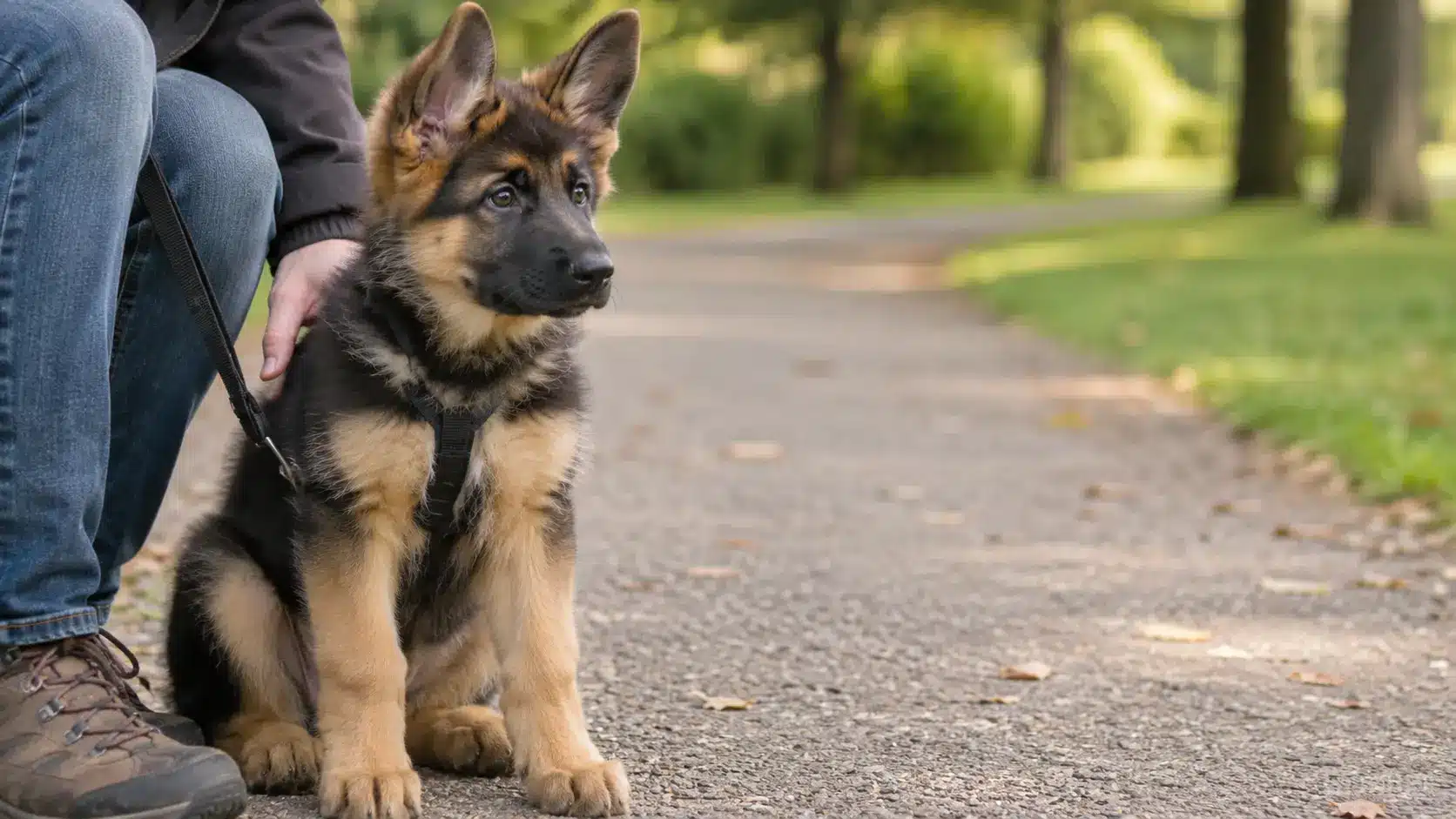
Increase distance first. Step away from the person, dog, sound, or environment causing concern. More space can help your dog recover enough to think and respond.
Make the next request easier. If your dog cannot focus near a distraction, move farther away. Ask for a skill they know well and reward a successful response, rather than repeating a cue louder.
Provide a choice. Let your dog move to a quiet area, especially during visits from guests or family gatherings. A safe resting place should not become a spot where strangers follow them.
Look for a pattern. Brief notes about the setting, distance, and signals can help a trainer understand what your dog finds difficult. Include health changes too; pain and illness can affect behavior.
A simple observation exercise
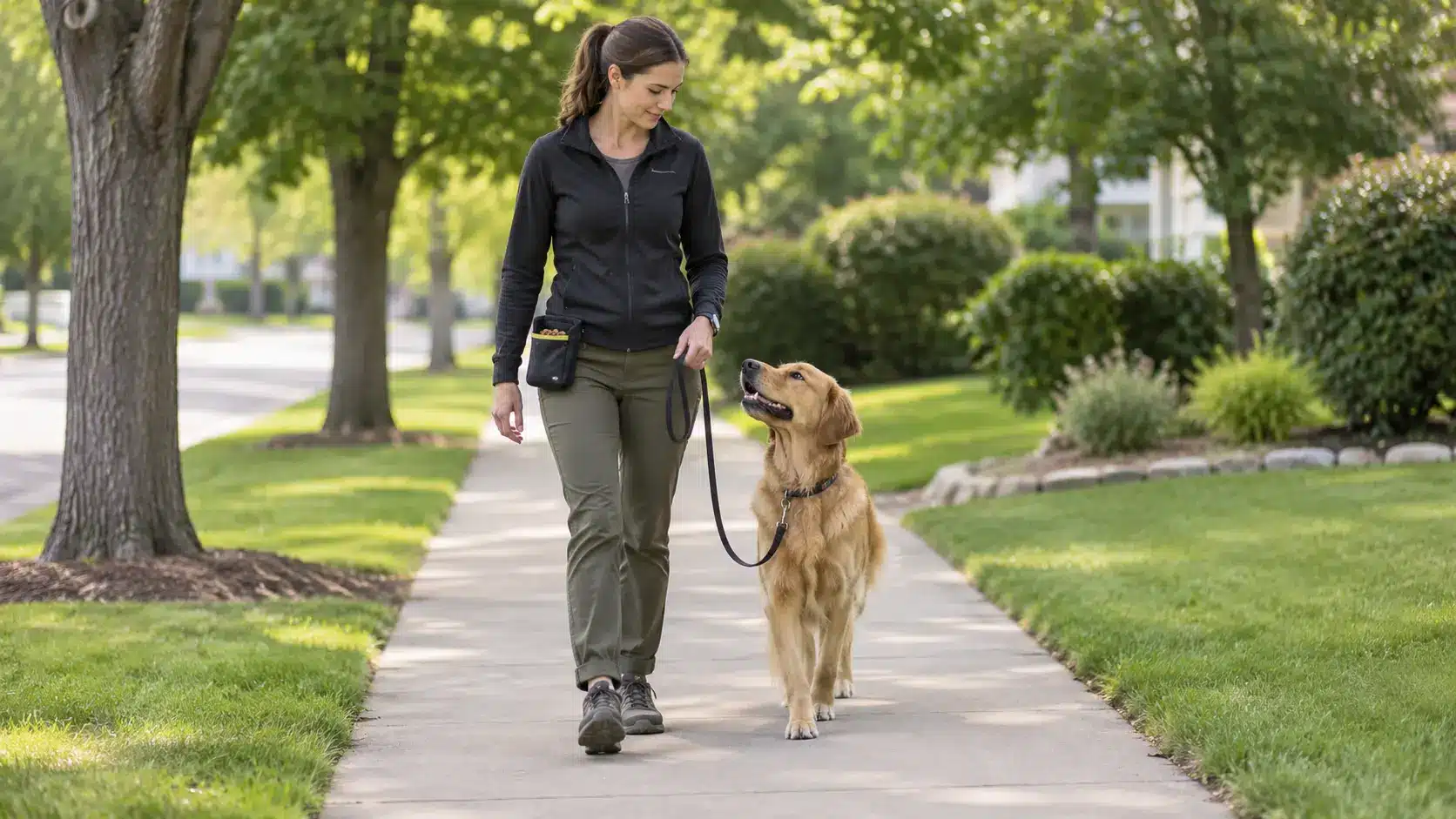
On a calm walk, spend two minutes observing your dog without giving extra commands. Notice their ears, tail, pace, mouth, and where they choose to look. Then compare those observations with a slightly busier environment, staying far enough away that your dog can remain comfortable.
You are not testing how much stress your dog can tolerate. You’re building a better understanding of their normal behavior and when they need help.
When professional support makes sense
If your dog frequently freezes, hides, growls, lunges, or appears distressed in everyday settings, a personalized training plan can help you identify triggers and build safer responses. Sudden behavior changes should also be discussed with your veterinarian to rule out a medical problem.
Ultimate K9 offers private dog training at our Graham facility, with a focus on individual behavior, clear communication, and realistic progress. Learn more about Belynda Moore and our training approach or contact Ultimate K9 to discuss your concerns.
Does a wagging tail always mean a happy dog?
Is lip licking always a stress signal?
Should I correct my dog for growling?
The takeaway
The most helpful question is not simply “What is my dog doing?” but “What is my dog communicating, and how can I make this situation easier?” Learning to recognize stress signals gives you a head start on better training and safer interactions.
3 Responses