
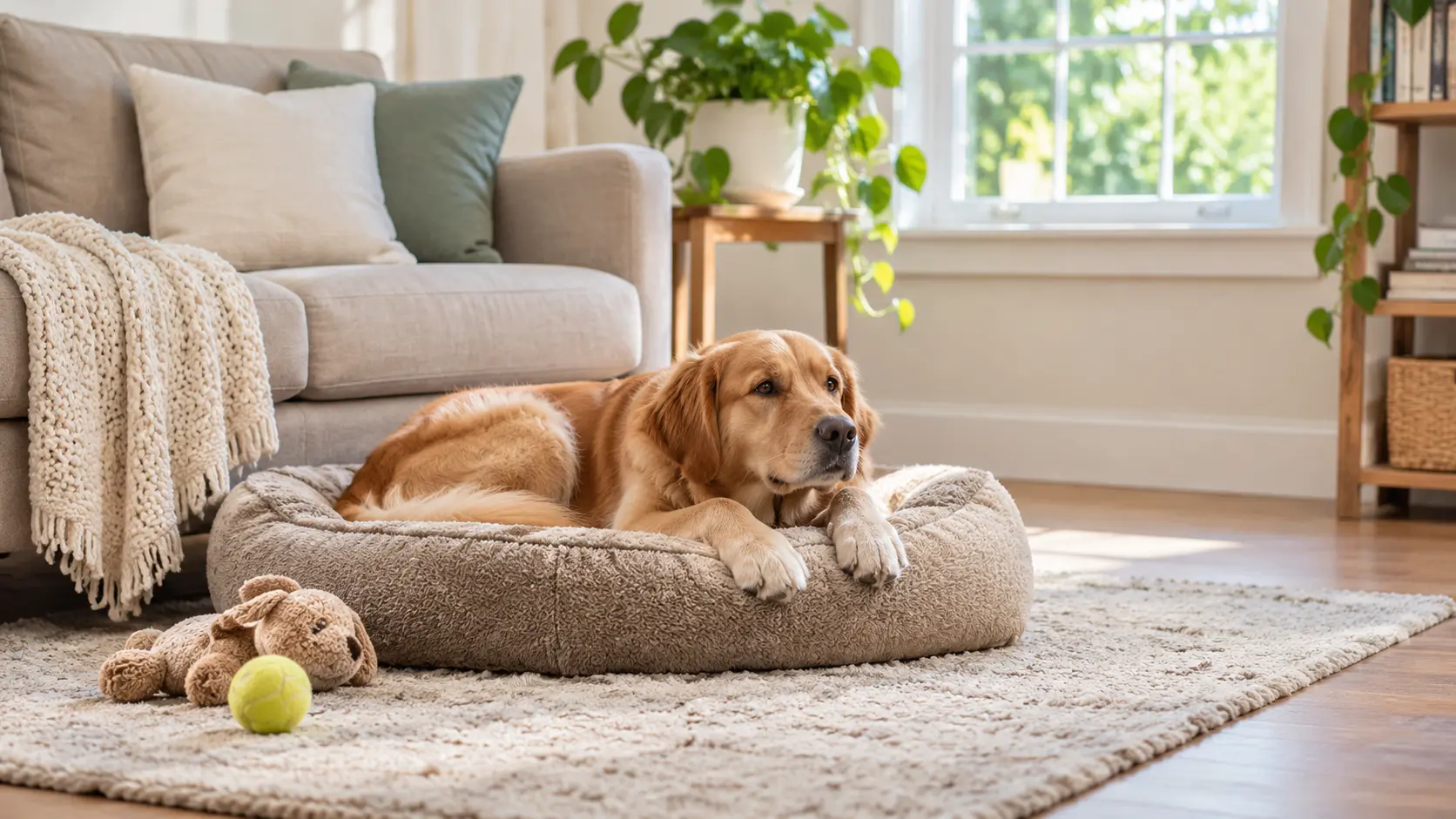
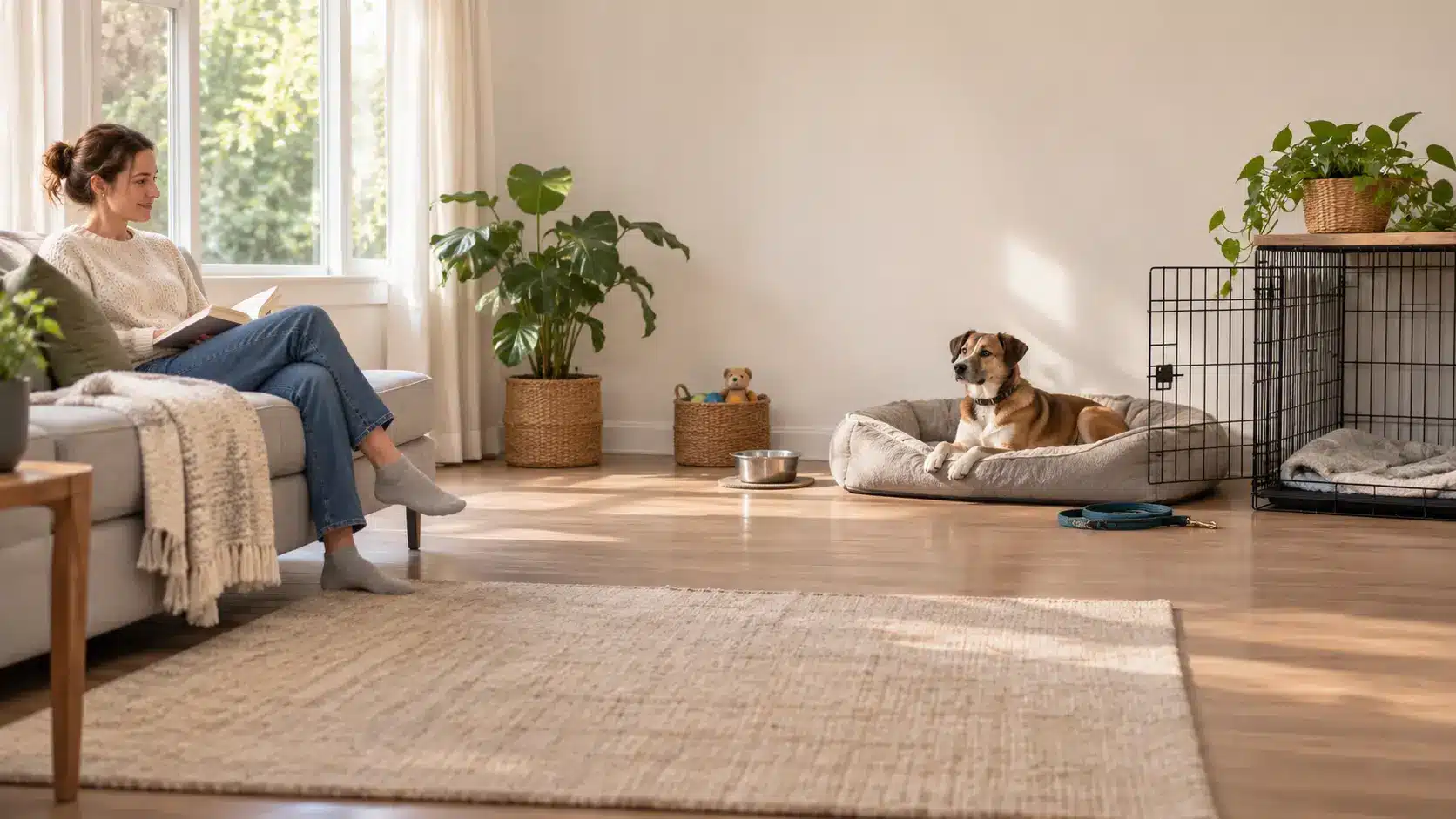
Does your dog hover under your feet while you cook, rush toward guests, or follow every movement around the house? One of the most useful skills you can teach is a simple cue: “place.” It gives your dog a clear destination and an activity they can understand while everyday life keeps moving around them.
If you want to learn how to teach your dog the place command, start with a comfortable mat and small rewards. You do not need a complicated setup or an hour-long training session. The goal is to teach your dog a predictable behavior, then make it reliable in different situations.
What does the place command mean?
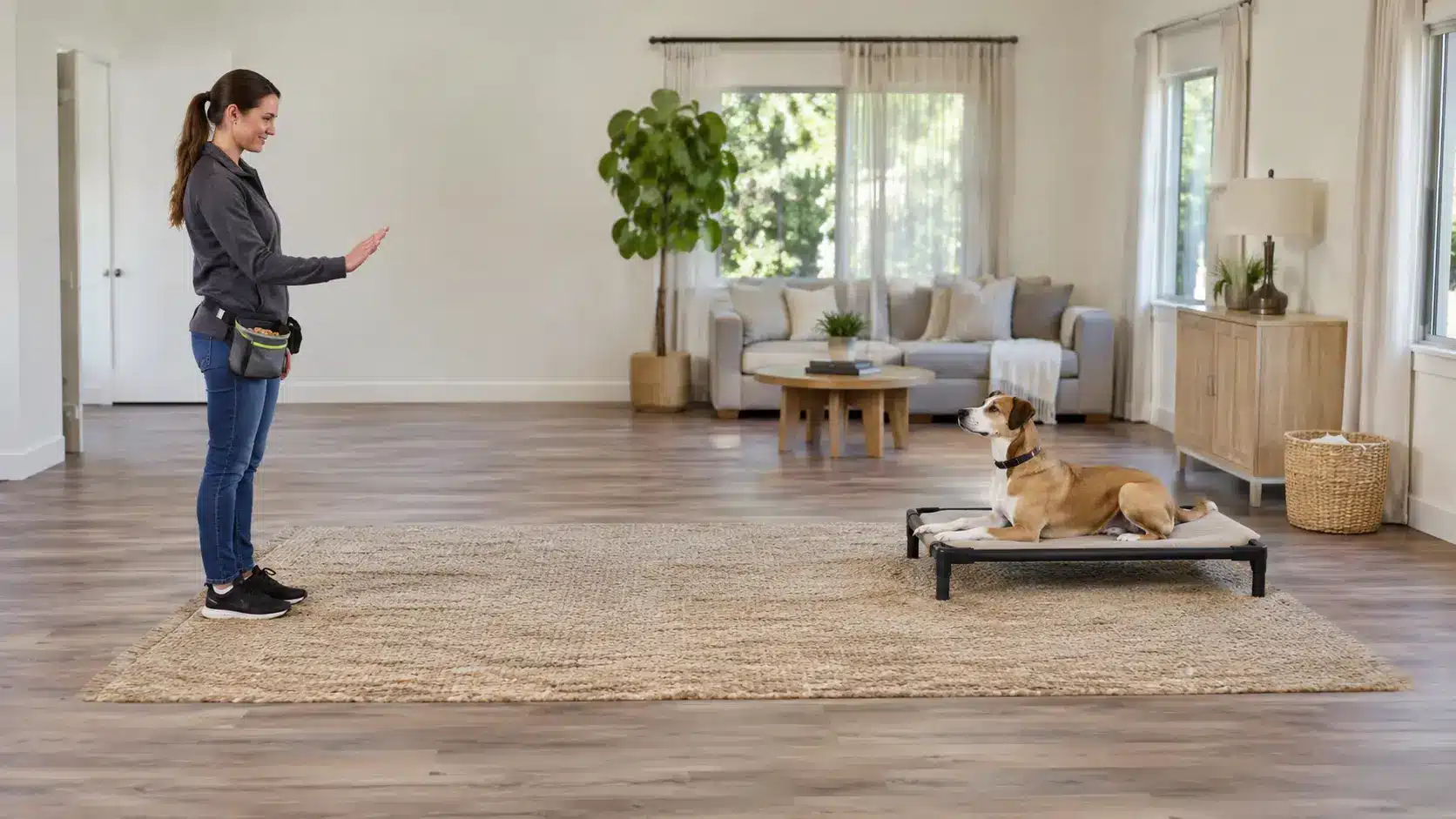
The place command asks your dog to go to a designated bed, mat, cot, or other clearly defined spot and remain there until released. The location becomes a visual target that makes it easier to teach your dog the instruction.
Unlike simply telling your dog “no” when they get underfoot, place gives them something positive to do. It can be useful when:
⦁ Someone comes to the door.
⦁ You are cooking or eating a meal.
⦁ You need space to carry groceries or clean.
⦁ Your dog needs help settling in a new environment.
⦁ You want to practice waiting and impulse control around distractions.
Place is not a punishment or a way to force a frightened dog to stay near something that scares them. When you teach your dog the place command, it should become a familiar and rewarding skill.
Step 1: Choose a comfortable, clearly defined spot
Start with a non-slip mat, dog bed, or stable raised cot that gives your dog enough room to stand, turn, and lie down comfortably. Place it in a quiet part of the room, away from the front door and busy foot traffic.
Use the same spot while your dog learns. Once you teach your dog the place command and the behavior becomes reliable, you can teach dog to go to bed on cue and practice with a similar mat in other rooms or locations.
Have small, high-value treats ready. Keep the first sessions short so the dog finishes engaged rather than frustrated.
Step 2: Reward your dog for approaching the mat
At first, you do not need to say “place.” Let your dog notice the mat. When they look at it, sniff it, or place a paw on it, mark that choice with “yes” and reward near or on the mat.
Gradually reward more complete steps: one paw, two paws, then all four paws. If your dog seems confused while you teach your dog the place command, you can gently lure them onto the mat with a treat and reward them as soon as they step onto it.
Keep rewards close to the mat as you teach dog to go to bed, so your dog learns that the good things happen on the designated spot, not across the room.
According to the American Kennel Club, teaching a dog to go to a designated mat or bed involves rewarding small steps, gradually increasing duration, and introducing distractions only after the dog understands the behavior. Copy paragraph
Step 3: Add the word “place”
When your dog is willingly moving onto the mat, say “place” just before they start. Mark and reward when all four paws are on the mat. Repeat several times to teach your dog the command, then pause and see whether your dog can respond to the cue without following a visible treat.
If the dog hesitates during dog mat training, make the exercise easier. A single clear cue followed by guidance is more effective than repeating “place” over and over.
You may encourage a sit or down once the dog arrives, but keep your first goal simple: go to the mat when asked.
Step 4: Teach a separate release cue
A reliable place behavior also needs a clear ending. Choose a word such as “free” or “okay,” say it, and invite your dog off the mat. Tossing a treat a short distance away can help teach your dog to understand the release cue at first.
Then ask your dog to return to place and reward the next success. The release cue tells your dog that the exercise is complete. Without it, dogs may learn to jump on the mat briefly, grab a treat, and leave immediately.
Step 5: Build duration in small pieces
Begin dog mat training by rewarding your dog for staying on the mat for one or two seconds. Gradually increase that time, delivering occasional rewards while they remain there.
Be careful not to increase the duration too quickly. If the dog repeatedly walks off, shorten the interval and reward sooner. You are building a habit of comfortable staying, not waiting for the dog to make a mistake.
If your dog seems restless during dog mat training, consider whether they need a bathroom break, movement, or a quieter location before practicing again.
Step 6: Add distance and everyday distractions
Once your dog understands the cue and release, take one small step away, return, and reward them for remaining on the mat. Build toward a few steps, then moving around the room.
Only after those skills are solid should you add distractions. Start with a quiet kitchen activity or a family member walking past. Later, practice with a soft knock at the door or a familiar visitor arriving. Keep the difficulty manageable and return to easier work when needed.
Duration, distance, and distractions should grow separately. Asking a new learner to stay for ten minutes while guests enter and food is on the table is likely too big a jump.
Use “place” in everyday routines
The best time to practice is not necessarily when your dog is already overexcited. Work before guests arrive and before dinner begins. Reward calm behavior on the mat, then release your dog when the activity is finished.
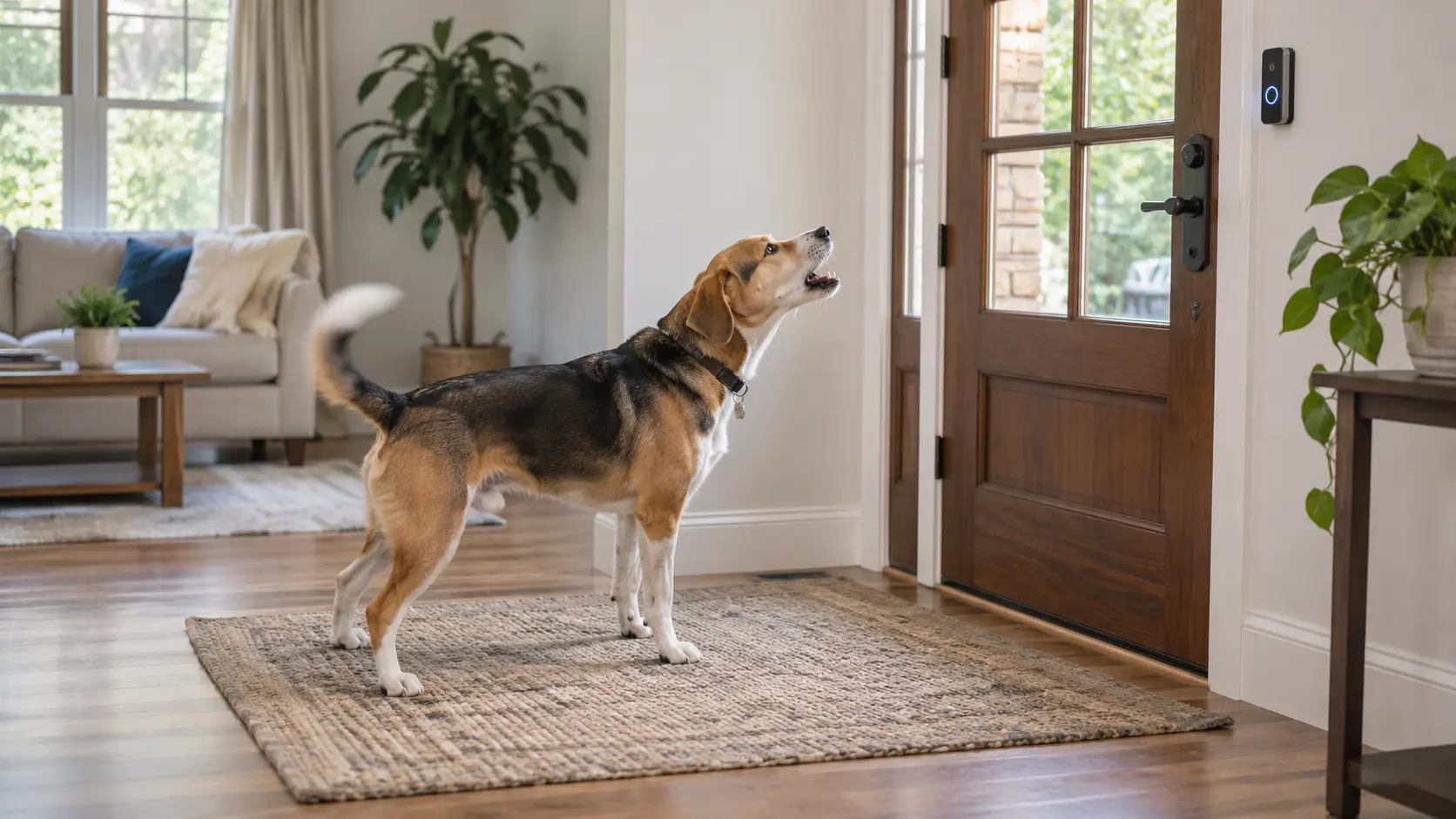
Over time, the cue can become part of a predictable household routine: doorbell rings, dog goes to mat, person handles the door. You can also pair it with other skills such as a doorway “wait” or polite leash manners.
If your dog is frightened of visitors, do not require them to remain near the visitor during dog mat training. Give them a safer retreat and seek appropriate professional guidance.
Mistakes that make place training harder
Using the mat only when your dog is in trouble. Practice during calm, positive moments so the mat remains a good place to be.
Releasing inconsistently. If your dog is rewarded for leaving whenever they choose, the duration part of the cue will be less clear.
Increasing distractions too quickly. Work at a level where your dog can still understand and succeed.
Expecting place to replace exercise or enrichment. Dogs still need appropriate movement, play, and mental stimulation; place is one useful skill, not an all-day requirement.
Frequently asked questions
Can I teach place with an ordinary dog bed?
Is the place command the same as “stay”?
What if my dog keeps leaving the mat?
Build practical obedience with Ultimate K9
At Ultimate K9 in Graham, WA, we use individualized training to help owners build communication, structure, and reliable everyday manners. The place command is one piece of that foundation. For more guidance, explore our Silver Program or learn about private dog training in Graham.
One Response