
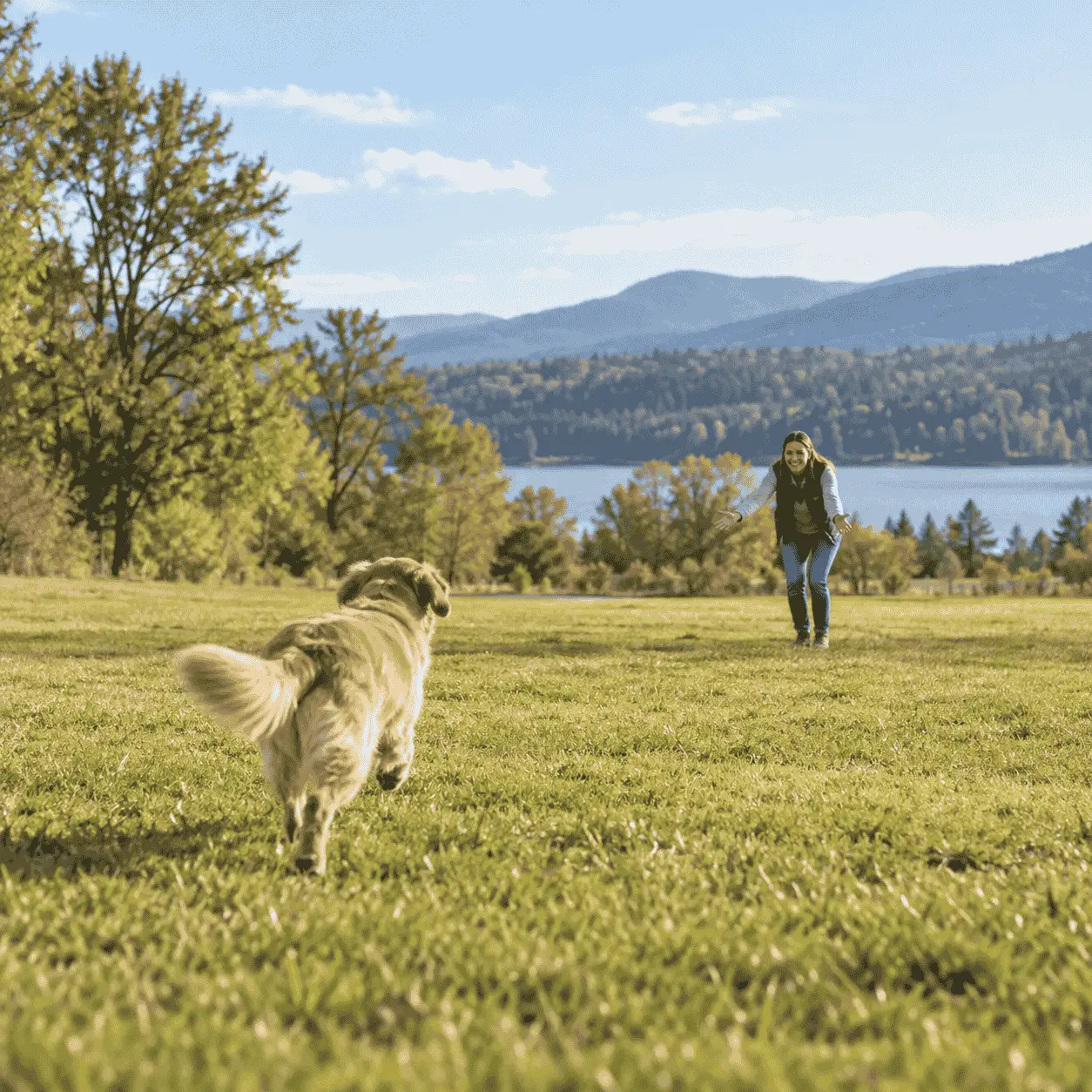
Teaching your dog to come when called is one of the most important skills in dog training.
Teaching your dog a reliable recall can make everyday life easier, give them more freedom, and help keep them safe in certain situations.
But recall is also one of the behaviors owners often struggle with most.
A dog may come perfectly inside the house but ignore the owner when they see another dog, smell something interesting, or become excited outside.
The key is understanding that recall is not just a command. It is a behavior that must be built through motivation, repetition, communication, and gradually increasing levels of difficulty.
Start in an Easy Environment
When teaching recall, begin somewhere your dog is likely to succeed.
This might be:
- Inside your home
- In a hallway
- In a fenced backyard
- In a quiet training area
Avoid starting in a highly distracting location.
If your dog is surrounded by other dogs, wildlife, children, or exciting smells, expecting a reliable recall without building a strong foundation is asking for advanced-level behavior too soon.
Make Coming to You Worthwhile
Your dog needs a reason to choose you over the environment.
In early recall training, reinforce successful responses generously.
Depending on your dog, rewards might include:
- High-value food
- Praise
- Toys
- Tug
- Play
- Running together
- Access to another activity
The reward should be something your dog genuinely values.
Avoid Calling When You Cannot Follow Through
One common mistake is repeatedly calling a dog when the owner has no way to reinforce the response.
For example, during off leash dog training at a park, if your dog is running freely and unlikely to come back, calling them 10 times teaches them that the command can be ignored.
Instead, use management while the behavior is developing.
Why Long-Line Training Is So Useful
A long line gives the dog more freedom while still allowing the handler to maintain control.
A long line can help you:
- Practice recall at greater distances
- Prevent the dog from running away
- Reinforce the command consistently
- Introduce mild distractions safely
The goal is not to drag the dog back to you.
The long line is a communication and safety tool while reliability is being developed.
Increase Difficulty Gradually
Once your dog responds well in a quiet environment, slowly increase the challenge.
A good progression might look like:
- Indoors
- Backyard
- Quiet outdoor area
- Mild distractions
- Greater distance
- Moderate distractions
- Real-world environments
Do not jump from step one to step seven.
Reliability is built through success.
Do Not Poison Your Recall Cue
In dog recall training, if coming to you always means something unpleasant, your dog may become less motivated to respond.
For example, avoid making recall consistently mean:
- Play is over
- The dog is being punished
- The dog is going into the crate
- The dog is leaving the park
- Something enjoyable is being taken away
Sometimes call your dog, reward them, and then release them back to what they were doing.
This teaches them that coming to you does not always end the fun.
Balanced Recall Training
Balanced training builds reliable recall by combining positive reinforcement with clear expectations and accountability.
We want the dog to understand that coming when called is highly rewarding.
But we also want the dog to understand that once the behavior is known, the cue is not optional.
The exact training approach may vary depending on:
- Age
- Temperament
- Confidence
- Motivation
- Training history
- Environment
- Level of understanding
Some dogs need more motivation.
Others need clearer structure.
Others may need more help learning how to respond around high distractions.
There is no single approach that fits every dog.
Avoid Overusing the Recall Command
Do not call your dog for every small thing.
If the cue is used constantly without meaning, it becomes background noise.
Use the recall cue intentionally.
Make it important.
Practice Short, Successful Sessions
Recall training does not need to last an hour.
Several short sessions throughout the week can often be more productive.
End while your dog is still engaged and successful.
Quality matters more than length.
Real-World Recall Takes Time
A dog that responds in your backyard is not automatically ready for off-leash freedom.
True reliability means the dog can respond around real-world distractions.
That may take weeks or months of structured training.
There is no benefit in rushing.
Safety Comes First
Until your dog’s recall is truly reliable, use:
- A leash
- Long line
- Secure fencing
- Controlled environments
Do not test recall in dangerous places such as:
- Busy roads
- Unfenced areas near traffic
- Uncontrolled dog environments
Training should always prioritize safety.
Recall Is About Relationship and Communication
A strong recall is more than teaching a dog to run toward you.
It reflects:
- Engagement
- Trust
- Motivation
- Clear communication
- Consistency
- Training history
When all of those pieces come together, recall becomes much more reliable.
Ultimate K9 helps owners build practical obedience that works beyond the living room and in real-world situations.