

Crate training is one of the most useful foundational skills for many puppies and adult dogs.
When introduced properly, a crate can become a comfortable resting area, help support house training, provide a safe space during household activities, and make certain travel or veterinary situations easier.
However, successful crate training involves much more than placing your dog inside a crate and closing the door.
The goal is to help your dog become comfortable with the crate through positive experiences, gradual introduction, predictable routines, and clear communication.
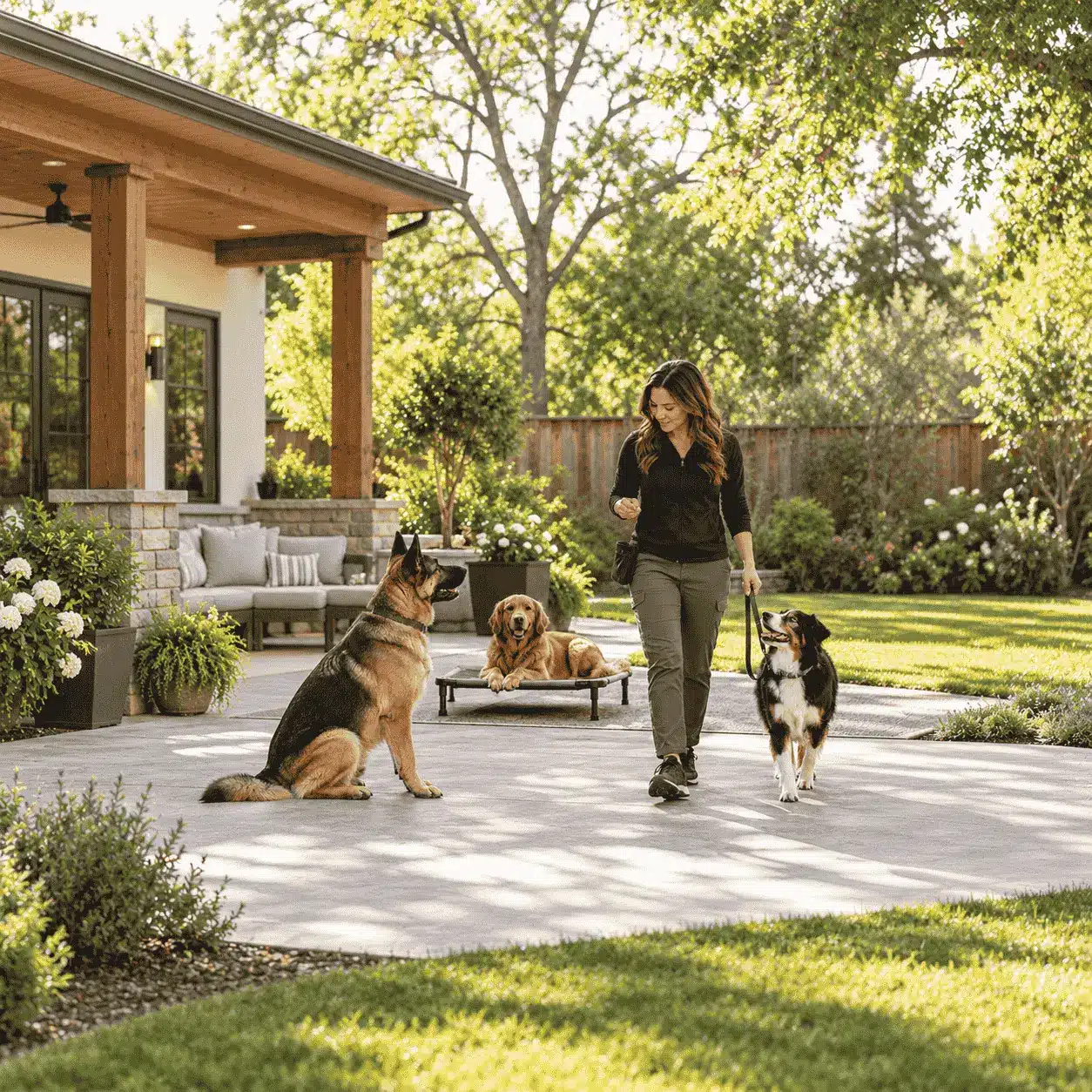
At Ultimate K9, we emphasize creating practical foundations that help both dogs and their owners feel more confident in everyday life.
Why Is Crate Training Important?
Crate training can support several areas of dog ownership.
House Training
Puppies are still learning where and when to eliminate.
An appropriately sized crate can support a consistent bathroom routine when combined with frequent opportunities to go outside.
However, a crate does not replace regular bathroom breaks or supervision.
Creating a Comfortable Resting Area
Many dogs benefit from having a quiet, predictable place to rest.
A crate can provide a designated space away from visitors, household activity, and distractions.
Preventing Unsafe Unsupervised Behavior
Young dogs may chew household items, investigate electrical cords, or swallow inappropriate objects.
Temporary, appropriate confinement can be useful while owners teach better household manners.
Supporting Daily Structure
A consistent routine involving exercise, training, meals, bathroom breaks, and rest can help dogs understand what to expect throughout the day.
Choosing the Right Crate
Before starting, make sure the crate is suitable for your dog.
Your dog should be able to stand comfortably, turn around, and lie down in a natural position.
Choose an appropriate crate style and place it somewhere with suitable temperature, ventilation, and limited distractions.
A quiet area near normal household activity is often a good starting point.
Remove collars or equipment that could become caught in the crate, and choose bedding or toys based on what is safe for your individual dog.
Step-by-Step Guide to Crate Training Your Dog
Step 1: Introduce the Crate Without Pressure
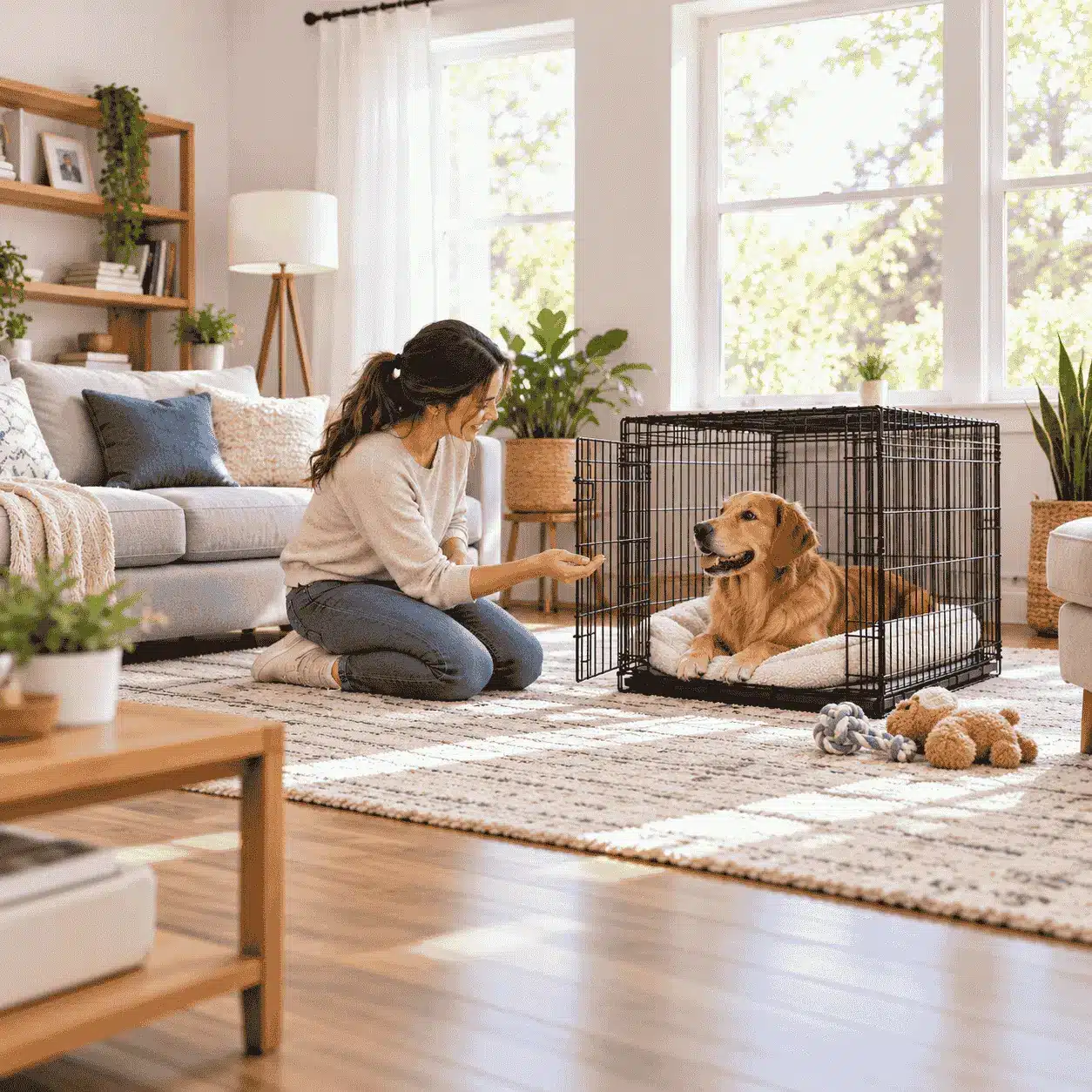
Begin with the crate door open.
Allow your dog to investigate it voluntarily.
You can place treats near the entrance and gradually farther inside.
Do not force your dog into the crate.
The first goal is simply to help them become comfortable approaching and entering it.
Step 2: Create Positive Associations
Once your dog willingly enters the crate, begin rewarding that choice.
You may provide treats, feed meals near or inside the crate, or offer a safe enrichment item.
Keep the door open during the earliest sessions.
The dog should learn that entering the crate is a positive and predictable experience.
Step 3: Introduce a Crate Cue
When your dog begins entering consistently, introduce a simple cue such as “crate” or “kennel.”
Say the cue, encourage your dog to enter, and reward the response.
Practice until the dog understands what the cue means.
Step 4: Practice Brief Door Closures
Once your dog is comfortable inside, briefly close the door while remaining nearby.
Start with only a few seconds.
Reward calm behavior and reopen the door before your dog becomes distressed.
Gradually increase the time as your dog’s comfort improves.
Step 5: Practice With You Nearby
Spend short periods sitting or moving around the room while your dog rests inside the crate.
Your presence can help make early sessions easier.
As your dog becomes comfortable, introduce short periods when you are briefly out of sight.
Step 6: Build Duration Gradually
Increase the time spent in the crate in manageable stages.
Some dogs progress quickly; others need considerably more time.
Watch your dog’s body language and behavior.
If your dog becomes distressed, reduce the difficulty instead of continuing to increase the duration.
Step 7: Introduce Short Departures
Once your dog is comfortable in the crate while you are home, you can begin practicing brief departures.
Keep early absences short enough for your dog to remain comfortable.
Gradually increase the duration based on their response.
How Long Can a Puppy Stay in a Crate?
There is no single schedule that is appropriate for every puppy.
Age, health, bladder development, sleep patterns, and individual needs all matter.
Young puppies need frequent bathroom breaks and opportunities for movement, play, social interaction, and rest outside the crate.
Extended confinement is not an appropriate substitute for training, exercise, or supervision.
If you are unsure about a suitable schedule, consult your veterinarian or an experienced puppy trainer.
Crate Training at Night
Nighttime crate training can be easier when the crate is initially positioned near the owner’s sleeping area.
This makes it easier to notice when a puppy needs a bathroom break and can help the puppy feel more comfortable in the new environment.
Establish a predictable bedtime routine, including a final bathroom opportunity and a calm transition to rest.
Some initial adjustment is normal, but persistent distress should not be ignored.
The goal is for the puppy to feel secure, not exhausted from crying.
What If Your Dog Cries in the Crate?
First, consider why the dog is vocalizing.
They may need to go outside, feel uncomfortable, or be distressed by the confinement.
Brief frustration and genuine panic should not be treated as the same thing.
Signs of significant distress can include frantic escape attempts, excessive drooling, persistent howling, and inability to settle.
If these occur, stop increasing the difficulty and seek qualified help.
A crate should not be used to force a dog through severe anxiety.
Balanced Training and Crate Structure
At Ultimate K9, we view crate training as part of a larger communication and lifestyle plan.
The emphasis is on helping the dog understand a clear routine while using positive reinforcement, management, reasonable boundaries, and consistency.
Dogs benefit from knowing when it is time to play, train, settle, and rest.
However, structure should be introduced gradually and adapted to the dog’s individual needs.
A crate should never be used as punishment or as a replacement for addressing fear or separation-related distress.
Common Crate Training Mistakes
Moving Too Quickly
Closing the door for too long before the dog feels comfortable can create negative associations.
Using the Crate as Punishment
The crate should remain a safe and predictable resting area, not a place associated with being punished.
Expecting the Crate to Fix Separation Anxiety
Crate training alone does not treat separation anxiety. Dogs with separation-related panic may actually injure themselves attempting to escape confinement.
Leaving Dogs Confined for Too Long
Dogs still need regular opportunities for exercise, bathroom breaks, mental enrichment, and social interaction.
Ignoring Individual Temperament
A confident puppy and a fearful rescue dog may need very different crate-training timelines.
Frequently Asked Questions
Is crate training good for puppies?
Should I cover my dog's crate?
Can an older dog learn crate training?
Start Building Better Habits Early
Crate training is one part of raising a confident, well-mannered dog.
Combined with clear communication, appropriate socialization, obedience training, and daily structure, it can support better household routines.
Ultimate K9 offers puppy training and individualized dog training in Graham, Washington, serving families throughout Puyallup, Tacoma, Spanaway, and nearby communities.
Need help with crate training, puppy behavior, or household manners?
Explore our Puppy Kindergarten program or Private Dog Training Lessons to get started.