


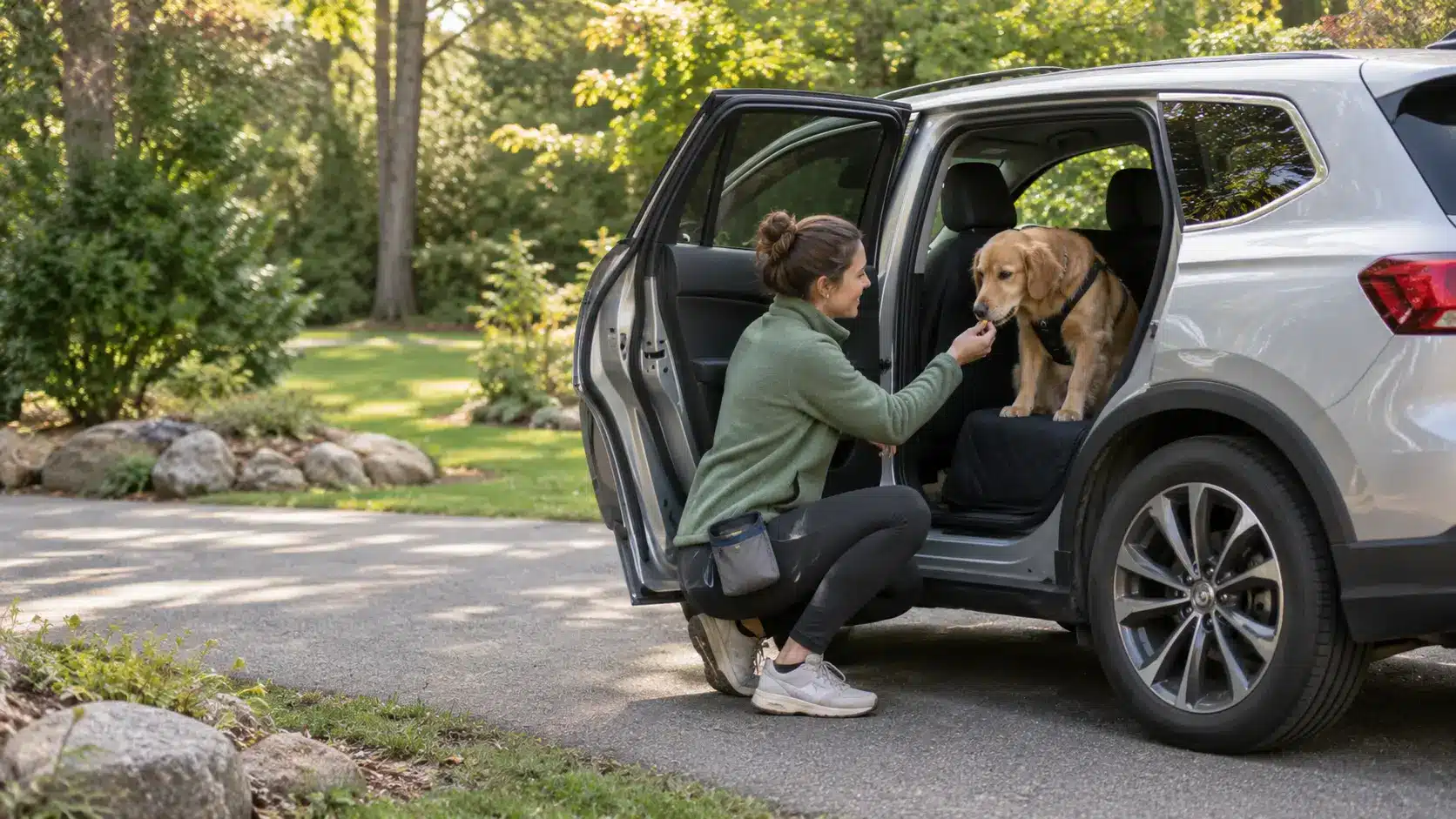
Some dogs hear the car keys and race to the door, excited for calm dog car rides. Others disappear under the kitchen table. If your dog trembles, whines, drools, or refuses to get into the vehicle, a simple drive to the park can feel like a major challenge.
Dog car anxiety can develop for different reasons. A dog might be frightened by the engine, restraint, movement, or a previous unpleasant trip. Another dog may be experiencing motion sickness. Because the symptoms can look similar, it helps to understand what is happening before trying to train through it.
Is it car anxiety or motion sickness?
Watch when the symptoms begin. A dog who becomes anxious as soon as the car door opens may be responding to the vehicle itself or an association with earlier trips. A dog who is calm while parked but starts drooling or vomiting after the vehicle moves may be nauseated.
Signs that deserve attention include panting in a cool car, repeated lip licking, excessive drooling, trembling, restlessness, whining, or vomiting. Some dogs experience both anxiety and motion sickness, which can make it difficult to achieve calm dog car rides. Feeling ill in a moving car can make the next trip frightening before it even begins.
Talk with your veterinarian if your dog becomes sick in the car, suddenly develops travel distress, or shows repeated drooling and vomiting. According to VCA Animal Hospitals’ guide to motion sickness in dogs, symptoms such as excessive drooling, restlessness, and vomiting may indicate motion sickness. Treating nausea or another medical concern can make behavior training more effective. Don’t give medications or supplements without veterinary guidance.
Why forcing car rides can make things worse
If your dog is already frightened, physically lifting them into a car and taking a long trip may increase that fear. The goal is to change how the dog feels about the steps involved in traveling, helping build positive associations for calm dog car rides rather than just keeping them quiet while distressed.
That means working below your dog’s stress threshold. A calm dog who can accept a treat or explore the parked vehicle is ready to learn. A dog who freezes, pulls away, or refuses normally appealing food may need an easier starting point.
Step 1: Make the parked car a positive place
Choose a quiet time when you don’t need to drive anywhere. Leave the engine off and begin several feet away from the car. Reward your dog for looking at it, sniffing nearby, or walking a little closer on their own.
Some dogs will be comfortable approaching the open door right away. Others may need several short sessions before they can. For calm dog car rides, let your dog’s response set the pace rather than aiming to get inside the car by a particular day.
Once your dog is relaxed near the car, encourage voluntary entry using a safe step or ramp if needed. Reward calm entry and allow them to step out again. Avoid shutting the doors immediately if that makes them nervous.
Step 2: Practice calm time inside without driving
With the vehicle safely parked, let your dog spend a brief, relaxed moment in their travel position. For calm dog car rides, practice with the crate or safety harness that will be used on future trips.
Gradually introduce small changes: sitting in the driver’s seat, closing a door, or fastening the restraint. Pair each easy step with something pleasant. To encourage calm dog car rides, if you notice stress signals, return to the earlier step where your dog was comfortable.
Remember that travel safety matters from the beginning. Use an appropriately fitted, vehicle-appropriate restraint or secured carrier. A loose dog can distract the driver and may be injured during a sudden stop.
Step 3: Introduce the engine and movement separately
When your dog is comfortable in the parked vehicle, start the engine briefly without driving. Reward calm behavior, switch it off, and end the session.
On another day, move the car a very short distance, perhaps within the driveway or around the block. Have another adult monitor the dog if possible so the driver can focus on the road. A short successful trip is better than a long ride that ends in panic or vomiting.
Increase distance gradually. If your dog shows signs of dog travel anxiety or becomes distressed, shorten the next session and consult your veterinarian when nausea is a possibility.
Step 4: Change what the trip predicts
For some dogs, every previous ride led to the veterinarian or groomer. Even if those visits were necessary, the car may have become a predictor of an uncomfortable event.
Once short rides are manageable, include brief trips to enjoyable, low-pressure places. Choose a quiet walking spot, a familiar friend, or a peaceful area where your dog can sniff. To help prevent dog travel anxiety, avoid crowded dog parks or busy events as your first “fun” destination.
The lesson becomes: Sometimes a car ride leads to a calm, pleasant experience—not only something difficult.
Step 5: Build a reliable pre-drive routine
Dogs often benefit from predictable sequences. For example: bathroom break, a few minutes to settle, calm entry, secure restraint, and a quiet departure. Keep the car comfortable and well ventilated. To help reduce dog travel anxiety, use familiar bedding if it can be placed safely with the restraint.
Never leave a dog unattended in a parked car, even for a quick errand. Temperature inside vehicles can change dangerously fast.
Common car-training mistakes
Jumping straight to a long ride
A half-hour drive is too much for a dog who is still worried about entering the vehicle. Scale the challenge to the dog’s current confidence.
Assuming every upset dog needs stricter obedience
Panting, drooling, and trembling may be signs of dog travel anxiety, reflecting genuine fear or nausea. These signs call for observation and, when appropriate, veterinary care—not harsher corrections.
Training only when there’s an appointment
Practice short sessions when you have time to stop early. Forced trips to necessary appointments can remain challenging while you work on the long-term plan.
When professional help is useful
If your dog panics around the car, has a bite risk during loading, or has persistent travel distress despite gradual practice, ask for professional guidance. A trainer can help with the behavior plan while your veterinarian addresses possible medical issues.
At Ultimate K9, we focus on individual dogs and the real-life situations families want to improve. Learn about our approach or contact our Graham dog training team for support.
Frequently asked questions
Can a dog grow out of car anxiety?
Should I feed my dog before driving?
How do I know when to increase the ride length?
The takeaway
Calmer car rides begin with understanding whether your dog is fearful, nauseated, or both. Build positive experiences in small steps, use safe travel equipment, and involve your veterinarian when symptoms suggest motion sickness.