

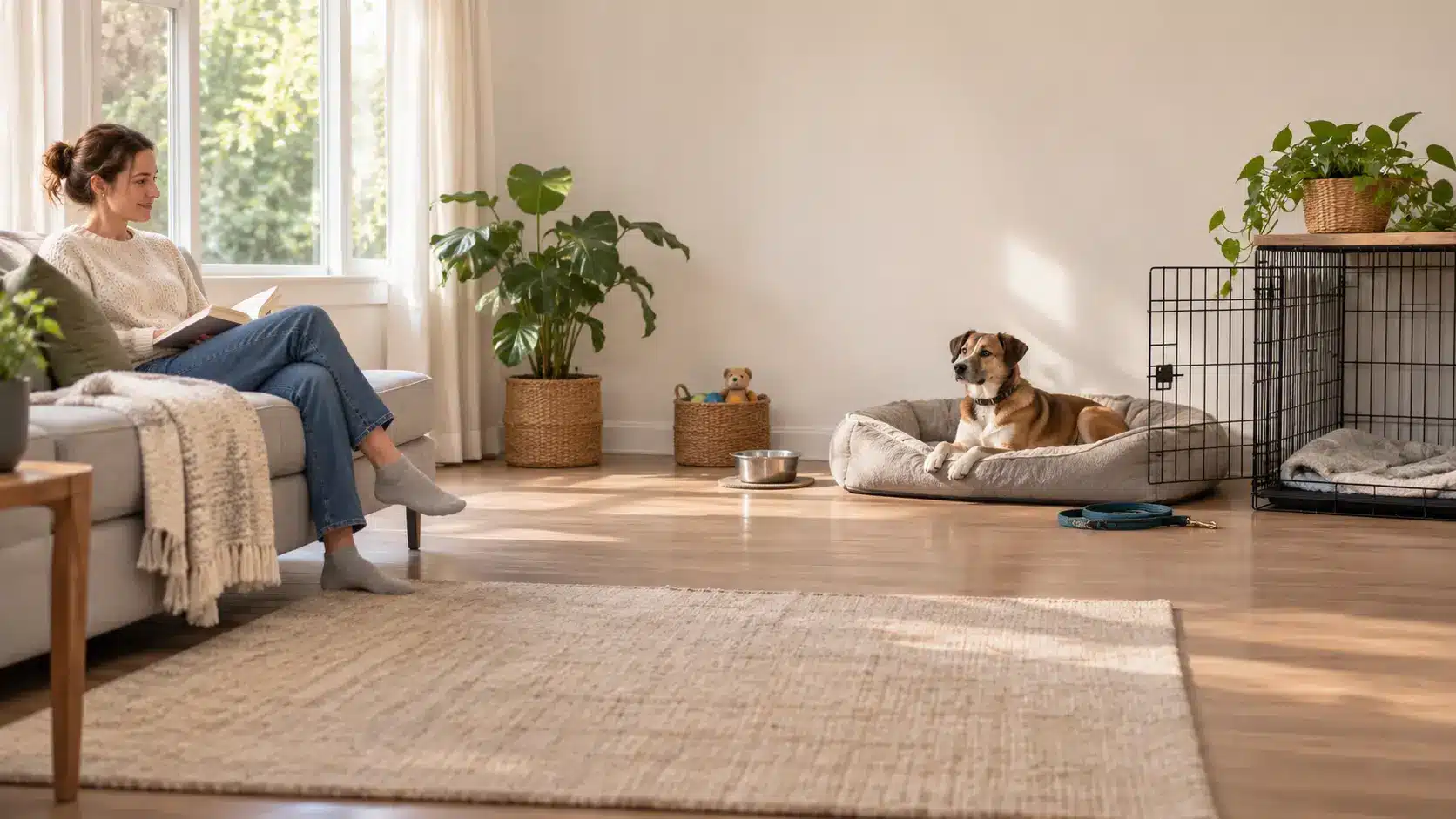
Has your confident, happy puppy suddenly become afraid of something they’ve seen a hundred times? Maybe they hesitate near the trash can, bark at someone wearing a hat, or refuse to walk past an object they ignored yesterday.
It can be confusing and worrying. One common explanation is a normal developmental stage known as a puppy fear period.
Understanding puppy fear periods helps you support your puppy’s confidence without overwhelming them. At Ultimate K9, Belynda Moore has spent more than 30 years raising and training puppies in Graham, Puyallup, Spanaway, and Tacoma, and every training plan takes into account each puppy’s temperament, experiences, and behavior.
Quick answer: Puppy fear periods are stages when puppies become more sensitive to new or unusual things. They’re commonly described as happening around 8–11 weeks and again sometime between about 6 and 14 months, though timing varies by puppy. Respond by giving your puppy distance, rewarding calm curiosity, keeping experiences short and positive, and never forcing them toward what scares them.
What Are Puppy Fear Periods?
As puppies grow, they move through important developmental stages. During some of them, they become more sensitive to people, objects, sounds, or unfamiliar places, and trainers call these stretches of heightened sensitivity “fear periods.”
Fear periods are often mistaken for stubbornness or defiance. In reality, your puppy is uncertain about the world around them, and their experiences during these stretches can leave a stronger impression than usual.
Not every puppy shows a clear fear period, though, and not every fearful reaction is developmental. Sudden fear can also follow a frightening experience, pain, illness, or a big change at home. Look at the whole picture before assuming it’s “just a phase.”
When Do Puppy Fear Periods Happen?
Fear periods are most often described in two stages:
The first fear period, commonly cited at around 8 to 11 weeks. This often overlaps with the time a puppy goes to a new home, which is one reason gentle, positive early experiences matter so much.
The second fear period, during adolescence, anywhere from about 6 to 14 months. According to the AKC’s guide to puppy fear periods, small breeds tend to hit this stage earlier than large and giant breeds. It can catch owners off guard because the puppy may already look like an adult dog.
These ranges are broad generalizations, not exact deadlines. Many fear periods pass within a few weeks, but there’s no fixed timeline. Watch how your puppy reacts to and recovers from new experiences rather than counting on a particular age.
Signs Your Puppy Is in a Fear Period
Common signs include:
Hesitating or refusing to approach familiar objects
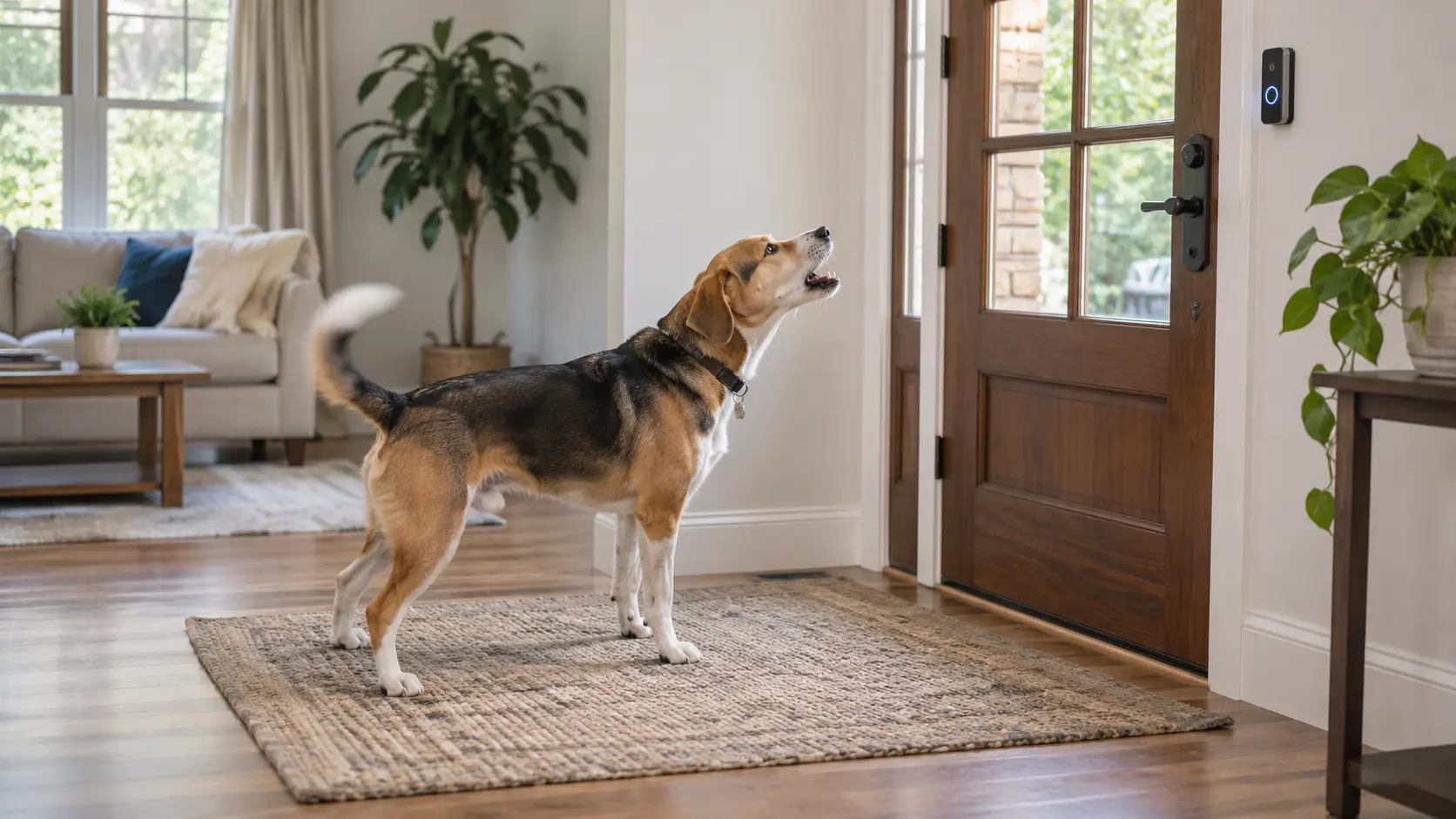
Barking at unfamiliar people, objects, or sounds
Avoiding places they used to enjoy
Hiding behind you or retreating
Freezing or refusing to move on walks
A lowered body, tucked tail, or ears pinned back
Refusing treats in new environments
Startling more easily than usual
These signs mean your puppy needs more distance and support. They do not automatically mean your puppy is aggressive or has a permanent behavior problem. Learn to read the early signals in our guide to dog body language and stress signs.
Fear Period or Something More?
| Typical fear period | Worth a closer look | |
|---|---|---|
| Onset | Gradual, around typical developmental ages | Sudden, after an injury, illness, or frightening event |
| Recovery | Bounces back fairly quickly with space | Struggles to recover even from mild surprises |
| Scope | Worried about specific new things | Avoids many everyday situations |
| Duration | Usually improves over a few weeks | Persists or gets worse over time |
| Behavior | Hesitates, barks, or retreats | Growls, snaps, or is distressed in familiar places |
If your puppy’s fear falls into the right-hand column, talk to your veterinarian and a qualified trainer.
Why Forcing Your Puppy to Face Fears Backfires
It’s natural to want to “toughen up” a nervous puppy by pulling them toward the scary object or asking strangers to pet them. Even with the best intentions, forced exposure can increase fear and leave your puppy feeling trapped.
A better approach gives your puppy enough space to observe from a comfortable distance, so new experiences stay manageable and positive.
How to Help Your Puppy Through a Fear Period: 7 Steps
Step 1: Recognize Discomfort Early
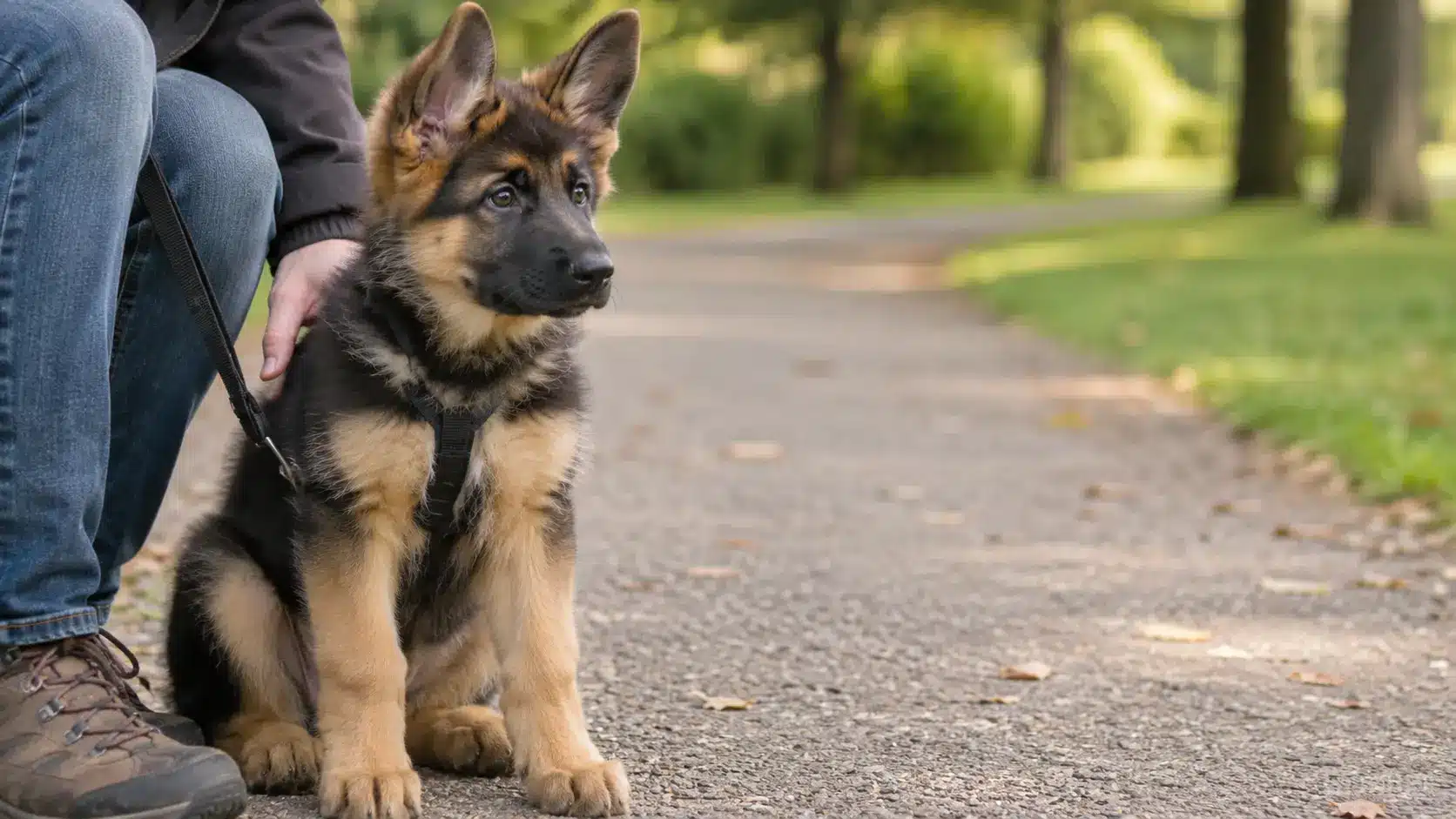
Watch your puppy’s posture, facial expression, movement, and willingness to explore. A puppy who calmly watches something from a distance and can still respond to you is ready to learn. A puppy who freezes or tries to bolt is not.
If you see discomfort, increase distance before the reaction grows.
Step 2: Let Your Puppy Observe From a Comfortable Distance
Say your puppy is worried about a stroller. Instead of walking straight toward it, move far enough away that your puppy can watch calmly.
Reward relaxed attention, let your puppy move away if they need to, and end the experience before stress builds. Confidence grows when puppies learn that new things can be observed safely, not when they’re pushed into them.
Step 3: Pair New Experiences With Good Things
When your puppy notices a bicycle, an unfamiliar sound, or a new person without getting overwhelmed, offer a small treat. Reward checking in with you and calm curiosity.
Never use food to lure a frightened puppy closer to something or someone they’re afraid of. Rewards should support comfort, not override your puppy’s warning signals.
Step 4: Keep Sessions Short
Your puppy doesn’t need to experience everything in one day. A good pattern: pick a quiet location, let your puppy observe, reward calm behavior, take a break, and leave while they’re still comfortable.
A few short, positive experiences are far more valuable than one long outing that ends with an overwhelmed puppy.
Step 5: Keep Routines Predictable
Consistent times for meals, potty breaks, play, training, and rest give your puppy a sense of security.
Puppies also need a lot of sleep, and an overtired puppy copes poorly with change. Give your puppy a quiet resting area, and don’t pack too many new experiences into one week.
Step 6: Keep Socializing, the Right Way
Socialization doesn’t mean making your puppy greet every person and dog. Good socialization might look like:
Watching people go by from a distance
Hearing everyday sounds at a comfortable volume
Exploring safe surfaces like grass, gravel, and ramps
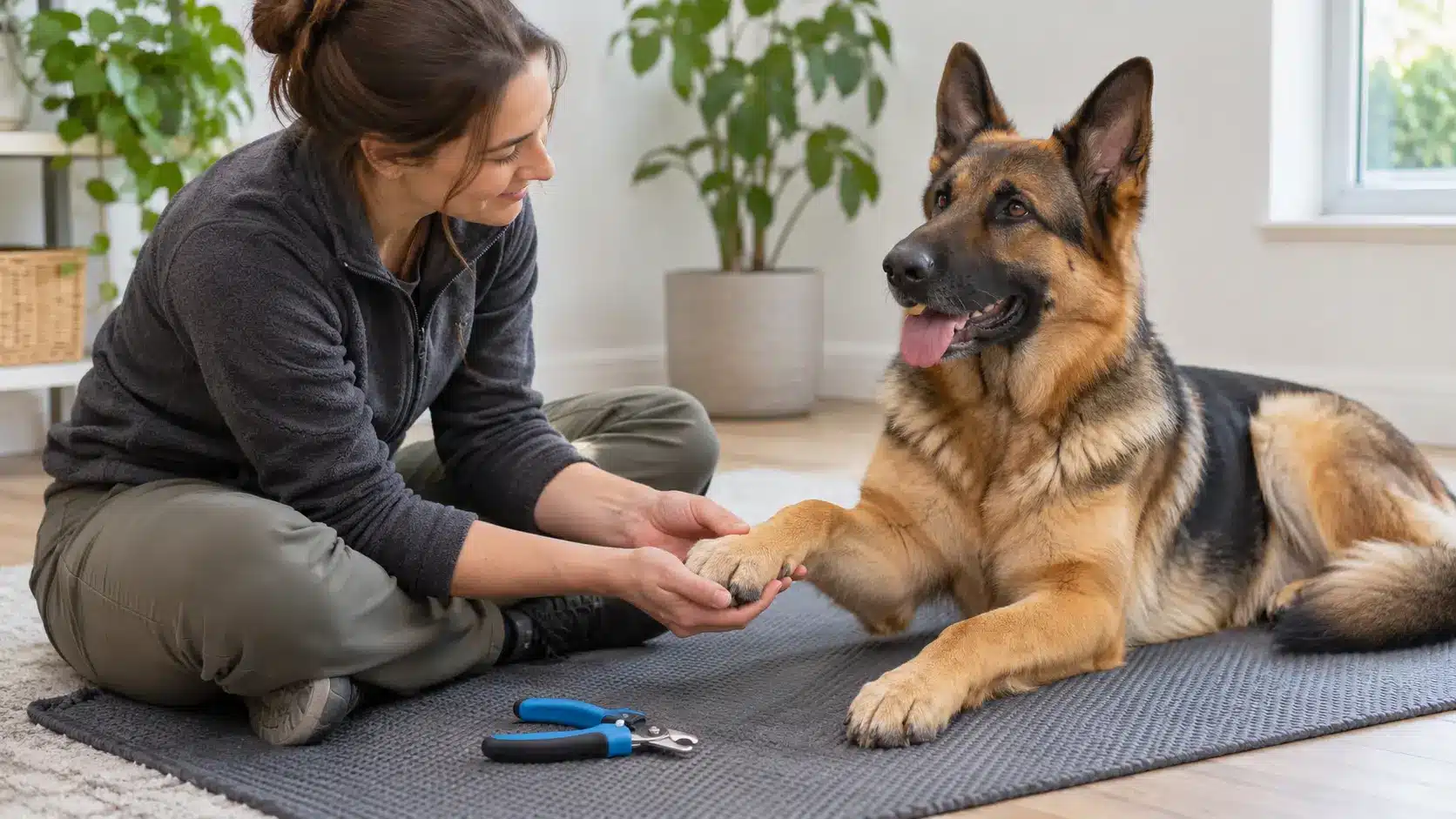
Enjoying gentle handling
Seeing bikes, cars, and strollers from a manageable spot
Follow your veterinarian’s advice about vaccinations and disease risk when choosing where to go. Your puppy can learn a lot just by watching. For more ideas, see how to introduce your dog to new people, dogs, and environments safely.
Step 7: Build Confidence With Foundation Skills
Simple skills give your puppy something familiar to lean on in new situations:
Responding to their name
Recall in safe, enclosed areas
Hand targeting (touching their nose to your hand)
Settling on a mat
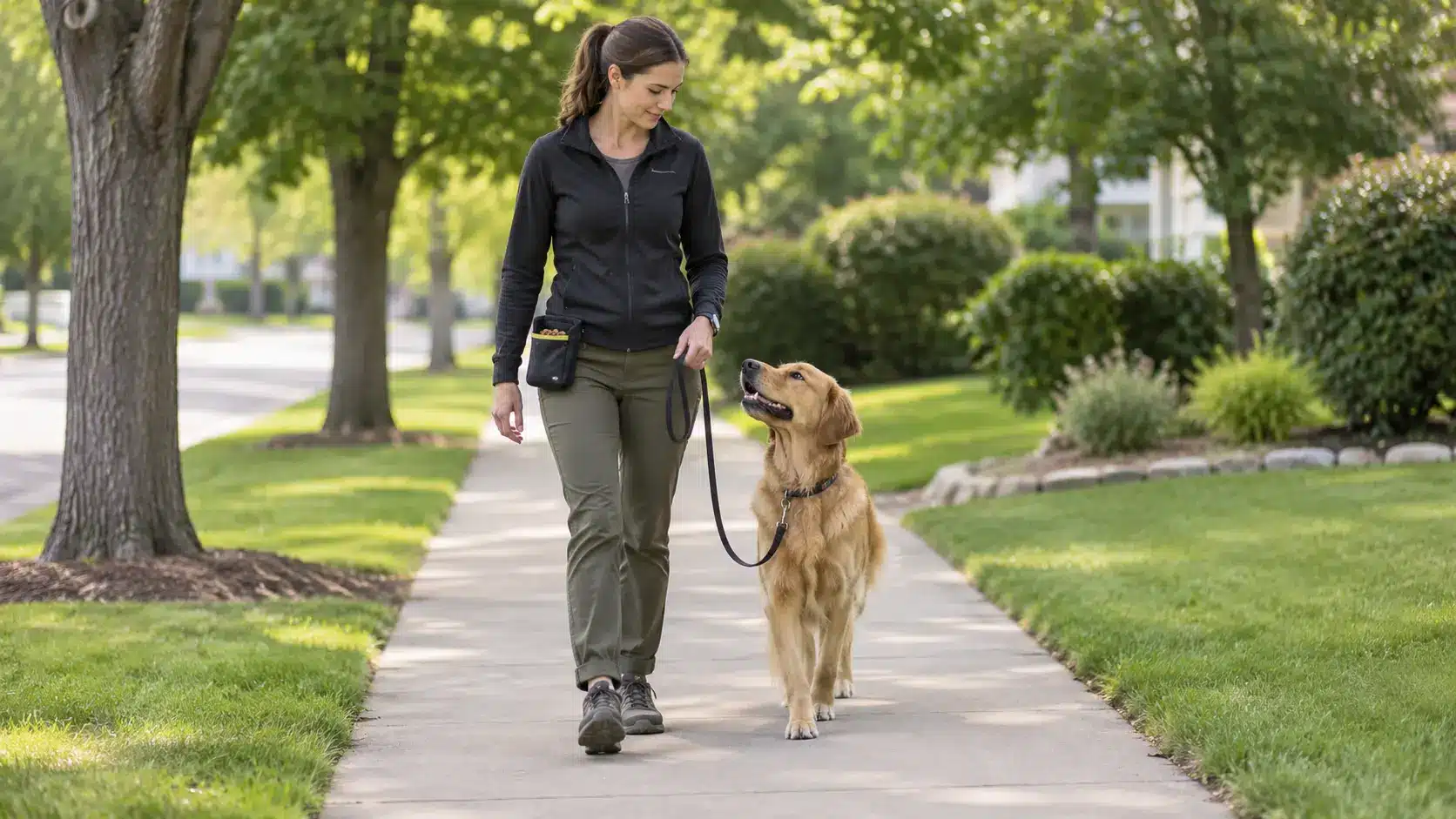
Gentle leash walking
Start at home and gradually take the skills to new places. Reward small successes, and make things easier if your puppy gets scared. Not sure when to begin? Read when you should start training a puppy.
Mistakes That Can Make Puppy Fear Worse
Forcing introductions. Puppies need choice and space.
Punishing fearful barking or retreating. This increases distress. Adjust distance and support your puppy instead.
Assuming serious fear will always fade on its own. Waiting too long can delay help your puppy needs.
Introducing too much too soon. Spread new experiences over many short sessions.
Ignoring sudden behavior changes. Abrupt fear, especially with other symptoms, can point to pain or illness. Check with your veterinarian.
When to Get Professional Help
Get extra support if your puppy:
Shows fear that keeps increasing
Can’t recover from mild surprises
Avoids many everyday situations
Growls or snaps when approached
Seems distressed even in familiar places
Your veterinarian can rule out medical causes, and an experienced trainer can build an individualized plan. If your older puppy stays generally nervous, read how to help an anxious dog build confidence.
Ultimate K9 offers structured puppy programs, including Puppy 101, Puppy Kindergarten, and Star Puppy Plus, as well as one-on-one private lessons.
Frequently Asked Questions
How long does a puppy fear period last?
How many fear periods do puppies have?
Should I comfort my puppy when they're scared?
Can a fear period cause aggression?
Should I stop socializing my puppy during a fear period?
Raise a Confident Puppy With Ultimate K9
A puppy who suddenly becomes cautious isn’t being disobedient. Development, experience, environment, and health can all play a role. Watch for stress signals, give your puppy space, and build confidence one positive experience at a time
Ultimate K9 helps puppy owners in Graham, Puyallup, Spanaway, Tacoma, and JBLM raise calm, confident dogs.
Claim your 50% off intro lesson, call 253-576-4458, or contact us to talk about your puppy.