


Does your dog rush ahead, zigzag across the sidewalk, or get so caught up in sights and smells that they forget you’re on the other end of the leash?
A reliable heel gives you clear communication and close control exactly when you need it: passing another dog, crossing a busy parking lot, or getting through a crowd. Learning how to teach a dog to heel isn’t about forcing a rigid position for an entire walk. It’s about building a clear skill you can switch on when it counts.
At Ultimate K9, Belynda Moore has spent more than 30 years teaching dogs and owners across Graham, Puyallup, Spanaway, and Tacoma how to walk together with structure, focus, and clear leash communication. Here’s how to get started.
Quick answer: To teach a dog to heel, pick one side (traditionally the left), reward your dog when their shoulder lines up with your leg, then build from one step to several steps, turns, and pace changes. Add a release word so your dog knows when heel is over, and introduce distractions gradually. Deliver rewards at your side, never out in front.
What Does “Heel” Mean in Dog Training?
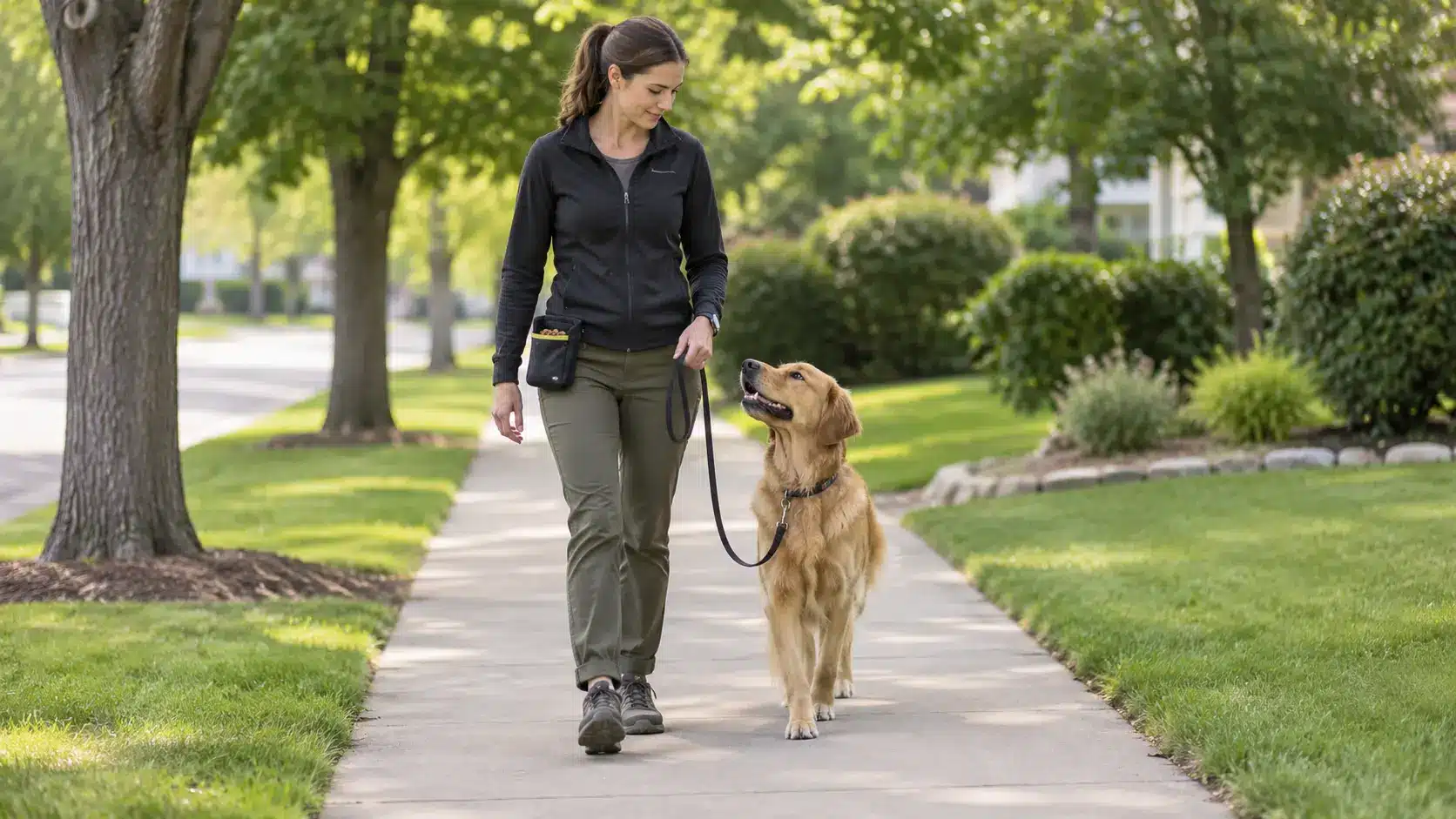
Heel asks your dog to walk close beside you in a set position, usually with their shoulder roughly even with your leg. Many trainers use the left side, the tradition in obedience and rally competition, but either side works for everyday life as long as you’re consistent.
Heel vs. Loose-Leash Walking: What’s the Difference?
| Heel | Loose-leash walking | |
|---|---|---|
| Position | Close at your side, in a set spot | Anywhere within the leash length |
| Attention | Focused on you | Free to sniff and explore |
| When to use it | Narrow sidewalks, passing dogs or people, parking lots, crowds | Relaxed everyday walks |
| Leash | Loose, dog stays in position | Loose, no pulling |
Both skills matter. Use heel when you need precision, then release your dog for relaxed walking and sniffing. If pulling is your main problem, start with our guide to why dogs pull on the leash.
Why Dogs Struggle With Heel Training
Dogs naturally move at a different pace than we do, and the world is full of interesting scents, people, dogs, and sounds. Training often stalls because of:
Starting in distracting places too soon
Rewards that come too late or land in the wrong spot
Repeating the cue over and over
Increasing difficulty too quickly
Demanding long stretches of focus
Pulling the dog into position with the leash
Whatever the problem, the answer to how to teach a dog to heel is the same: teach the position somewhere easy first, then add movement and distractions a little at a time.
How to Teach a Dog to Heel: 7 Steps
Step 1: Choose Your Heel Position
Pick one side and stick with it. With your dog nearby, use a treat to guide them alongside your leg. The moment their shoulder lines up with your leg, mark it with “yes” and reward.
Practice while standing still. Your dog should understand where heel is before you ask them to walk in it.
Step 2: Reward the Correct Position
Reward your dog each time they move back into position on their own. Deliver the treat right beside your leg, not out in front of you. Where the reward lands teaches your dog where to be.
A helpful tip from the AKC’s heel training guide: hold your treat hand near your chest between rewards. This keeps your dog from simply following the food or jumping for it.
Once your dog moves into position reliably, start saying “heel” just before they get there. Use one clear cue, said once.
Step 3: Take One Step Forward
Start with a single step. If your dog stays beside you, mark, reward, and reset. Build to two steps, then three, then short stretches indoors.
One accurate step teaches more than ten steps of pulling. Short, successful repetitions keep the picture clear for your dog.
Step 4: Add Turns and Pace Changes
Walk a few steps and make a wide, gentle turn. Reward your dog for following and staying in position. Then mix in short changes of pace, slowing down and speeding up.
Avoid harsh leash jerks that could startle your dog or knock them off balance. The goal is attention and coordination, with the leash as a communication tool rather than a way to drag your dog into place.
Step 5: Teach a Release Cue
Heel needs a clear beginning and a clear end. Choose a release word such as “free” or “okay.”
After a few successful steps of heel, say your release word and let your dog move to a comfortable loose-leash distance where it’s safe. This keeps heel distinct from an ordinary stroll and gives your dog time to sniff and decompress.
Step 6: Add Distractions Gradually
Once your dog heels reliably indoors or in the yard, move to a quiet outdoor space. Start with just a few steps, then slowly add mild challenges: a parked car, people in the distance, a slightly busier path.
If your dog loses focus, add distance and go back to an easier level. Don’t start next to a dog park or another strong trigger. If your dog nails it at home but tunes you out outside, read why your dog listens at home but ignores you outside.
Step 7: Use Heel in Everyday Life
Ask for heel when you:
Pass someone on a narrow sidewalk
Walk through a parking lot or across a street
Enter a vet clinic, pet store, or training space
Move through a short, busy stretch
Release your dog afterward when it’s safe. The goal is structure when you need it and relaxed walking the rest of the time. Pair heel with a solid “leave it“ and a reliable recall for safer walks all around.
Common Heel Training Mistakes
Expecting heel for the whole walk. Your dog needs time to sniff and explore. Use heel selectively.
Pulling your dog into position. This creates tension and confusion. Teach the target position first.
Rewarding in front of your body. This teaches forging ahead. Always reward at your side.
Adding difficulty too fast. Failed repetitions slow learning. Keep distractions manageable.
Forgetting the release cue. Without it, your dog can’t tell when focused walking is over.
How Long Does It Take to Teach a Dog to Heel?
Many dogs learn the basic position within a few short sessions. Holding heel reliably around real-world distractions takes longer, often weeks of consistent practice. Short daily sessions of five to ten minutes usually beat one long weekend session.
When Private Training Helps
Some dogs heel perfectly at home but fall apart around distractions. Others become overexcited or reactive on walks. If your dog lunges or barks at other dogs or people, it helps to understand the difference between reactivity and aggression.
Ultimate K9’s private lessons give you one-on-one help with leash communication and focus, and our group classes let you practice heel around real-world distractions.
Frequently Asked Questions
How long does it take to teach a dog to heel?
Should my dog heel on the left or right?
Can I practice heel off leash?
Is heel the same as not pulling on the leash?
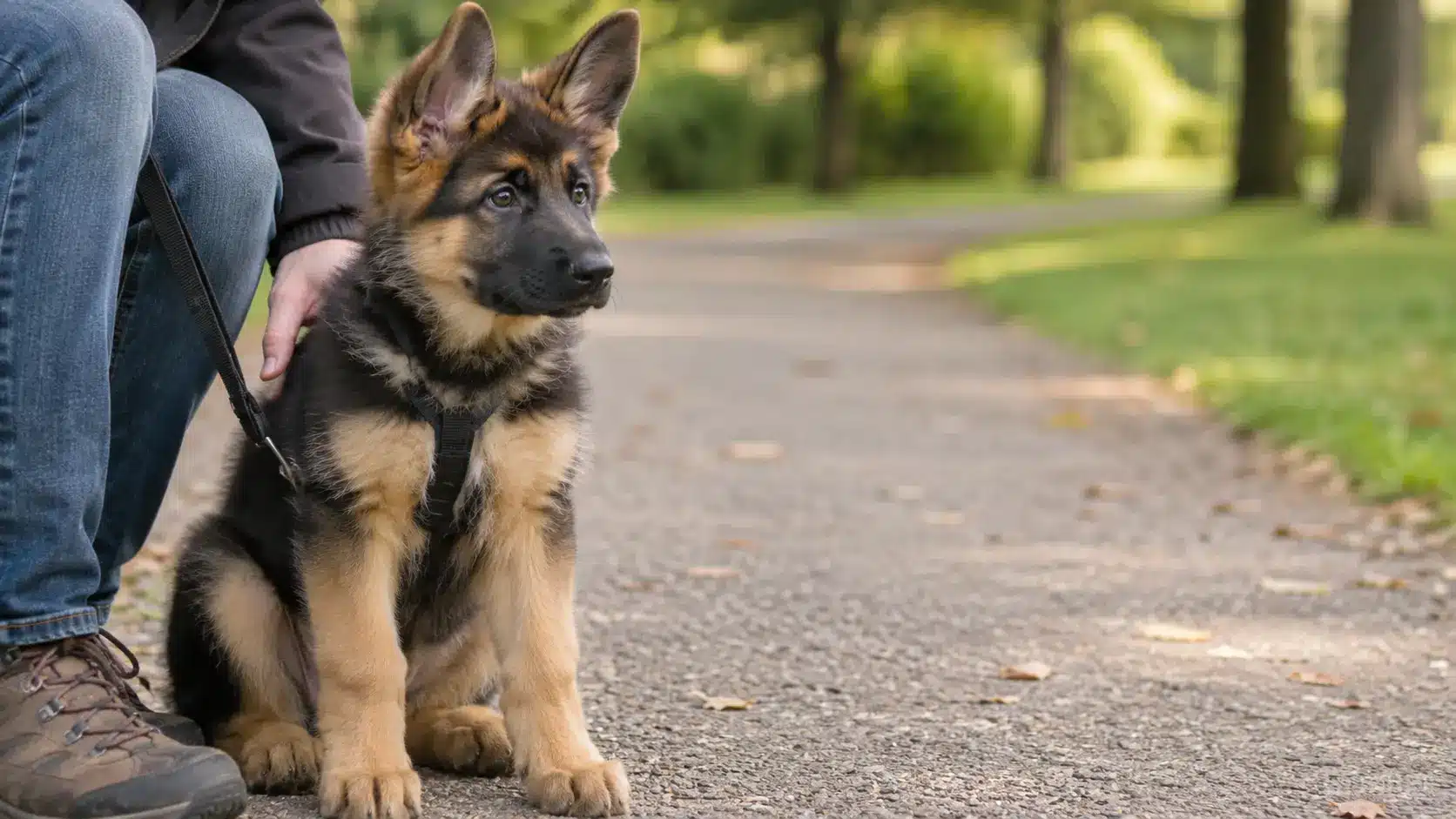
Can puppies learn to heel?
Walk With Confidence: Heel Training With Ultimate K9
Now you know how to teach a dog to heel. Start with the position, reward small wins, and build movement and distractions step by step.
Ultimate K9 helps families in Graham, Puyallup, Spanaway, Tacoma, and JBLM enjoy calmer, more focused walks.
Claim your 50% off intro lesson, call 253-576-4458, or contact us for help with heel and walking manners.