


Does your dog pull their paw away the moment you reach for it? Maybe they disappear when the clippers come out, or wriggle so much that dog nail trimming turns into a two-person wrestling match.
You’re not alone. These reactions are common, especially in dogs who’ve had an uncomfortable nail trim before or never learned what to expect during handling.
The good news: dogs can learn to accept, and even calmly cooperate with, nail trims and paw handling through small, predictable steps. At Ultimate K9, Belynda Moore has spent more than 30 years helping dogs across Graham, Puyallup, Spanaway, and Tacoma build confidence and cooperation. Here’s the step-by-step approach we recommend.
Quick answer: To make dog nail trimming easier, start by rewarding light touches near the paw, build up to brief paw lifts, introduce clippers or a grinder at a distance, rehearse a “mock” trim without cutting, then trim just one nail per session. Keep sessions short, stop before your dog gets stressed, and ask your veterinarian to check for pain if handling resistance starts suddenly.
Why Some Dogs Hate Having Their Paws Touched
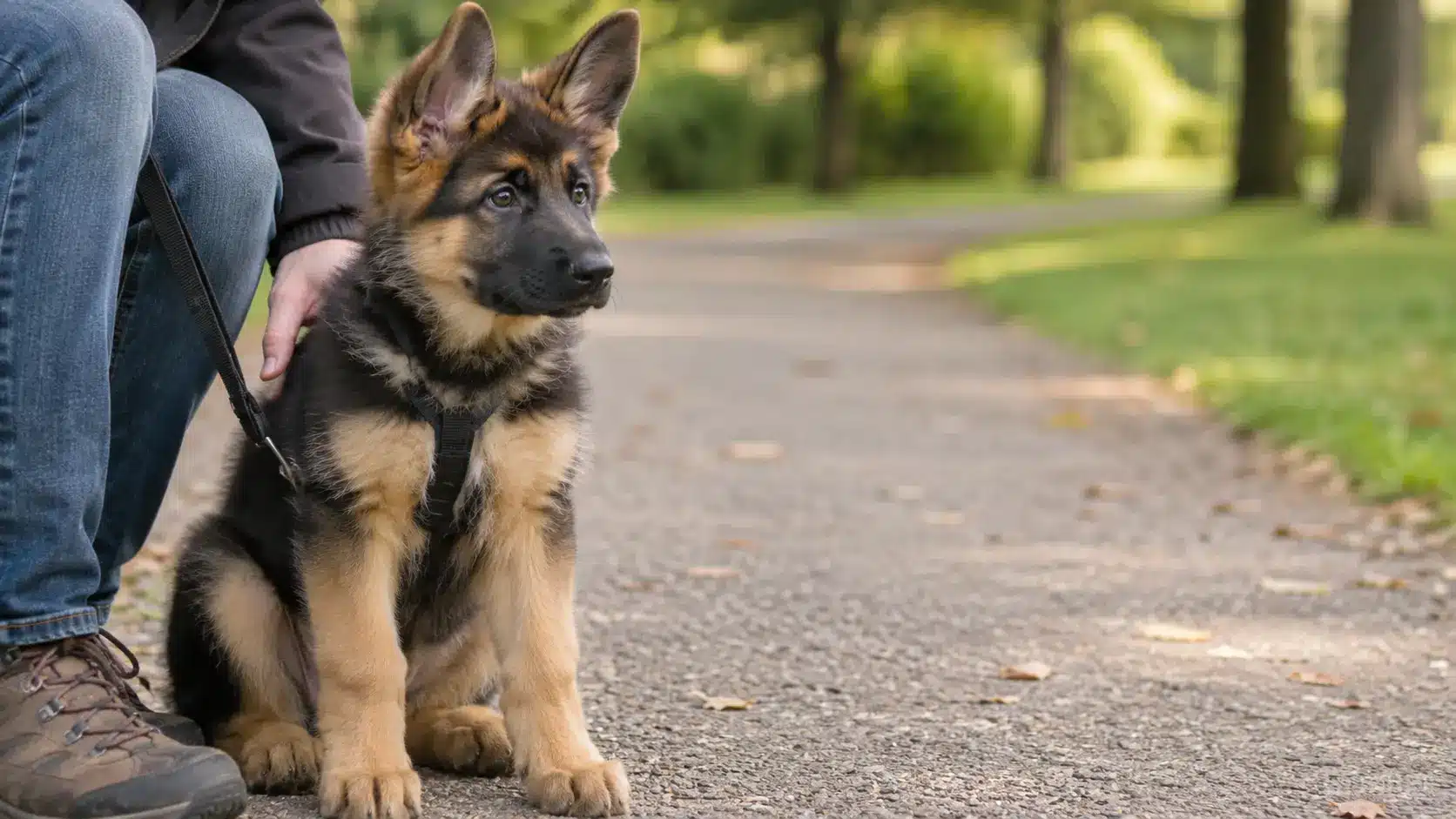
Dogs rely on their feet for balance and movement, and paws can be naturally sensitive. Common reasons a dog resists nail trimming or paw handling include:
Little experience with handling as a puppy
A past nail trim that hurt, especially if the quick was cut
Unfamiliar tools or the buzzing of a grinder
Being held down or restrained
Slippery floors that make them feel unstable
Pain from an injury, a nail problem, or joint discomfort
If your dog suddenly starts resisting paw handling, especially with limping, swelling, or licking, see your veterinarian before you start training.
What Is Cooperative Care Training?
Cooperative care teaches dogs to take part in their own handling instead of just enduring it. Rather than holding a dog still until the job is done, you use gradual exposure, predictable steps, and rewards.
For example, a dog might learn to rest their chin on your hand or stand on a non-slip mat while you briefly check one paw. The result is calmer, safer handling for everyone, plus a dog who trusts the process.
How to Train Your Dog for Nail Trims: 6 Steps
Step 1: Start With Comfortable Touch
Choose a quiet spot where your dog is already relaxed. Briefly touch somewhere they’re comfortable with, like the shoulder or upper leg, then reward.
Over several sessions, gradually move your touch closer to the paw. Avoid sudden grabs, and never hold a paw while your dog is actively trying to pull away. If they pull back, make the next repetition easier.
Step 2: Introduce Brief Paw Contact
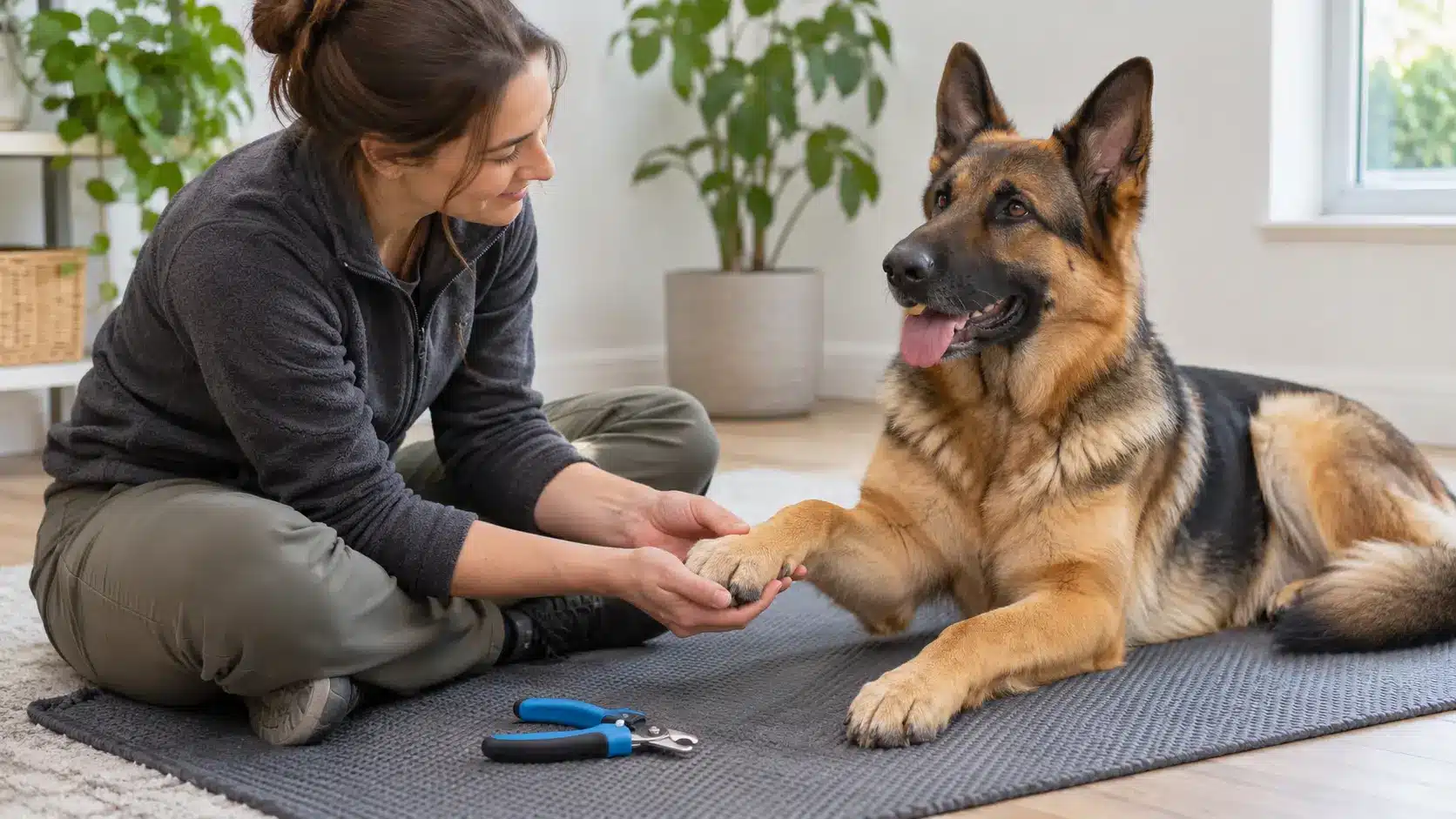
When your dog is relaxed with touches near the foot, briefly touch the top or side of the paw, let go, and reward.
Slowly increase how long you touch. A half-second may be plenty at first. When your dog is ready, gently lift the paw just a little and set it back down, supporting the leg in a natural position. A moment of relaxed handling is worth far more than a long struggle.
Step 3: Introduce the Nail Trimming Tools
Some dogs react more to the tools than to having their paws handled.
Clippers: set them on the floor a comfortable distance away. Reward your dog for calmly noticing them. Later, pick them up and set them down again, rewarding calm behavior.
Grinders: start with the grinder switched off. Then turn it on at a distance where your dog can hear it without worry, and gradually close the gap over several sessions.
Never put a buzzing tool on your dog’s paw before they’re comfortable with the sound.
Step 4: Practice a Mock Nail Trim
Once your dog is comfortable with both paw handling and the tools, rehearse the whole sequence without cutting:
Lift one paw briefly.
Bring the trimmer close to a nail.
Move it away and reward.
Repeat until the routine feels familiar. You can also gently touch the nail with the tool while it’s inactive. This teaches the routine without the pressure of finishing a full grooming session.
Step 5: Trim One Nail at a Time
When your dog is comfortable with the mock trim, take just a small amount off a single nail. Reward, and stop there if needed. One calm nail is better than a forced full trim.
Avoid cutting the quick, the living part of the nail that contains nerves and blood vessels. It’s easy to see on light nails but hidden in dark ones, so take tiny slivers at a time. If you’re unsure, ask your veterinarian or a professional groomer to show you. The AKC’s guide to trimming dog nails safely also explains how the quick works.
Step 6: Teach a Start-and-Stop Signal
A chin rest gives your dog a clear way to say “I’m ready” and “I need a break.”
Teach your dog to place their chin on your hand or a folded towel, rewarding that position repeatedly. Later, touch a paw while they hold the chin rest. If your dog lifts their chin or pulls away, pause.
Respect the signal. Don’t treat the chin rest as permission to push through obvious discomfort; watch your dog’s whole body, including posture, tension, and willingness to participate.
Common Dog Nail Trimming Mistakes
Trying to do all the nails at once. This overwhelms many dogs. Short, successful sessions build trust faster.
Holding a frightened dog down. Restraint can increase fear and the risk of a bite. Get professional support if your dog panics.
Waiting until nails are overgrown. Long nails create urgency and make every session harder. Make paw handling part of everyday life.
Ignoring warning signs. Pulling away, freezing, lip licking, or growling all tell you something. Stop and reassess. Our guide to dog stress signals can help you spot them early.
Make Everyday Care Easier
The same gradual approach that makes dog nail trimming easier also works for brushing, ear checks, wiping muddy paws (a daily job in a Pacific Northwest winter), putting on a harness, and gentle body checks.
Introduce each activity separately, keep sessions short, and don’t attempt medical or grooming procedures beyond your experience. To prepare your dog for appointments, read our guide on how to prepare your dog for vet visits and grooming.
When to Get Professional Help
A veterinarian should assess any possible pain. If your dog’s nails are badly overgrown and they’re too stressed to handle, your vet may suggest a sedated nail trim to buy time while you work on training.
If your dog is fearful, growls, snaps, or struggles with routine handling, professional guidance can help you create a safer plan. Ultimate K9’s private lessons are tailored to your dog’s specific needs. For dogs who are nervous in general, see how to help an anxious dog build confidence.
Frequently Asked Questions
How often should I trim my dog's nails?
How often should I practice paw handling?
Can an older dog learn to accept nail trims?
Are nail grinders better than clippers?
What should I do if my dog growls during a nail trim?
Build Calm, Cooperative Handling With Ultimate K9
Good nail care is something your dog can learn to take part in calmly. Start with gentle touch, introduce tools gradually, and reward cooperation every step of the way.
Ultimate K9 helps dogs and owners in Graham, Puyallup, Spanaway, Tacoma, and JBLM build confidence and better everyday manners.
Claim your 50% off intro lesson, call 253-576-4458, or contact us for help with handling and obedience.