
A child runs across the living room. The family dog follows, excited. Everyone laughs—until the dog jumps, the child falls, or the game gets too rough. Many difficult dog-and-child moments begin as ordinary family activities.
Good dogs and kids safety starts with adults creating clear boundaries for everyone. Children need age-appropriate rules. Dogs need space, supervision, and a chance to opt out of interaction. Neither should be expected to manage a risky situation alone.
Whether you have a new puppy, a longtime family dog, or children who are learning safe dog interactions, these habits can make home life calmer and safer.
The most important rule: Active adult supervision
Never leave a baby or young child alone with a dog, even a familiar dog who has never shown aggression. The American Veterinary Medical Association’s dog bite prevention guidance emphasizes the importance of supervising children around dogs and recognizing warning signs of discomfort. A well-trained dog can still react when frightened, startled, cornered, or in pain.
Active supervision means an adult is close enough and attentive enough to intervene before an interaction becomes uncomfortable. Simply being somewhere in the house—or watching through a camera—does not replace supervision.
When an adult cannot supervise, create physical separation using a gate, door, or another secure setup to ensure safe dog interactions. This protects both the child and the dog.
Teach children that dogs need personal space
Children often show affection through hugs, kisses, and face-to-face contact. Some dogs find those interactions uncomfortable, especially when they cannot move away.
Teach children to invite rather than insist: Call the dog gently, remain still, and allow the dog to choose whether to come closer. If the dog approaches with relaxed body language, an adult can guide brief, gentle petting on the shoulder or side.
For better dogs and children safety, if the dog moves away, that is the end of the interaction. A dog should never have to growl or snap to make their wish for space understood.
Five family rules worth practicing
1. Leave dogs alone while they eat or chew
Meals, bones, and valued toys are not invitations to touch the dog or take items away. Separate the dog’s feeding area from children’s play areas. If your dog already guards food or toys, seek professional advice rather than letting children practice exchanges.
2. Never wake a sleeping dog by touching them
A startled dog may react defensively. Teach children to speak from a distance and ask an adult for help if the dog must be moved.
3. Don’t chase, grab, ride, or corner dogs
Running after a retreating dog, pulling ears or tails, and climbing onto a dog are unsafe even if the dog seems tolerant. Adults should stop these behaviors consistently.
4. Keep faces away from a dog’s face
Kissing, hugging, and leaning over a dog can put a child’s face close to the dog’s teeth. Choose side-by-side activities with comfortable space instead.
5. Always ask before touching an unfamiliar dog
For better dogs and children safety, first ask the adult owner. Then observe the dog’s response. For better dogs and children safety, a dog who looks away, retreats, stiffens, or appears worried should not be approached.
Read your dog’s body language early for dogs and kids safety
Many dogs communicate discomfort before growling. Warning signs can include turning the head away, repeatedly licking the lips, stiffening, moving behind furniture, or trying to leave. A wagging tail doesn’t automatically mean the dog enjoys the situation.
When you see a sign of discomfort, calmly separate the child and dog. Don’t punish the dog for communicating stress. Repeatedly ignoring early warnings can compromise dogs and children safety and increase the chance that a future interaction escalates.
If your dog growls, snaps, or bites, end the interaction safely and speak with a veterinarian and appropriately qualified behavior professional. Child safety must come before training goals.
Create a dog-only quiet zone
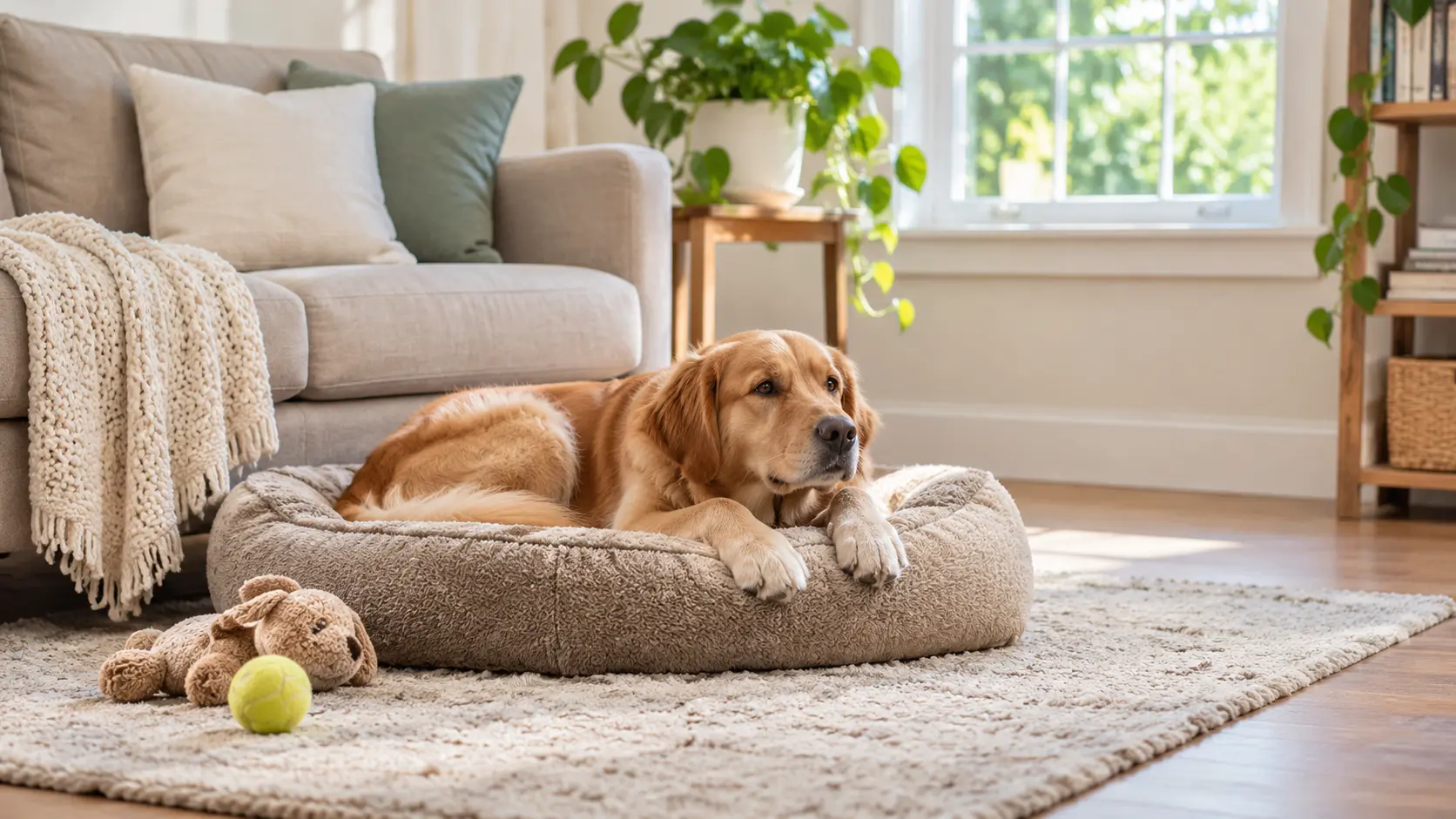
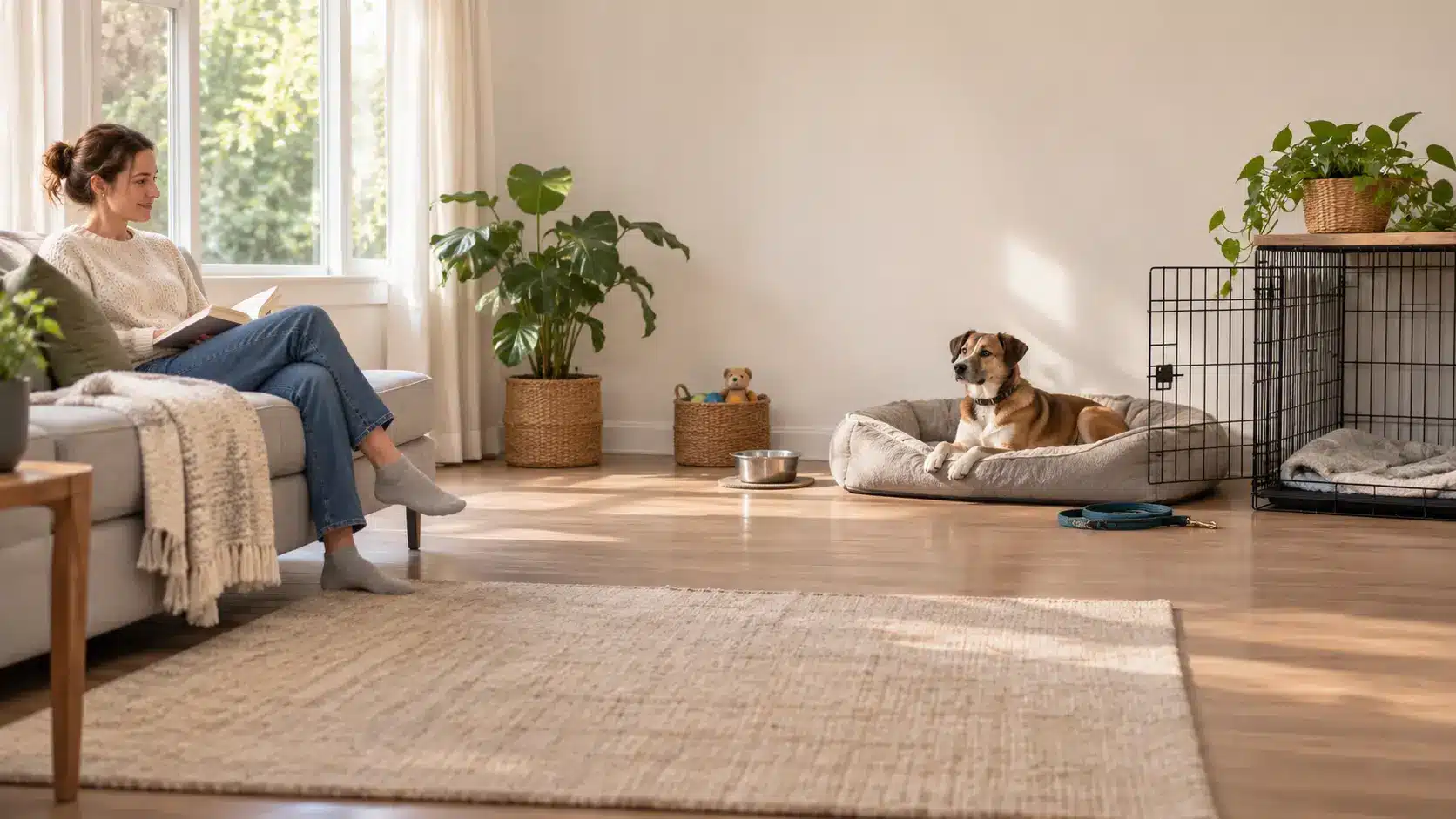
Your dog should have a place to rest without being approached. A room behind a gate, a comfortable bed in a quiet area, or a crate the dog enjoys can work. Children should understand that this space is off-limits.
The zone is not a punishment. It’s a predictable place the dog can go when the household becomes noisy. Practice guiding the dog there calmly and rewarding relaxed behavior before you need it during a busy gathering, helping reinforce dogs and children safety.
Choose better activities for children and dogs
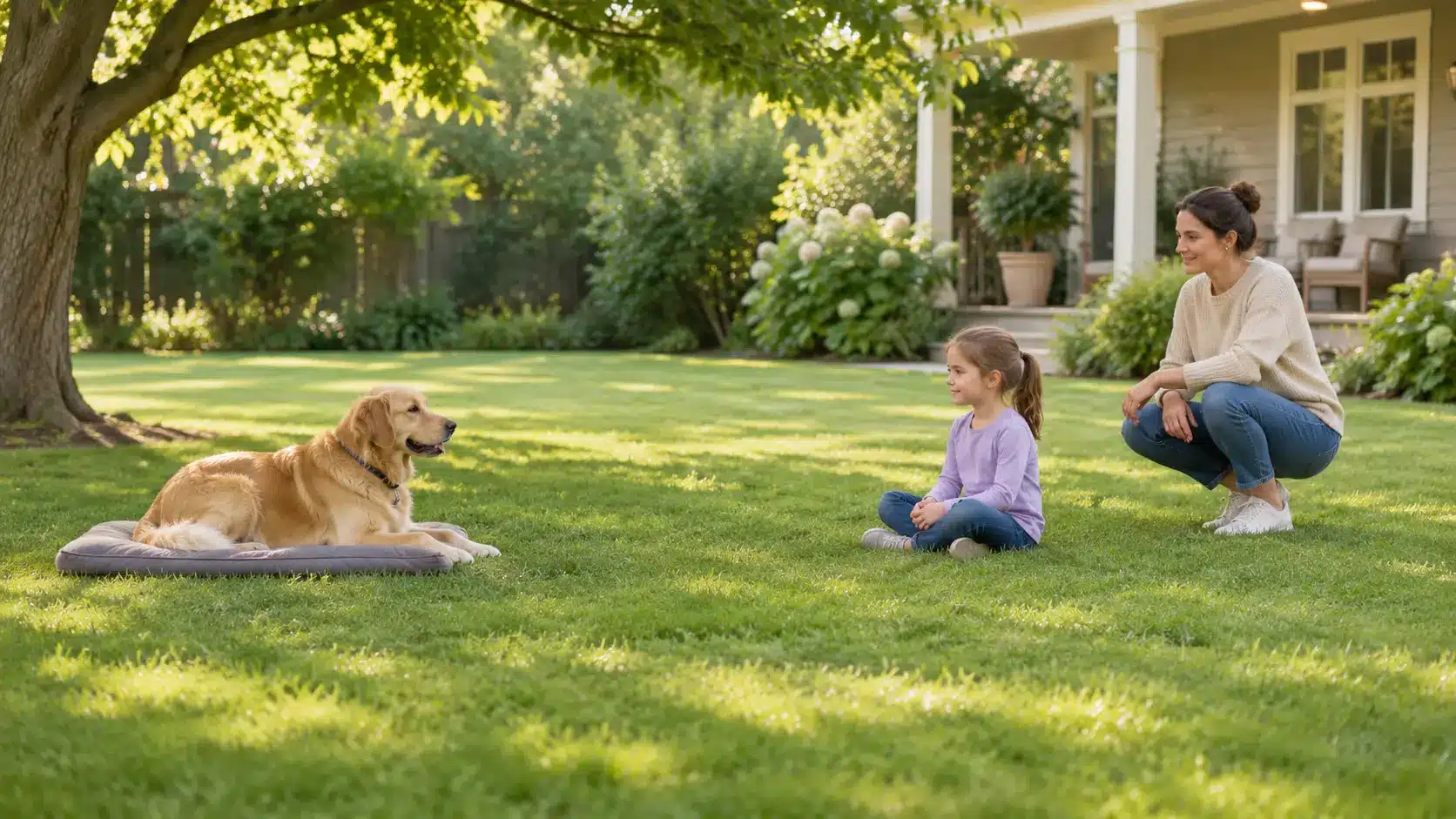
The best family activities are structured and supervised. Depending on the child’s age and the dog’s comfort, try a short “find the treat” game led by an adult, tossing a toy in an open area, or rewarding the dog for a simple cue such as “sit.”
Give children jobs that are safe for their developmental stage: filling a treat pouch with an adult, helping set up a training mat, or observing calm behavior. Young children should not be responsible for physically controlling a dog.
For better dogs and children safety, avoid competitive games around food or toys, rough wrestling, and exciting chase games. For better dogs and children safety, if play becomes fast and noisy, pause early rather than waiting for the dog to lose control.
Helping a dog who is uneasy around children
Not every dog enjoys children’s unpredictable movement and sounds. That doesn’t make the dog “bad,” and it doesn’t mean the child should try harder to win them over.
Start with management: Provide distance, use safe barriers, and make sure the dog can retreat. An adult can reward calm observation of children from a comfortable distance without requiring direct contact. If your dog freezes, lunges, growls, or has a bite history, don’t attempt close exposures on your own.
How Ultimate K9 can help families
At Ultimate K9 in Graham, WA, we focus on understanding each dog’s behavior and teaching owners consistent communication. Private training can help families improve dogs and children safety by building calmer household routines, age-appropriate expectations, and safer manners.
Learn about Belynda Moore and Ultimate K9 or contact our team to discuss your family’s training priorities. Training can improve behavior, but it never replaces adult supervision around children.
Frequently asked questions
Is it safe to let a toddler hug the family dog?
Should children give commands to dogs?
What if my dog growls at my child?
The takeaway
A peaceful relationship between children and dogs depends on more than obedience. It comes from attentive adults, respectful boundaries, and teaching both the dog and the child what safe interactions look like.