
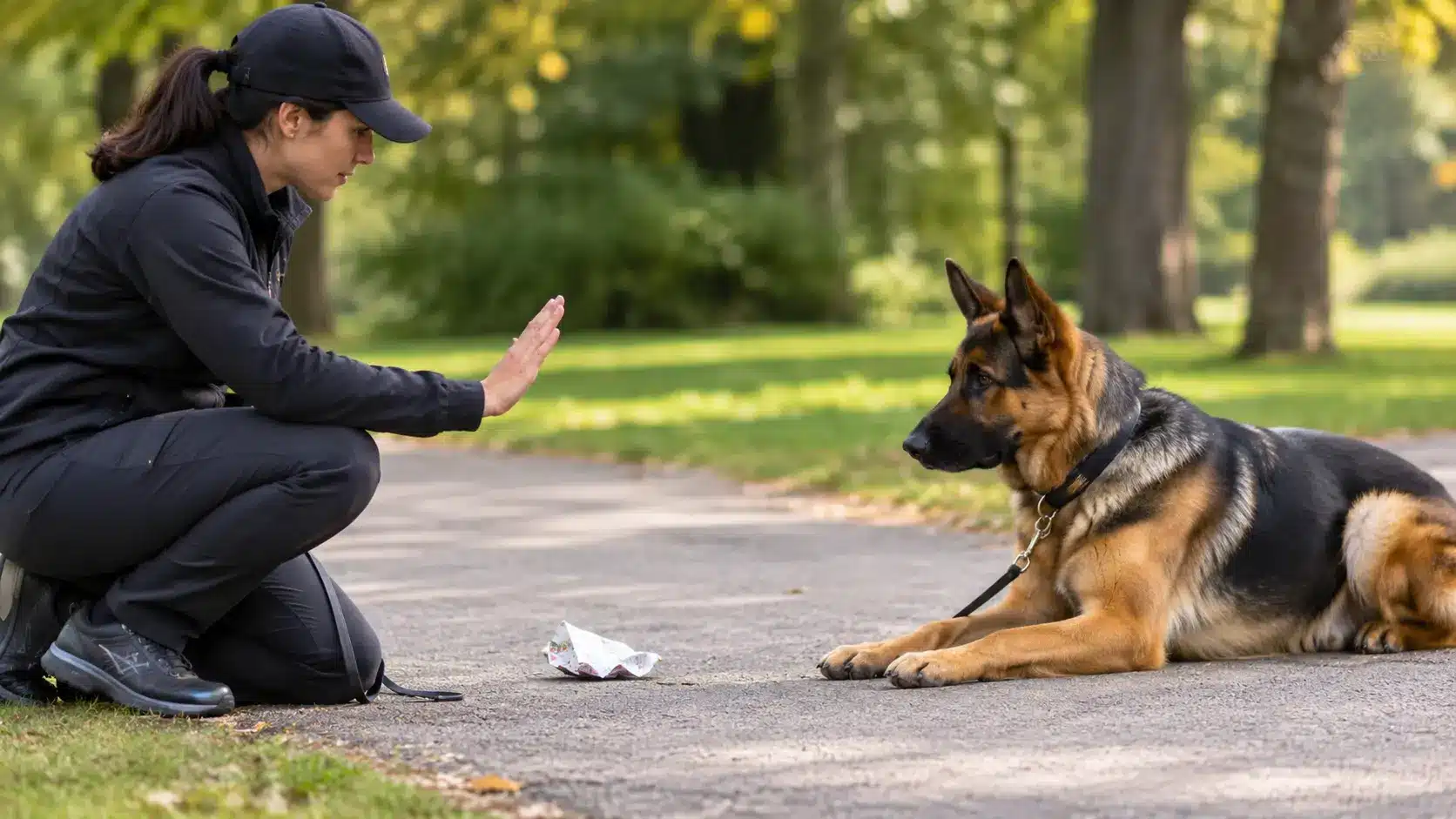
A chicken bone on the sidewalk. A dropped snack in the kitchen. A discarded wrapper at the park. Dogs explore with their noses and mouths, and sometimes that curiosity can put them in danger, which is why it’s important to teach a dog to leave potentially harmful objects alone.
A reliable “leave it” cue teaches your dog to disengage from something before picking it up. When you teach a dog the “leave it” command, it’s different from “drop it,” which means releasing an object already in the mouth. Both are useful, but learning to leave an item alone is often the safer first step.
Here’s how to teach a dog “leave it” without turning every walk into a tug-of-war.
What “leave it” should mean
Think of “leave it” as: Ignore that object and turn your attention back to me.
The cue should not mean “Keep reaching for the object until I say it five times.” Instead, it becomes a clear, practiced behavior that earns a better outcome. The American Kennel Club’s guide to teaching the “leave it” command explains how reward-based exercises can help dogs develop impulse control around tempting objects. At first, your dog will make the choice in a quiet room. Later, you’ll gradually teach a dog to respond around more interesting items and distractions.
The biggest mistake owners make is starting with something their dog desperately wants, such as food scraps outdoors. It is much easier to teach a dog when you begin with a controlled, low-distraction setup.
Step 1: Reward disengagement from a closed hand
Choose two types of treats: a less exciting treat for the training item and a higher-value treat for the reward. Hold the less exciting treat inside a closed fist at your dog’s nose level.
Your dog may sniff or nudge your hand. Keep the fist closed without scolding or jerking it away. To teach a dog to make better choices, the moment your dog backs off, looks away, or pauses their attempts, mark that choice with a calm “yes” and give a better treat from your other hand.
Repeat until your dog offers the disengagement quickly. Keep sessions short enough that both of you stay relaxed. If your dog paws hard or becomes frustrated, take a break and try an easier version.
Step 2: Progress to an open hand
Once your dog is leaving the closed fist alone, show the low-value treat on an open palm. To teach a dog to leave an item alone, calmly close your hand if they move toward it. If they back away, mark and reward from the opposite hand.
The lesson is simple: Moving away from the tempting item makes something good happen. You don’t need to shout “no” or physically push your dog back.
When this becomes easy, you can teach a dog to respond to the words “leave it” by saying the cue just before showing the treat. Say the cue once and give your dog a chance to respond.
Step 3: Practice with a treat on the floor
Place a treat on the floor and cover it with your hand. Reward your dog for looking away from it, using a different treat. Slowly uncover the floor treat as your dog succeeds.
You can later practice standing, with the low-value treat protected under your foot. To teach a dog proper boundaries, use a leash if needed to keep the dog from reaching the item. Work on a non-slip surface where your dog can move comfortably.
Never use dangerous objects for practice. Medication, sharp objects, chicken bones, and potentially toxic foods are real hazards, not training props.
Step 4: Add movement and easy distractions
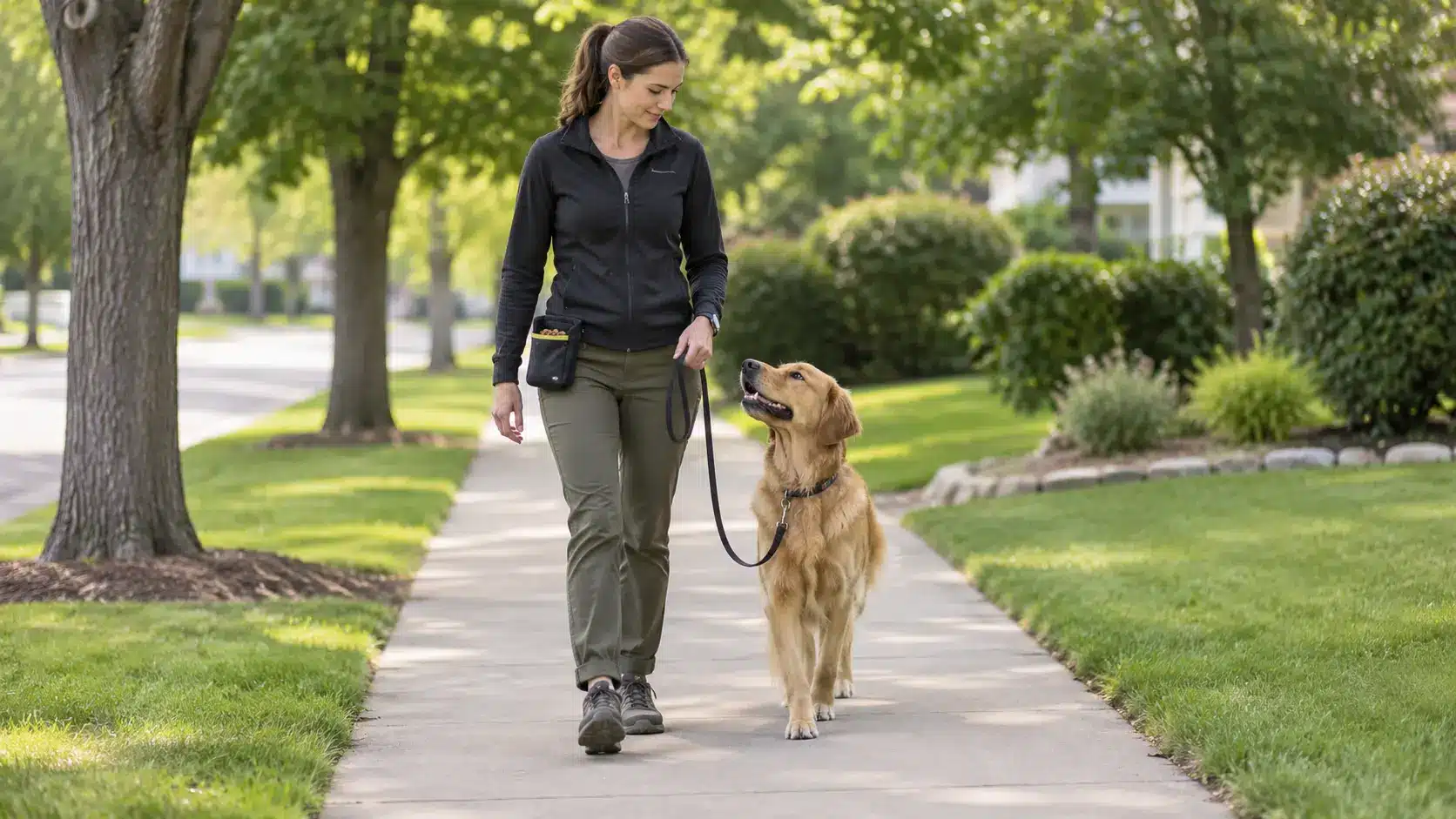
Many dogs understand “leave it” while sitting still but forget when they are walking. Set up a short indoor path with a few harmless items placed well to the side. Walk your dog on a loose leash, say the cue once before approaching an item, and reward when they glance back at you or continue past it.
Progress from a quiet room to your backyard and then to a calm sidewalk. Increase only one challenge at a time: distance, movement, or distraction.
If your dog keeps diving toward the item while you teach a dog the “leave it” command, the exercise is too hard right now.
Step 5: Use the skill during real walks
When you see something interesting ahead, give your dog enough distance to succeed. To teach a dog to respond reliably, cue “leave it” before they reach the item, then reward promptly for checking in with you.
Don’t wait until your dog already has an unsafe object in their mouth. At that point, you may need a well-practiced “drop it” or “trade” behavior, plus careful handling. If your dog swallows something potentially poisonous, contact a veterinarian or animal poison-control service promptly rather than relying on training.
Common mistakes that weaken the cue
Repeating “leave it” again and again
To teach a dog to respond consistently to a cue, avoid repeating it without a successful response. Practice at an easier distance and reward the first response.
Always letting the dog have the forbidden item afterward
For some games, permission cues such as “take it” are useful. But with “leave it,” practice rewarding from a different hand or location so your dog doesn’t assume the item you asked them to ignore will eventually be theirs.
Practicing only in the living room
Dogs don’t automatically apply a skill everywhere. Train in several safe settings before expecting reliable performance outdoors.
Punishing curiosity
Your dog is responding to a normal urge to investigate. Create opportunities for a better choice and make that choice worthwhile.
A five-minute leave-it routine
Spend a minute with the closed fist, a minute with an open palm, a minute with a covered floor treat, and the last two minutes walking past one easy distraction. Stop earlier if your dog becomes confused. A few successful repetitions are more valuable than a long session filled with mistakes.
When your dog responds readily, vary the location and reward. Praise, play, and permission to continue the walk can become useful reinforcers as the skill develops.
When to get help
If your dog guards found objects, snaps when approached, or repeatedly swallows unsafe items, don’t practice risky exchanges on your own. A veterinarian and qualified behavior professional can help you build a safer plan.
Ultimate K9 provides private training at our Graham, WA facility to help owners build useful skills with clear communication and consistency. You can explore our Dog Training Foundations course or contact Ultimate K9 for personalized support.
Frequently asked questions
How long does it take to teach “leave it”?
What's the difference between “leave it” and “drop it”?
Can older dogs learn this cue?
The takeaway
A useful “leave it” cue is built before you need it. Start easy, reward the choice to disengage, and steadily bring the skill into everyday situations.