
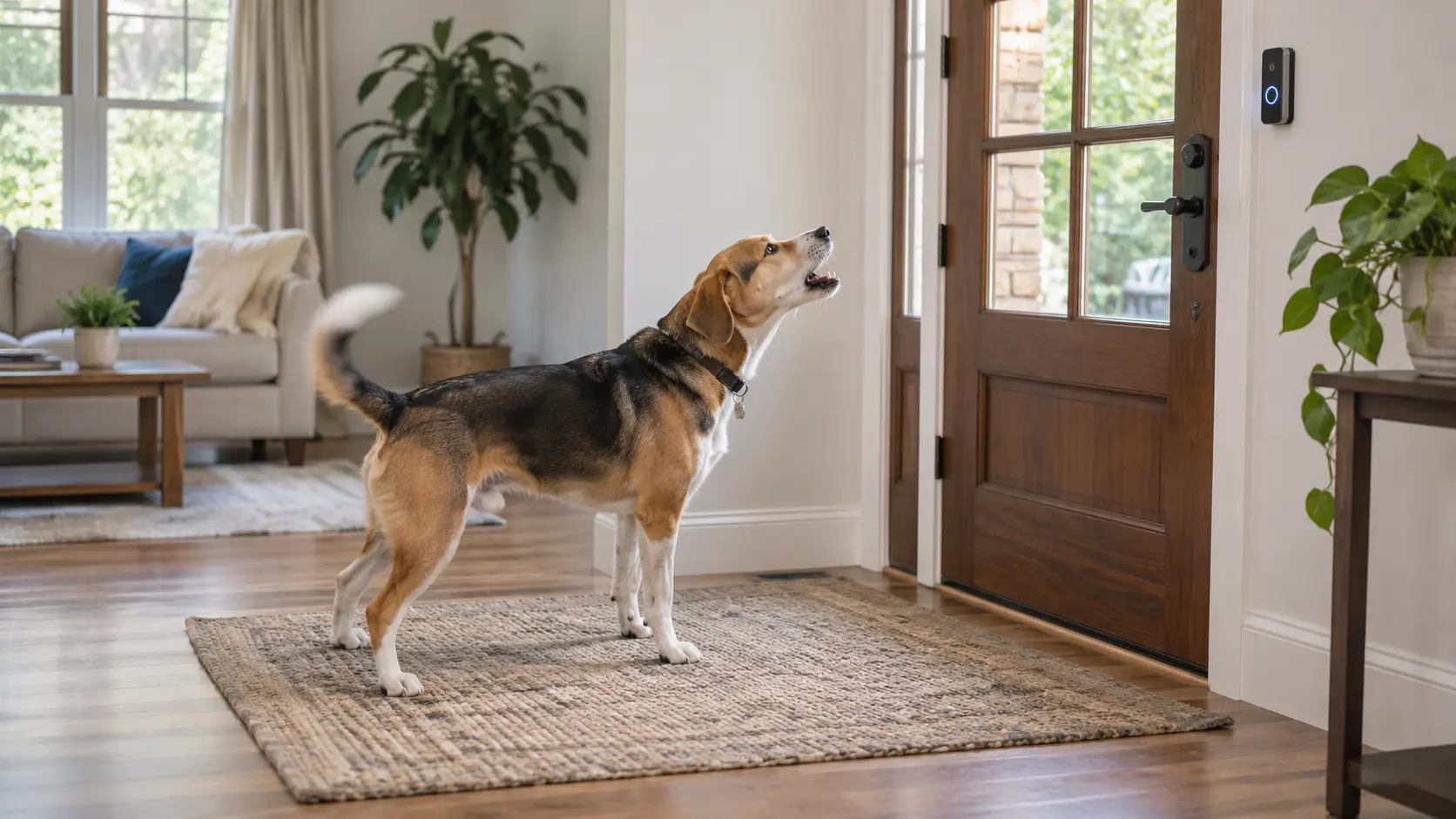
A delivery arrives, someone rings the bell, or you open the door to bring in groceries—and suddenly your dog is trying to squeeze past you. If this sounds familiar, you are dealing with a behavior often called door dashing. It may look like excitement, but learning how to Stop Your Dog from rushing out the door is essential to prevent dangerous situations involving roads, other dogs, or unfamiliar people.
The good news is that with consistent dog impulse control training, you can teach most dogs a clearer routine: an open door does not automatically mean permission to leave.
Learning how to Stop Your Dog from running out the door starts with preventing escapes, then building a reliable habit of waiting for a release cue.
Why dogs rush through open doors
Dogs do what has worked for them before. The doorway may lead to a walk, an interesting smell, visitors, or freedom to explore. To Stop Your Dog from rushing out, it’s important to understand that if this behavior has repeatedly led to something rewarding, your dog may start moving before you have even turned the handle.
Excitement is not the only reason. Some dogs are highly stimulated by doorbells, other animals outside, or activity on the street. Others have simply never learned that a doorway is a boundary. Rather than labeling the dog stubborn, focus on teaching dog impulse control and what you want to happen when the door opens.
Safety comes before training
Do not practice near an unsecured exterior door with a dog who has a history of escaping. Start at an interior doorway or behind a second barrier. Until the behavior is reliable:
⦁ Use a leash or properly fitted harness when opening an exterior door.
⦁ Put a baby gate between your dog and the front entrance when possible.
⦁ Ask visitors to wait while you secure your dog.
⦁ Keep identification and microchip details current in case an escape occurs.
Management is not a failure. It protects your dog while you build the new skill and strengthen dog impulse control.
Step 1: Teach a simple “wait” away from distractions
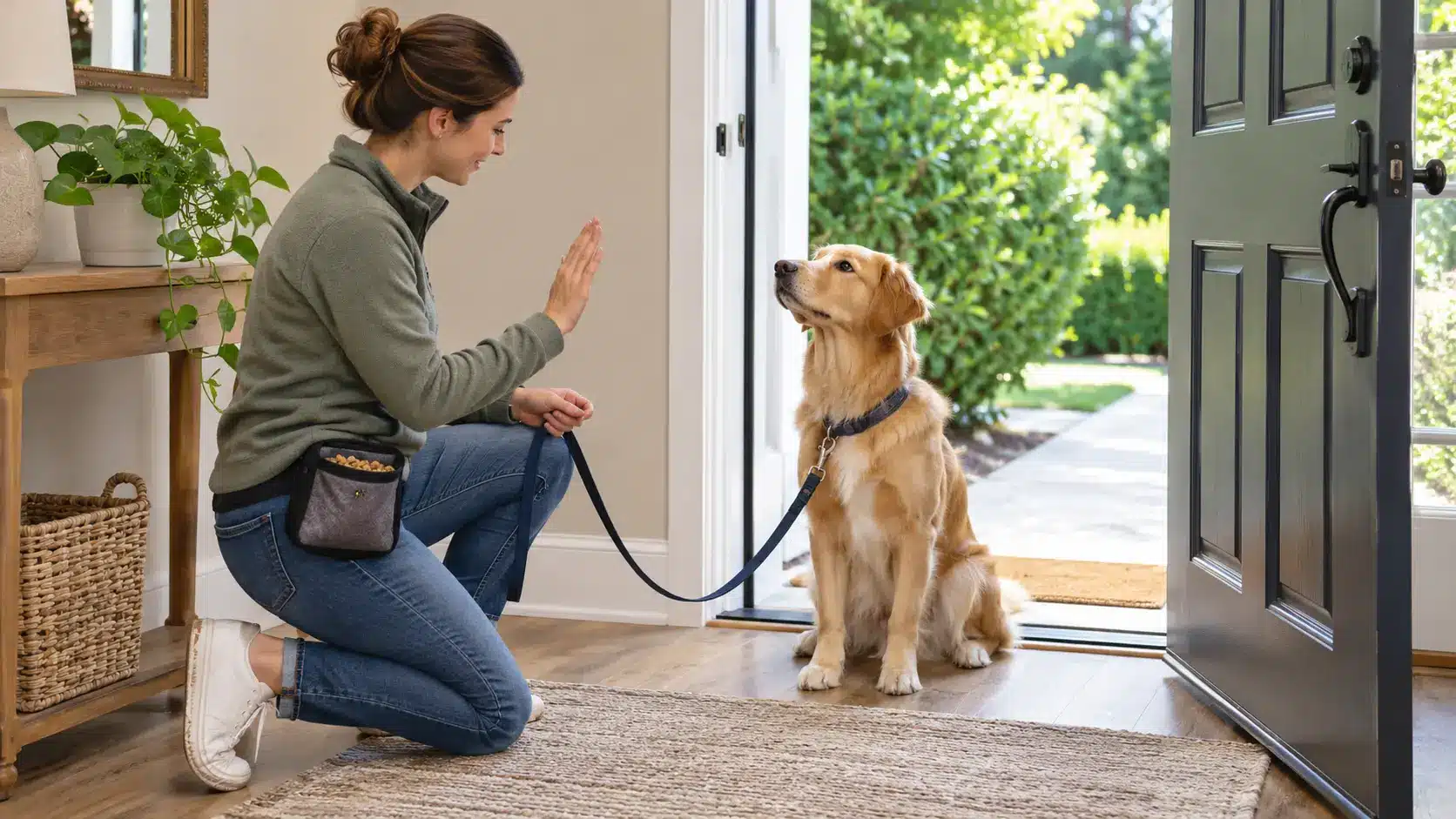
Begin at an interior door when your dog is relaxed. Have a few small rewards ready. To Stop Your Dog from rushing through the doorway, stand with your dog on one side of the doorway and reach for the handle.
If your dog stays on their side, mark the moment with a calm “yes” and reward. Open the door just an inch, then close it. Reward again if your dog remains behind the threshold. If they move forward, calmly reset; make the next attempt easier rather than repeating the cue more loudly.
At this stage, you are rewarding a choice: noticing the open door without rushing through it. Your dog does not have to hold a perfect sit. Standing calmly is fine.
According to the American Kennel Club, teaching dogs to wait at doorways involves gradually opening the door, rewarding calm behavior, and introducing a release cue when the dog is ready. Consistent practice helps build safer doorway habits. Copy paragraph
Step 2: Add a release cue
Choose a consistent release word, such as “okay,” “free,” or “let’s go.” After a brief wait, say the release cue and invite your dog through the safe interior doorway.
Not every practice should end with crossing the threshold. Sometimes reward your dog and close the door instead. This teaches that waiting does not always predict immediate access to the other side.
The difference is important: “wait” means pause until you receive guidance; the release cue gives permission to move. Everyone in the household should use the same words.
Step 3: Build duration, movement, and distractions separately
Once the dog can wait while the door opens, slowly build real-world reliability. Work on only one challenge at a time:
⦁ Duration: Can your dog wait for five seconds instead of one?
⦁ Movement: Can you take one step through the doorway and step back?
⦁ Distraction: Can someone walk past the door while your dog stays behind the threshold?
If your dog makes repeated mistakes during dog impulse control training, the exercise has become too difficult. Shorten the wait, reduce movement, or move to a quieter location.
Step 4: Practice with real doors—carefully
When your dog is consistent indoors, transfer the skill to the front door with a leash attached and a secure backup barrier. To help Stop Your Dog from running out the door, practice touching the handle, unlocking the door, opening it slightly, and eventually opening it wider.
Then rehearse everyday situations: carrying a bag, greeting a familiar visitor, or stepping onto the porch. Keep the reward close to your dog, not outside the door, so you reinforce staying inside. Never use a real street or escaping opportunity as a test of your dog’s progress.
Step 5: Give your dog another job when visitors arrive
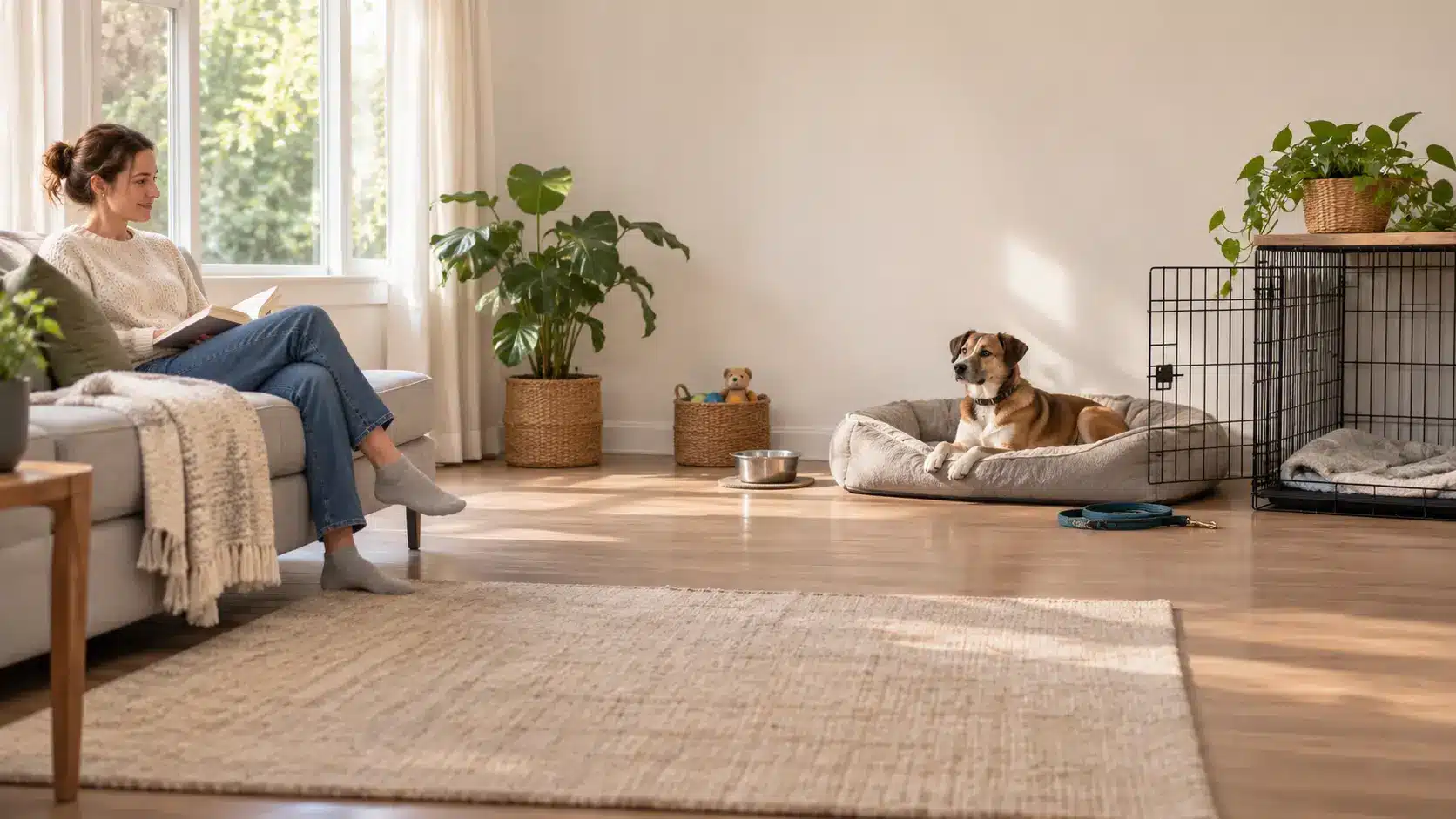
For many dogs, doorway manners improve even faster when they have an alternative behavior. A “place” cue can send the dog to a bed or mat away from the entrance while you answer the door. To build dog impulse control, practice the cue first when no one is visiting, then add quiet knocks and other distractions.
A dog who learns where to go, what to do, and when to move has less reason to make the decision alone. This is a central part of good impulse-control training: clear routines are easier to follow than constant correction.
Common mistakes that slow progress
Practicing only when the doorbell rings. To Stop Your Dog from rushing out the door, remember that real visitors are often too exciting for a new skill. Set up calm rehearsals first.
Repeating “wait” over and over. Say it once, lower the difficulty, and reward the behavior you want to help build better dog impulse control.
Giving freedom too soon. A few successful repetitions indoors do not mean your dog is ready to wait off-leash beside a busy road.
Inconsistent household rules.
If one person expects a wait and another routinely lets the dog charge out, progress in dog impulse control training will be slower.
When should you ask a trainer for help?
If your dog repeatedly escapes, becomes frantic when separated from the doorway, or cannot settle around visitors, individualized coaching can help identify what is driving the behavior. Sometimes, to Stop Your Dog from running out the door, you need to address excitement and habit; in other cases, fear, reactivity, or inadequate recall makes the situation more complex.
At Ultimate K9, we work with owners at our one training facility in Graham, Washington, focusing on clear communication, realistic routines, and training that matches the individual dog. Learn about our dog training in Graham, WA or explore the foundations covered in our Silver Program.
Frequently asked questions
How long does it take to stop door dashing?
Should my dog sit before every door opens?
What if my dog already runs out the front door?
Build calmer doorway habits with Ultimate K9
Safe doorway manners are about more than a single command. They teach your dog to pause, check in, and respond to clear direction even when something exciting is happening. If door rushing is becoming a daily struggle, contact Ultimate K9 to discuss a training plan suited to your dog and home.